Portable Air Conditioner Explained: BTU, Noise, Running Costs and Buying Mistakes

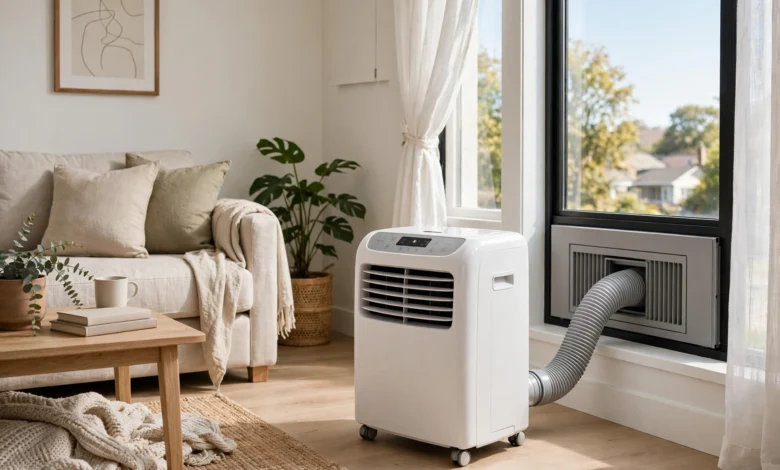
A portable air conditioner is one of those purchases that sounds simple until you start comparing models, because the headline numbers on the box rarely tell the whole story about how a machine will actually perform in your home. The direct answer to the question most buyers really have is this: a true compressor-based portable air conditioner will cool a single room properly, provided you size it correctly for the space, fit the window kit properly, and accept that it will cost real money to run and will make real noise while it works. If any one of those three conditions is missing, the same machine can feel disappointing, expensive, or both, which is why so many summer purchases end up gathering dust in a spare room by September.


This guide is written as an explainer rather than a ranked shortlist, because the best choice depends far more on your room, your windows, and your tolerance for noise and running costs than on which model happens to top a chart this week. It is a practical compromise: it cools without permanent installation, it can be moved from room to room, and it can be stored away in winter, but it is never as quiet, efficient, or powerful as a fixed wall-mounted split system. Understanding that trade-off before you buy is the difference between a summer of comfortable evenings and a summer of arguing with a noisy box that never quite seems to make the room cold.
What It Actually Is, and What It Is Not
A genuine portable air conditioner works exactly like a fridge in reverse, using a compressor and refrigerant to pull heat out of the room air and push it outside through an exhaust hose, which is why every real model comes with a hose and some form of window kit. That hose is not an optional accessory or a bit of packaging to throw away, because without somewhere for the hot air to go, the machine would simply be moving heat around the room rather than removing it, and the room would never actually get cooler. This is the single most important distinction in the whole category, and it is the one that catches out the most buyers, because a large number of cheaper products that look like air conditioners are in fact evaporative coolers, which work by blowing air over wet pads and do not lower the temperature of a room in the same way at all.
An evaporative cooler can feel pleasant on a dry day, because moving humidified air across your skin does create a cooling sensation, but in a typical humid British summer it often makes a room feel clammy rather than comfortable, and it will never bring a bedroom down to a genuinely cool temperature for sleeping. A true compressor model, by contrast, also dehumidifies as it cools, which is part of why the air feels fresher afterwards, and it can hold a room at a set temperature in a way that a fan or an evaporative cooler simply cannot. If a product listing does not mention a compressor, a BTU rating, and an exhaust hose, then whatever it is, it is not an air conditioner in any meaningful sense, and you should treat its cooling claims with considerable scepticism.
BTU, Explained: Matching Power to Your Room
BTU, which stands for British Thermal Unit, is the standard measure of cooling power, and it is the number that matters most when you are trying to match a machine to a room, because an undersized unit will run constantly without ever reaching the temperature you asked for. As a rough guide, a unit of around 9,000 BTU suits a smaller room of under 20 square metres, such as a typical box room, home office, or small bedroom, while most ordinary living rooms and larger bedrooms fall into the 10,000 to 12,000 BTU range, and open-plan living spaces or rooms with large south-facing windows may need 12,000 to 13,000 BTU to cope on the hottest days. These figures are guides rather than exact science, because ceiling height, insulation, the number of people in the room, and heat from computers or cooking all add to the load, but they are a far better starting point than simply buying the cheapest or the most powerful model on the page.
Going bigger is not automatically better, either, because an oversized unit in a small room will cool the air quickly and then switch off, only to switch on again a few minutes later, and that short cycling can leave the room feeling clammy rather than comfortable, since the machine never runs long enough to dehumidify properly. It will also cost more to buy and more to run, and it will usually be louder and heavier than the size you actually needed, which matters when you are dragging it between rooms or trying to store it in winter. The sensible approach is to measure your room honestly, including any open doorways into adjoining spaces that the cooled air will drift into, and then choose the size band that fits that measurement, remembering that a slightly generous choice is safer than a machine that is always struggling at full power.
Noise: What the Decibel Numbers Really Mean
Noise is the specification most often ignored until the first hot night, when a machine that seemed fine in the shop suddenly makes sleep impossible, and it deserves as much attention as the BTU rating. Manufacturers quote noise in decibels, and the numbers look reassuringly small on paper, but decibels work on a logarithmic scale, so a small numerical difference represents a much larger difference in perceived loudness than most people expect. As a rough translation into everyday life, the low fan setting on many portable units sits around 50 to 55 decibels, which is comparable to the background hum of a fridge or a quiet conversation in the next room, while the high cooling setting often reaches 60 to 65 decibels, which is closer to a dishwasher running or a normal conversation right beside you, and that is loud enough to disturb light sleepers.
The practical implication is that you should think about where and when you will actually use the machine, because a unit that is perfectly acceptable in a living room during the day can be a genuine problem in a bedroom at night. Some people solve this by cooling the bedroom for an hour before bed and then switching the machine off, while others look specifically for models with a quiet or sleep mode and accept that the room will cool more slowly on that setting. It is also worth remembering that a machine working flat out because it is undersized for the room will always be louder than a correctly sized machine running comfortably on a medium setting, which is another reason why getting the BTU choice right pays off in ways that go well beyond the temperature on the thermostat.
Running Costs: What It Really Costs to Use
Running costs are where a portable unit surprises people most, because the purchase price is only the beginning, and a machine that runs for several hours a day through a heatwave can add a noticeable amount to an electricity bill. The cost depends on the wattage of the unit, the electricity tariff you are on, and how many hours a day it actually runs, but a typical mid-sized unit drawing around 1,000 watts costs roughly 25 to 30 pence per hour at current domestic tariffs, which means an evening of cooling can easily cost a pound or more, and a full hot week can cost ten pounds or beyond. That is not a reason to avoid buying one, because comfort has real value on the hottest nights, but it is a reason to use the machine deliberately, cooling one room rather than trying to cool the whole house, and switching it off when the room is empty.
Energy efficiency ratings help here, although they are less decisive than the size and usage pattern, because even an efficient portable unit is inherently less efficient than a fixed split system, which does not have to push hot air through a long hose inside the room it is trying to cool. Practical habits matter more than the label: closing curtains on sunny windows, cooling the room in the evening rather than fighting the midday sun, keeping doors closed so the cooled air stays where it is needed, and using a timer or the thermostat rather than leaving the machine running at full power all day. The Energy Saving Trust publishes general advice on keeping homes cool and using energy efficiently, and its guidance is a useful second opinion before you commit to a machine that will be running for hours at a time through the summer.
The Window Kit: The Part Most People Get Wrong
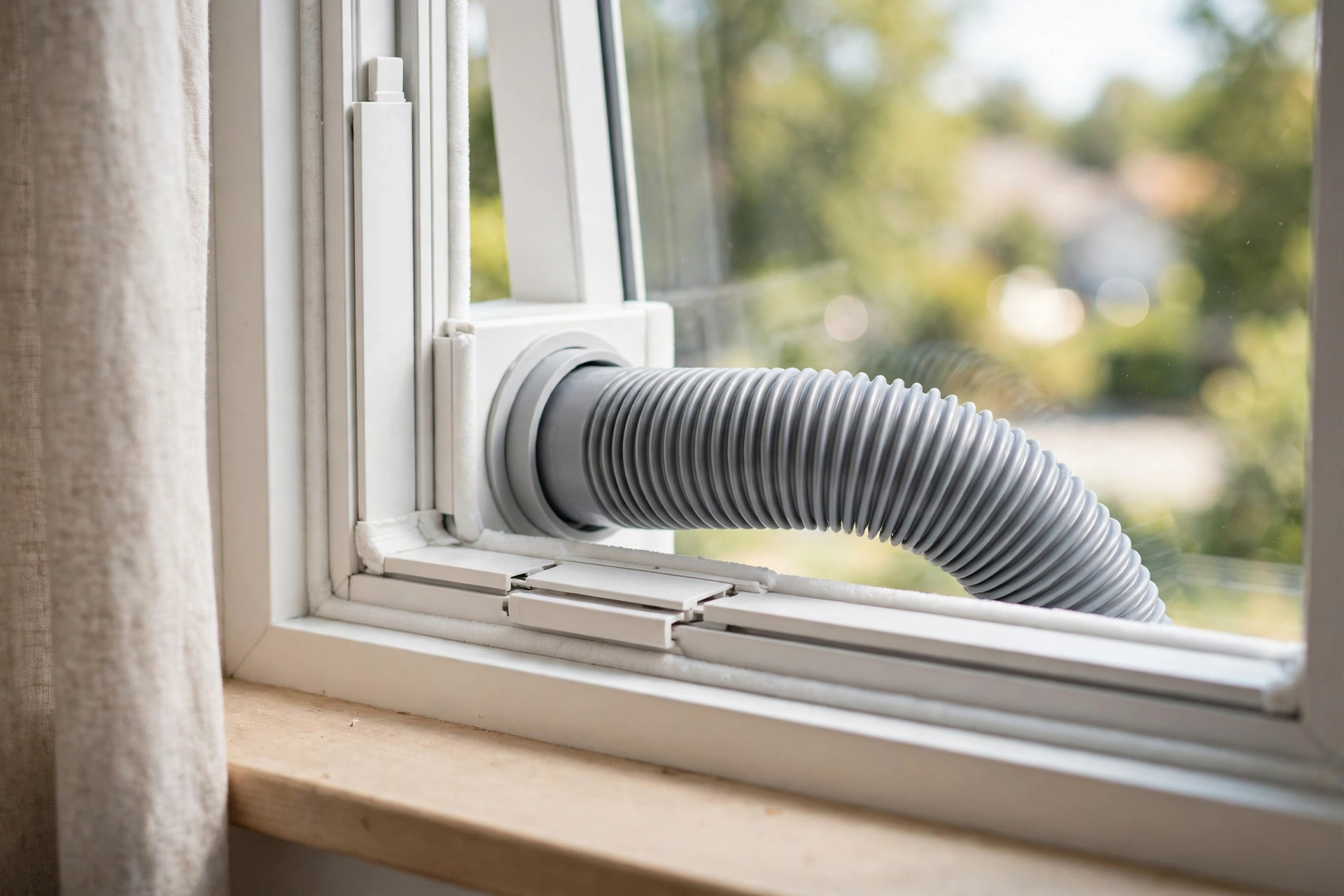
The window kit is the least glamorous part of the whole purchase and the one most likely to ruin the result, because a poorly sealed kit lets the hot air the machine has just pumped outside leak straight back into the room, undoing much of its work. Most units come with a basic kit designed for sliding or sash windows, which may or may not suit the windows in a British home, and many buyers discover too late that their casement or tilt-and-turn windows need a different sealing solution, such as a fabric window seal that zips around the hose and sticks to the frame. A kit that leaves gaps around the hose is not a minor cosmetic issue: it is effectively an open window on a hot day, and it forces the machine to run longer, louder, and more expensively for a worse result.
Before buying, it is worth looking at the actual windows in the room where the machine will live, measuring the opening, and checking whether the included kit will fit or whether you need to budget for an aftermarket seal. The seal itself is a relatively cheap accessory, usually well under the cost of a takeaway, but it makes a disproportionate difference to performance, and it is the single most cost-effective upgrade available to any portable unit owner. It is also worth planning where the hose will run, because a long, kinked, or uphill hose run reduces efficiency, and the machine needs to sit close enough to the window that the hose can run in a short, gentle curve. A few minutes of planning here will save a summer of frustration.
Mistakes to Avoid Before You Buy
The most common buying mistake is choosing on price alone, because the cheapest portable unit on the page is often either an evaporative cooler in disguise or an undersized unit that will struggle in anything larger than a cupboard. The second mistake is ignoring the window situation, as described above, and the third is forgetting about drainage, because a portable air conditioner collects water as it dehumidifies, and while many models evaporate much of it through the exhaust, some need a drain hose or a tank emptied, which is an unwelcome surprise in the middle of the night. Checking the drainage arrangement, the hose length, the weight of the unit, and whether it will fit through doorways and into storage are all small checks that prevent large regrets.
Another mistake is expecting one portable unit to cool a whole flat, because these machines are room coolers, not whole-home systems, and trying to cool an open-plan ground floor with a single portable unit will leave every room lukewarm and the electricity meter spinning. It is far better to cool the room you are actually using, close the doors, and move the machine when you move rooms, which is after all the reason for buying a portable model in the first place. Finally, do not trust a single dramatic claim about a machine dropping a room by ten degrees in ten minutes, because real cooling takes time, and the honest measure of a good portable air conditioner is whether it holds a comfortable temperature steadily through a hot evening without deafening you or bankrupting you.
Conclusion
A portable air conditioner earns its place in a British home when it is bought with clear eyes: a true compressor machine, sized honestly to the room, fitted with a properly sealed window kit, and used deliberately for the room you are actually in. The BTU guide, the noise reality, the running costs, and the window kit are not footnotes to the purchase, they are the purchase, and getting them right matters far more than any single feature, brand badge, or headline claim on a retailer page. Buy the size your room needs, budget for a proper window seal, and plan for the running costs, and a portable unit can turn the handful of genuinely hot weeks in a British summer from miserable to comfortable.
If you go into the purchase expecting a silent, whole-house, near-free solution, you will be disappointed, but if you go in expecting a practical, movable room cooler with real running costs and real noise, you will almost certainly be pleased with what it does. Measure the room, check the windows, read the noise figures with the translations in this guide in mind, and treat the price on the retailer page as the starting point rather than the whole cost. Done that way, a portable air conditioner is one of the most useful summer purchases a UK household can make, and it will be ready to earn its keep again the next time the temperature climbs.
FAQs
Is a portable air conditioner the same as an evaporative cooler? No, and the distinction matters enormously, because a true compressor machine uses a compressor and refrigerant to remove heat from a room and push it outside through an exhaust hose, which genuinely lowers the room temperature and dehumidifies the air at the same time. An evaporative cooler, by contrast, simply blows air over wet pads, which can feel refreshing on a dry day but does not cool a room in the same way and can make a humid British summer room feel clammy rather than comfortable, so always check for a compressor, a BTU rating, and an exhaust hose before buying.
What size portable air conditioner do I need for a living room? Most ordinary living rooms fall into the 10,000 to 12,000 BTU range, while smaller rooms under 20 square metres are usually well served by a unit of around 9,000 BTU, and open-plan spaces or rooms with large south-facing windows may need 12,000 to 13,000 BTU to cope on the hottest days. Ceiling height, insulation, the number of people in the room, and heat from cooking or electronics all add to the cooling load, so measure the room honestly, including open doorways the cooled air will drift through, and choose the band that fits rather than simply buying the most powerful model available.
How loud is a portable unit at night? On a low setting, many portable units run at around 50 to 55 decibels, which is comparable to a fridge hum or a quiet conversation in the next room, while on high they often reach 60 to 65 decibels, which is closer to a dishwasher running nearby and is loud enough to disturb light sleepers. A common strategy is to cool the bedroom for an hour before bed and then switch the machine off, or to use a quiet or sleep mode and accept slower cooling, and a correctly sized machine running on a medium setting will always be quieter than an undersized machine working flat out.
Do I really need the window kit? Yes, absolutely, because the exhaust hose is how the machine removes heat from the room, and a poorly sealed window kit lets that hot air leak straight back inside, forcing the machine to run longer, louder, and more expensively for a worse result. Many included kits suit sliding or sash windows but not casement or tilt-and-turn windows, so check your actual windows before buying and budget for a fabric window seal if needed, since it is a cheap accessory that makes a disproportionate difference to how well the machine performs.
How much does it cost to run a portable unit? A typical mid-sized unit drawing around 1,000 watts costs roughly 25 to 30 pence per hour at current domestic tariffs, so an evening of cooling can cost a pound or more and a full hot week can cost ten pounds or beyond, depending on your tariff and how many hours the machine actually runs. You can keep costs down by cooling only the room you are using, closing doors and curtains, using the thermostat or timer rather than running at full power all day, and remembering that the purchase price is only the starting point of the total cost of ownership.
If you found this guide helpful, you may also enjoy our other home and appliance explainers on this site.