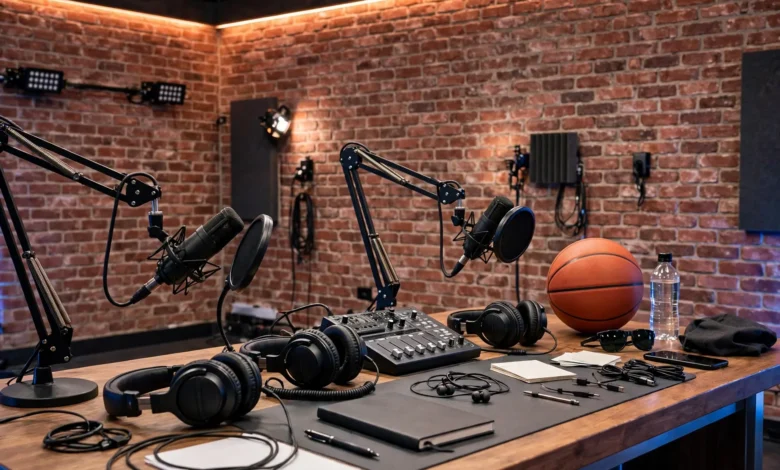
The direct answer is that Dave Portnoy is the 49-year-old founder and owner of Barstool Sports, back in full control of the company he built after buying it back from Penn Entertainment in August 2023, and still one of the loudest voices in American sports media in late 2026. His most recent headline came on 3 October 2026, when Fox Sports removed him and Barstool from its Saturday pregame show Big Noon Kickoff, a decision reported by The Athletic that ended a partnership barely a season old. Yet the same reporting made clear that his weekday show Wake Up Barstool continues on FS1, which means the Fox chapter is narrowed rather than finished, and the wider Barstool empire he controls carries on regardless.

The story of Dave Portnoy matters beyond sports because it traces how one personality turned a free local newspaper into a national media brand, sold it for hundreds of millions of dollars, bought it back for a single dollar, and then walked into the most traditional corner of television before walking out again. This article tells that story in order, from his Massachusetts childhood and Michigan education through the founding of Barstool, the Penn years, the buyback, the Fox deal and the October 2026 split. Controversies are covered factually and with attribution, without repeating unproven claims, and every key date and figure comes from published reporting cited in the text.
Who Is Dave Portnoy?
David Scott Portnoy was born on 22 March 1977 in Salem, Massachusetts, and raised in nearby Swampscott, the son of Michael, a lawyer, and Linda, a high school teacher, according to his biographical record summarised by Wikipedia and multiple profile sources. He attended Swampscott High School, where he played baseball and won the league batting triple crown as a junior, and he later graduated from the University of Michigan in 1999 with a degree in education, although he had no plans to become a teacher. While at Michigan he founded a website called thegamblingman.com, where he published his sports betting picks, an early sign of the blend of gambling, opinion and self-promotion that would later define his career.
After college, Portnoy moved to Boston and worked at Yankee Group, an IT market research firm, but the office job never fitted the competitive, outspoken character he had shown since school. He has described himself as a heavy sports bettor in his twenties, and the frustration of working for someone else while nursing strong opinions about sports, gambling and media eventually pushed him toward starting something of his own. That decision, taken in the early 2000s, would produce one of the most distinctive and divisive brands in modern sports media, built almost entirely around his own voice and his willingness to say what traditional broadcasters would not.
The public persona that made him famous is known as El Presidente, or Stool Presidente, a nickname that captures both his role as Barstool’s boss and the cult of personality that surrounds the company. Unlike most media founders, who eventually step back from the content, Portnoy has remained the loudest voice in his own company for more than two decades, fronting videos, pizza reviews, podcasts and social media feuds in person. That visibility is the reason his name trends whenever Barstool makes news, and it is also the reason his personal controversies and his company’s fortunes have always been impossible to separate from each other.
Building Barstool Sports
Dave Portnoy founded Barstool Sports in 2003 as a free sports and gambling newspaper for the Boston area, which he personally handed out on subway platforms and street corners while selling advertisements to keep the publication alive. The paper focused on local sports, betting odds, fantasy sports and humour, written in a deliberately raw and politically incorrect voice that rejected the polished tone of mainstream sports coverage. Early advertisers included offshore betting websites, and the paper initially struggled, gaining traction in 2004 when Portnoy began placing photographs of women in swimwear on the front page, a tactic that drew criticism but also built a fiercely loyal readership among young men.
The decisive move came in 2007, when Barstool expanded from print into a blog, allowing rapid, constant updates and a national audience far beyond Boston commuters. The blog format let the company hire personalities who could create video, podcast and written content in the same unapologetic style, turning a local paper into the nucleus of a media ecosystem built around a single dominant figure. Podcasts, video series, live events and merchandise followed, and the brand’s formula of named personalities, fan community and direct engagement proved far more durable than many traditional publishers expected, surviving platform changes that killed countless rival blogs.
Outside investment accelerated that growth, with Peter Chernin’s The Chernin Group buying a stake in January 2016 reported at ten to fifteen million dollars, and increasing its holding to sixty percent by 2018 after further investment of twenty to twenty-five million dollars. Penn National Gaming, now Penn Entertainment, then agreed in January 2020 to buy a thirty-six percent stake for about $163 million in cash and convertible stock, before paying about $388 million in February 2023 for the remaining interest, bringing its total acquisition price to roughly $551 million. Those deals turned a Boston newspaper into a company valued in the hundreds of millions, while Portnoy remained in control of its content throughout, a condition he treated as non-negotiable in every negotiation.
Controversies and Comebacks
Controversy has accompanied Barstool from its earliest days, because the deliberately provocative style that built its audience also guaranteed regular clashes with critics, advertisers and institutions. The early newspaper’s crude humour and its use of swimwear photographs drew condemnation, and the brand’s later content, including jokes and commentary aimed at women, minorities and rival fan bases, kept it in the news for reasons that had little to do with sports. Portnoy has always treated that criticism as part of the brand rather than a threat to it, arguing that his audience wants unfiltered opinion rather than the cautious language of traditional broadcasters, and that argument has repeatedly proven commercially successful even when it cost him mainstream partnerships.
The Penn years tested that bargain, because operating inside a regulated gambling company required a more moderate tone than Barstool’s audience expected, and Portnoy later said the association may have cost Barstool sportsbook licences in some states. When Penn sold the company back to him in August 2023, he pledged in a social media video that the site’s content would return to what he called its pirate-ship style of raucous commentary, and he said he would never sell Barstool again. That buyback is the defining comeback of his career: a founder who had sold his company in stages for more than half a billion dollars got it back for one dollar plus non-compete agreements, with Penn retaining fifty percent of any future sale proceeds under the original terms of the deal.
The most recent controversy concerns Ohio State University and its head football coach Ryan Day, and it directly shaped the October 2026 Fox decision described later in this article. In August 2025, Ohio State barred Portnoy, a Michigan alumnus and booster, from entering Ohio Stadium for the Texas game, although he could still appear on Fox’s pregame coverage outside the stadium, and Ohio State athletic director Ross Bjork later refuted reports that Portnoy had been banned from the stadium, according to The Athletic’s reporting. Portnoy has also publicly denied past allegations of misconduct reported by media outlets, and this article does not repeat unproven claims, since the verified record of his career provides more than enough material without them.
Dave Portnoy Today
As of late October 2026, Dave Portnoy remains the founder and owner of Barstool Sports, running a company whose daily output spans podcasts, videos, written content and live events, alongside a weekday television show on Fox’s cable network. The Fox Sports partnership, agreed in July 2025, made him a regular on Big Noon Kickoff, Fox’s Saturday college football pregame show, and launched Wake Up Barstool, a two-hour weekday show that debuted on FS1 on 2 September 2025. The partnership was widely seen as Fox’s answer to ESPN’s College GameDay success with Pat McAfee, an attempt to capture younger viewers and higher ratings with a personality-driven alternative to a traditional pregame desk.
That experiment ended abruptly on the evening of Friday 3 October 2026, when The Athletic’s Andrew Marchand reported that Portnoy and Barstool would no longer appear on Big Noon Kickoff, citing sources who were not authorised to speak publicly. According to Marchand’s report, there was no single reason for the abrupt timing, other than that the constant challenge of uniting Fox Sports’ more traditional show with Barstool’s persona proved unsustainable, with the Ohio State dispute cited as the largest example of the friction. Fox Sports declined to comment on the change, according to the same report, and the decision took effect before the Minnesota game against Michigan, from which Portnoy was notably absent.
Portnoy responded in his customary fashion, posting on X that he had been told he was being put on ice, and blaming Ohio State and Ryan Day for complaining to the Big Ten and pressuring Fox until the network had no choice. He wrote that the juice was not worth the squeeze, that huge dollars were at stake, and that he did not blame Fox, while calling Day soft and accusing him of throwing temper tantrums over things Portnoy had said. The same reporting stressed what did not change: the broader Barstool partnership with Fox is not finished, and Wake Up Barstool continues to air daily on weekdays on FS1, which means Portnoy lost a Saturday stage rather than his television career.
His Business Empire Beyond Barstool
Barstool itself remains the core of the empire, but its value lies less in any single show than in a network of personalities, formats and revenue streams that Portnoy has assembled over two decades. Podcasts hosted by Barstool talent draw loyal audiences that advertisers struggle to reach elsewhere, video series and social media clips travel far beyond the company’s own website, and merchandise and live events convert online fandom into real-world spending. The pizza review series One Bite, launched in 2017 with the unofficial goal of reviewing every pizza place in Manhattan, became a cultural phenomenon in its own right, giving Portnoy a second audience beyond sports fans and a format that local restaurants actively court.
The gambling chapter of the empire is now closed in its old form, after the Barstool Sportsbook was rebranded as ESPN Bet when Penn struck its ten-year, $1.5 billion partnership with ESPN in August 2023. That deal is what freed Portnoy to buy Barstool back, since Penn no longer needed the Barstool brand for its betting operation, and it ended the awkward period in which a provocative media company operated inside a regulated gambling business. Barstool no longer runs a sportsbook, and its commercial future rests on media, advertising, merchandise, events and television partnerships rather than gambling revenue, a cleaner model that also removes the licensing headaches Portnoy blamed for constraining the brand.
Television remains the newest pillar of that model, with the Fox deal giving Barstool a daily FS1 presence and a college football show that airs on Barstool channels and Fox platforms including Tubi. The economics of personality media favour exactly that kind of recognisable-host format, because live shows and named presenters are harder for AI-generated content to copy than generic news reporting. Whether the Fox relationship survives the Big Noon Kickoff split in its current form is an open question, but the weekday show’s survival suggests both sides still see value in the arrangement, even after the Saturday experiment failed.
What’s Next
The immediate future looks like consolidation rather than another dramatic reinvention, with the surviving pieces of the Fox deal and Barstool’s own channels carrying the company into 2027. Wake Up Barstool continues on FS1 on weekday mornings, giving Portnoy a daily television platform that does not depend on college football Saturdays or on access to any particular stadium. The Barstool College Football Show also continues, and Portnoy has said it may even appear in Columbus, where he claims most fans love the rivalry despite his feud with Ohio State’s coach, a characteristically provocative promise that keeps the story alive even after the Fox pregame exit.
For Big Noon Kickoff itself, the main desk now consists of Urban Meyer, Matt Leinart, Brady Quinn, Mark Ingram II and host Rob Stone, according to Field Level Media’s report on the change, returning the show to a more traditional former-player format. ESPN’s College GameDay, averaging 2.83 million viewers through the first four weeks of the season according to Front Office Sports figures cited by Sports Illustrated, remains the ratings leader that Fox was chasing, which suggests the network may eventually try another personality-led experiment even though this one failed. Portnoy’s own history suggests he will not wait quietly for such an opening, since every previous setback, from the Penn moderation era to the Ohio State stadium dispute, has been followed by a louder return rather than a retreat.
Longer term, the question is whether a personality-driven media company can keep growing in an era when AI summaries and generated video are making generic sports news cheaper by the month. Barstool’s model, built on named hosts, live formats and a fan community that feels personal rather than corporate, is arguably better placed for that shift than traditional publishers, because audiences follow people rather than headlines. If Portnoy can keep his talent, avoid the kind of partnership blow-up that ended the Big Noon Kickoff run, and resist the temptation to sell again, the empire he bought back for a dollar may yet prove more valuable than the company he sold for hundreds of millions.
Conclusion
Dave Portnoy’s career is a story of comebacks layered on comebacks, from a free Boston newspaper handed out on subway platforms to a national media brand, from a half-billion-dollar sale to a one-dollar buyback, and from a Fox pregame stage to a weekday show that survived the Saturday split. The through-line is a founder who never left his own company, never softened his voice for long, and repeatedly bet that a loyal audience matters more than mainstream approval. That bet has cost him partnerships, including the October 2026 Big Noon Kickoff exit, but it has also made him one of the few independent media owners still standing after two decades of industry upheaval.
The honest assessment is that his empire is smaller than the gambling-era Barstool at its peak, but also freer, with no sportsbook licensing constraints and a television deal that still gives him daily reach. Whether the next chapter brings a new network partnership, a return to a Saturday stage, or simply steady growth from podcasts, pizza reviews and the weekday show, the outcome will depend on the same qualities that built Barstool in the first place. Audiences do not follow Portnoy because he is safe, and they are unlikely to start now, which is precisely why his next move will be watched as closely as his last one.
How old is Dave Portnoy?
Portnoy is 49 years old, having been born on 22 March 1977 in Salem, Massachusetts, and raised in nearby Swampscott, according to his biographical record. He turned 49 in March 2026, which makes him one of the older figures in a sports media landscape increasingly dominated by creators in their twenties and thirties. His age matters to the story because he has now spent more than half his life building Barstool, from a newspaper handed out on Boston street corners in 2003 to a national company he still owns and runs outright.
How did he start Barstool?
He started Barstool Sports in 2003 as a free sports and gambling newspaper for the Boston area, which he wrote largely himself and distributed on subway platforms and street corners while selling advertisements to keep it alive. The paper gained traction in 2004 and expanded into a blog in 2007, which allowed national growth through podcasts, video and social media, before outside investment arrived from The Chernin Group in 2016 and Penn Entertainment from 2020. Penn eventually paid about $551 million in total for the company, before selling it back to him for one dollar plus non-compete agreements in August 2023, when Penn struck its ESPN betting partnership instead.
Is he still involved with Barstool Sports?
Yes, he is not merely involved but is the founder and owner of Barstool Sports, having bought the company back outright from Penn Entertainment in August 2023 and pledged never to sell it again. He remains its most visible personality, fronting content across its channels, and his weekday show Wake Up Barstool continues to air daily on FS1 under the Fox Sports partnership agreed in July 2025. The October 2026 decision removed him only from Fox’s Saturday pregame show Big Noon Kickoff, and neither that decision nor any other recent development has changed his ownership or day-to-day control of the company.