
The OnePlus 15 is OnePlus’s flagship phone for 2026, and the short answer to the question behind this guide is that it is already on sale: it launched in China on 27 October 2025, reached global markets on 13 November 2025, and arrived in the United Kingdom from £849. What you get for that money is a phone built around three headline numbers — Qualcomm’s Snapdragon 8 Elite Gen 5 processor, a huge 7,300mAh silicon-carbon battery, and a 6.78-inch display that refreshes at up to 165Hz — plus a triple 50-megapixel camera system and the latest Android 16 software with OnePlus’s OxygenOS 16 on top. This guide covers every confirmed specification, the real prices, and the honest trade-offs, so you can decide whether it deserves a place in your pocket.


One important note before the details: the OnePlus 15 is not identical in every country, and this guide flags the differences where they matter. Wired charging, for example, is rated at 120W in China and India but 80W in the United States and Canada, and prices vary by region even for the same memory configuration. Where a figure comes from OnePlus itself or from established review publications, this article says so, and where early coverage disagreed — on small points such as the exact UK price of the larger model — the range is given honestly rather than smoothed over. As of October 2026, the phone has been on sale for almost a year, so this is a guide based on real devices and real reviews, not on pre-launch speculation.
OnePlus 15 at a Glance: Key Specs and Price
At its core, the OnePlus 15 is a conventional flagship executed with unusual emphasis on battery life and speed. The headline specifications, confirmed by OnePlus at launch and repeated across every major specification listing, are a 6.78-inch 1.5K LTPO AMOLED display with a resolution of 1,272 by 2,772 pixels, Qualcomm’s Snapdragon 8 Elite Gen 5 chipset, 12GB or 16GB of LPDDR5X RAM, 256GB or 512GB of UFS 4.1 storage, and a 7,300mAh battery that is among the largest ever fitted to a mainstream flagship phone. The rear camera system uses three 50-megapixel sensors — a main camera, a periscope telephoto with 3.5x optical zoom, and an ultra-wide camera — while the front camera is a 32-megapixel unit, and the whole device carries IP69 and IP69K dust and water resistance ratings.
Pricing is where the phone genuinely surprised people at launch, because it undercut its predecessor in some markets while holding firm in others. In the United Kingdom, the 12GB/256GB model launched at £849, with the 16GB/512GB model at £979, making the entry model £50 cheaper than the equivalent OnePlus 13 at launch; in the United States the same two models cost $899.99 and $999.99, in Canada CAD $1,299.99 and CAD $1,399.99, and in India from INR 72,999, with the China launch price starting at CNY 3,999. Those figures come from OnePlus’s own global pricing announcements in November 2025, as reported by Notebookcheck and GSMArena, and as of October 2026 they remain the best reference point, subject to the usual retailer discounts and trade-in offers that have softened the price over the year.
Design and Display
The OnePlus 15’s design is a deliberate break from the previous generation, and it is one of the first things you notice when you pick the phone up. Gone is the curved display of the OnePlus 13, replaced by a completely flat 6.78-inch panel with ultra-narrow 1.15mm bezels on all sides, giving the device a cleaner, more modern face that is also easier to protect with a standard screen guard. The body measures 161.42 by 76.67 by 8.10 millimetres and weighs 211 grams, which is reasonable for a phone carrying such a large battery, and it is sold in three finishes globally — Infinite Black, Sand Storm, and Ultra Violet — with additional colors in China. OnePlus also removed the alert slider, a signature feature of its phones for a decade, replacing it with a customizable action button, a change that divided long-time fans.
The display itself is a 1.5K LTPO AMOLED panel, which means it can vary its refresh rate from as low as 1Hz up to 120Hz for everyday use, and reach 165Hz in supported games — the headline figure that OnePlus markets most heavily. In practice, reviewers have praised the panel’s smoothness and color accuracy, with the screen earning a DisplayMate A++ rating at launch, while noting that full-screen brightness tops out at around 1,800 nits, which is strong but not class-leading in direct sunlight. The trade-off behind the 165Hz figure is resolution: the panel is 1.5K rather than the full 2K of some rivals, and Gadgets 360’s review specifically listed the lower resolution as a drawback, arguing that 165Hz is not worth the resolution compromise for everyone. For gamers the faster refresh is a genuine benefit; for everyone else, the adaptive 1-120Hz range is what you will actually live with.
Performance: Chipset, RAM and Gaming
Performance is the least controversial part of this phone, because the Snapdragon 8 Elite Gen 5 was Qualcomm’s most powerful mobile chipset at launch, and it remains one of the fastest chips available as of October 2026. Paired with up to 16GB of LPDDR5X RAM and faster UFS 4.1 storage, it handles everything from everyday multitasking to demanding games without breaking stride, and review roundups have consistently praised both its raw speed and its thermal stability under sustained load. OnePlus adds its own touches for gamers, including a dedicated G2 gaming chip intended to reduce latency and a Glacier Cooling System that uses aerospace-grade aerogel to spread heat, and the combination means long gaming sessions stay smooth without the phone becoming uncomfortably hot in the hand.
For ordinary use, that power translates into a phone that feels fast in ways that are easy to undervalue until you live with them: apps open instantly, switching between a dozen open apps does not force reloads, and the software rarely stutters even with heavy widgets, video, and navigation running together. The 12GB base model is enough for almost everyone, and the 16GB model mainly benefits heavy multitaskers, people who edit video on their phone, and anyone who wants extra headroom for the years ahead. If you are choosing between the two, the storage difference matters more than the RAM difference for most buyers, because 512GB gives you room for large photo libraries and downloaded video that 256GB will eventually struggle to hold.
Cameras: Hasselblad System Explained
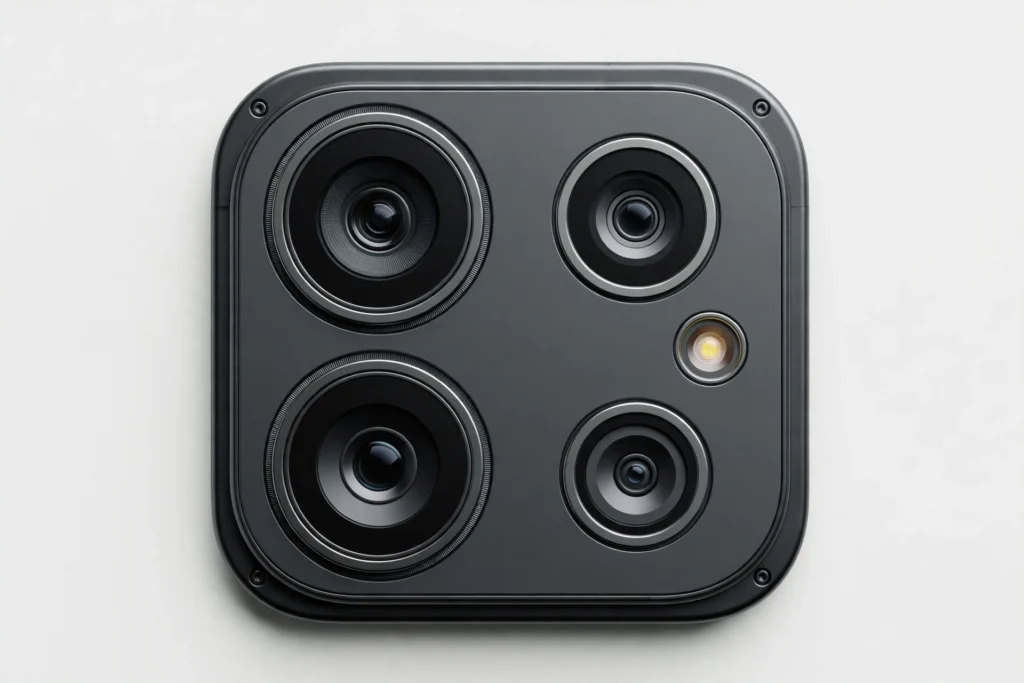
The camera story is the most misunderstood part of this phone, so it deserves a clear explanation. For several generations, OnePlus partnered with camera legend Hasselblad on color tuning and imaging features, and many buyers still associate the brand with that partnership — but the OnePlus 15 ends it. OnePlus replaced Hasselblad tuning with its own in-house Lumo imaging engine, which means the familiar Hasselblad name and its exclusive shooting features are gone, even though the hardware itself remains a serious triple-camera setup. That change explains why some reviewers praised the cameras while others found them inconsistent: the sensors are excellent, but the color science and processing are first-generation Lumo work rather than the mature Hasselblad-tuned pipeline of earlier models.
On hardware, the numbers are straightforward and confirmed across specification listings. The main camera is a 50-megapixel sensor with an f/1.8 aperture, a 24mm-equivalent focal length, and optical image stabilization; the telephoto is a 50-megapixel periscope unit with a 3.5x optical zoom, an f/2.8 aperture, and an 80mm-equivalent focal length, also stabilized; and the ultra-wide camera is a 50-megapixel sensor with an f/2.0 aperture, a 16mm-equivalent focal length, and a 116-degree field of view. The front camera is a 32-megapixel unit, and video recording reaches 4K at 120 frames per second with Dolby Vision support. In daylight the system produces detailed, consistent images across all three lenses, while low-light and zoom performance is where reviewers have been most divided, so buyers who prioritize photography should compare sample images before committing.
Battery and Charging
Battery life is the single best reason to buy the OnePlus 15, and it is the area where review consensus is closest to unanimous. The 7,300mAh silicon-carbon battery is dramatically larger than the cells in rival flagships from Samsung and Apple, and it delivers the kind of endurance that changes how you use a phone: reviewers have repeatedly described two-day battery life under normal use, and Tom’s Guide measured a remarkable 25 hours and 13 minutes in its standardized battery test, a record for a phone sold in the United States at the time. Silicon-carbon chemistry is what makes this possible, because it packs more energy into the same physical space than the older lithium-ion cells used in most flagships, and OnePlus claims the battery retains more than 80 percent of its health after four years of use.
Charging is nearly as impressive, with one important regional catch that buyers should understand before ordering. In China and India the phone supports 120W wired charging, while in the United States and Canada it is rated at 80W SUPERVOOC wired charging, and wireless charging is 50W AIRVOOC — but fast wireless charging requires OnePlus’s own charger, because the phone has no built-in Qi2 magnets. In practice, Tom’s Guide measured 81 percent charge in 30 minutes on the US model, which means a dead phone can be revived during a coffee break, and the combination of huge capacity plus fast top-ups removes the battery anxiety that defines most flagship ownership. Just be aware that the fastest wireless speeds need first-party accessories, and that the charger situation varies by region, so check what is in the box where you buy.
OxygenOS and Software Support
On software, the global model runs Android 16 with OnePlus’s OxygenOS 16 interface, while the Chinese model runs ColorOS 16 on the same Android base, and the experience is best described as clean, polished, and feature-rich without being heavy-handed. Reviewers have praised the interface for its speed, its sensible customization options, and its growing set of AI features, including Google Gemini integration, and the phone feels cohesive in a way that reflects years of refinement rather than a rushed launch. There are occasional quirks — some pre-installed apps, some settings buried deeper than they should be — but nothing that undermines daily use, and the overall software experience is one of the phone’s genuine strengths rather than a compromise made to hit a price.
The weakness is the length of support, and buyers should go in with their eyes open. OnePlus promises four years of Android updates for this phone, which is respectable in absolute terms but falls short of the seven years offered by Samsung and Google for their flagships, and that gap matters if you plan to keep your phone for five or six years. Security updates extend beyond the Android version upgrades, but the headline comparison is unavoidable: a phone bought in 2026 will stop receiving major Android versions sooner than its biggest rivals. For buyers who upgrade every two or three years, that is a non-issue; for long-term keepers, it is the strongest argument for choosing a Samsung or Pixel instead, and it should weigh in your decision.
OnePlus 15 vs OnePlus 13 and Rivals
Compared with the OnePlus 13, the new model is an evolution with three clear upgrades and two controversial changes. The battery jumps from 6,000mAh to 7,300mAh, the display moves from a curved 120Hz panel to a flat panel that reaches 165Hz in games, and the Snapdragon 8 Elite Gen 5 replaces the previous generation’s Snapdragon 8 Elite, while storage moves to faster UFS 4.1 — all genuine improvements that you will feel every day. On the other side of the ledger, Hasselblad tuning is gone in favor of the new Lumo engine, and the alert slider has been removed entirely, so buyers upgrading from the 13 will gain endurance and speed but lose two features that defined the OnePlus experience. Pricing softens the blow in the UK, where the entry model launched £50 cheaper than the equivalent OnePlus 13, even though prices rose slightly in India and Canada.
Against the wider market, the phone’s pitch is simple: it offers flagship speed and the best battery life in its class for less money than Samsung’s Ultra models or Apple’s Pro phones, but it asks you to accept shorter software support and a camera system that is very good rather than class-leading. Samsung’s Galaxy S series counters with seven years of updates and a more mature camera pipeline, Google’s Pixel counters with computational photography and AI features that OnePlus cannot match, and Apple counters with ecosystem lock-in that many buyers will not leave. The OnePlus 15 wins on endurance and value, competes evenly on performance and display, and loses on update longevity and camera consistency — which makes it the right choice for heavy users and gamers, and a harder sell for photography-first buyers and long-term keepers.
Should You Buy the OnePlus 15?
You should buy this phone if battery life and performance top your list of priorities, because nothing else at this price combines a 7,300mAh battery, Snapdragon 8 Elite Gen 5 speed, and a smooth 165Hz display in a single package. Heavy users, commuters, travelers, and mobile gamers will feel the benefit every single day, and the UK launch price of £849 for the 12GB/256GB model makes it hundreds of pounds cheaper than ultra-flagships that cannot match its endurance. The flat display, the IP69 rating, and the clean OxygenOS software round out a package that feels complete rather than compromised, and after almost a year on sale, the early software quirks have largely been smoothed out by updates.
You should look elsewhere if you keep phones for six or seven years, because the four-year Android update promise will run out while Samsung and Google devices are still being supported, and if photography is your top priority, the Lumo camera system — while capable — is less consistent than the best from Google, Samsung, or Apple. You should also think twice if the alert slider was a feature you used daily, because it is gone for good on this generation. For everyone else, the balance is favorable: this is a flagship that trades a little camera polish and update longevity for outstanding battery life, top-tier speed, and a fair price, and as of October 2026 it remains one of the strongest all-round Android phones you can buy.
Conclusion
The OnePlus 15 is easy to sum up: it is the endurance champion of its generation, with a battery that embarrasses every rival, performance that matches anything on the market, and a price that undercuts the ultra-flagships by a wide margin. Its weaknesses are real but narrow — a camera system finding its feet after the Hasselblad split, software support that ends sooner than Samsung’s or Google’s, and the loss of the alert slider — and none of them changes the fundamental value equation for most buyers. As of October 2026, with almost a year of sales and software updates behind it, the phone has proven itself as a reliable, fast, long-lasting flagship rather than a launch-day gamble.
If you are upgrading from an older OnePlus, the decision comes down to what you valued most about your old phone: if it was battery life and speed, this is a clear upgrade; if it was Hasselblad colors and the alert slider, you will feel their absence. If you are switching from another brand, the phone makes its case on endurance and price alone, and it is strong enough to win over anyone tired of charging by mid-afternoon. Check the current retailer price before you buy, confirm which charging speeds apply in your region, and compare camera samples if photography matters to you — but for most people, this is one of the safest flagship purchases of 2026.
When is the OnePlus 15 release date?
The handset launched in China on 27 October 2025, went on sale there on 28 October 2025, and reached global markets — including the United Kingdom, Europe, Canada, and India — on 13 November 2025, with United States sales following on 18 December 2025 after a short delay linked to certification. As of October 2026 it has been on sale for almost a year, so buyers are choosing from a mature product with established reviews and retailer discounts, rather than a pre-order gamble. If you see references to an October 2025 launch, those refer to the China debut; the global launch that matters for UK buyers is the November 2025 date.
How much will it cost in the UK?
At launch, the UK price was £849 for the 12GB/256GB model and £979 for the 16GB/512GB model, according to Tech Advisor’s launch coverage, with GSMArena listing the same tiers at £850 and £980 — a £1 rounding difference between sources that does not change the picture. That made the entry model £50 cheaper than the equivalent OnePlus 13 at its launch, although prices have since moved with retailer discounts, trade-in offers, and seasonal sales. As of October 2026, buyers should expect to pay around those launch figures or less from major retailers, and should check OnePlus’s own UK store and authorized sellers for the current price before ordering.
What chip does the OnePlus 15 use?
The phone uses Qualcomm’s Snapdragon 8 Elite Gen 5, which was Qualcomm’s flagship mobile processor at launch and remains one of the fastest smartphone chips available as of October 2026. It is paired with LPDDR5X RAM and UFS 4.1 storage, and OnePlus adds a dedicated G2 gaming chip plus an aerogel-based Glacier Cooling System to keep performance stable during long gaming sessions. In practical terms, that combination means instant app launches, smooth multitasking, and high-frame-rate gaming without the thermal throttling that holds back some thinner flagships, and it is one of the main reasons reviewers have praised the phone’s speed so consistently.
Is the OnePlus 15 better than the OnePlus 13?
Yes, in the areas that matter most to daily use: the battery grows from 6,000mAh to 7,300mAh, the display moves from a curved 120Hz panel to a flat panel reaching 165Hz in games, the chipset steps up to the Snapdragon 8 Elite Gen 5, and storage moves to faster UFS 4.1, while the UK launch price of the entry model actually fell by £50. The trade-offs are the loss of Hasselblad camera tuning, replaced by OnePlus’s own Lumo engine, and the removal of the alert slider, so buyers who loved those features may prefer to stay with the 13. For everyone else — especially heavy users and anyone frustrated by battery life — the newer model is the better phone, and the camera differences are narrowing as Lumo matures through software updates.