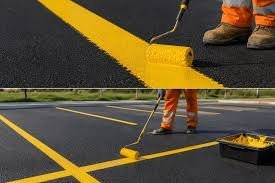
Line marking paint keeps areas organised and safe. Whether you are line marking a carpark, warehouse floor, sports field or road, your colour choice is important. You need a colour that clearly communicates your message without the need for additional signage.


Use this handy guide to learn the most commonly used line marking colours and when you should use them.
Why Do Line Marking Colours Matter?
Colour does most of the heavy lifting when it comes to communicating in a marked area. Bright yellow lines tell drivers to slow down. Solid red line means danger or no stopping allowed. White lines separate traffic lanes. When you use the correct colour, people won’t even have to think about following the rules.
Colour can also have legal and safety consequences depending on where you are line marking. There are often specific regulations around colours used in workplaces, public areas and roads. Check with your local council or governing body to see if there are any regulations you need to follow before purchasing your paint.
White: The Most Popular Line Marking Colour
As you’ve probably guessed already, white is the most popular and commonly used colour for line marking. From roads and carparks to warehouse floors and sports fields, white can be used on any surface to stand out against a dark background.
White paint is also the most inexpensive paint you can buy. This is because titanium dioxide is used as the primary pigment which provides strong opacity and bright whiteness. One coat of white paint is usually sufficient to create a crisp clean line on top of a dark surface.
Use white for:
- Road line markings to separate traffic lanes
- Parking bays in a carpark
- Lane markings on a sports field
- Walkways
Yellow: High Vis Safety Lines
Yellow is best used for warning lines and demarcating caution areas. Double yellow lines on roads are used to indicate no-stopping zones. Yellow lines on factory floors remind pedestrians to watch their step.
Yellow paint is more expensive than white paint. The cost comes from the chemicals used to produce bright, durable yellow colours. Lead-free yellows such as bismuth vanadate are 6 times more expensive than older lead chromate pigments.
However, if your primary concern is visibility then yellow is the best colour to use. Consider yellow for:
- Lines marking hazard zones or obstructions in a warehouse.
- Road line markings to indicate no-parking zones
- Danger zones around loading docks
- Separating areas designated for pedestrians only
Red: Danger and Stop Lines
Red is another attention-grabbing colour that signifies danger or stopping isn’t allowed. If you see red line markings on the road, it usually means you aren’t allowed to stop at any time.
Red line markings are used in workplaces to mark out danger zones or restricted areas. You might see red lines around fire equipment, emergency exits, or forklift-operating zones.
Red is a great colour for line marking on light surfaces and dark surfaces. Used alongside white or yellow paint, you can clearly demarcate areas with multiple meanings. Red = danger, yellow = caution.
Use red to mark:
- Fire exit routes or fire equipment storage areas
- Road line marking to indicate no stopping allowed
- Danger zones for heavy machinery
- Staff only areas or other restricted zones
Blue: Parking and Information Lines
Blue line markings are most commonly used in car parks and pedestrian areas. In most instances, blue indicates disabled parking or reserved parking spaces.
Blue is an easy-to-read colour that creates enough attention without signaling urgency.
Similar to red markings, blue is often used to provide information in industrial areas. Blue lines may highlight areas with specific instructions.
Use blue for:
- Disabled or accessible parking bays
- Reserved parking spots
- Marking out sections in a warehouse or factory
Green: Safe Areas and Paths
Similar to blue paint, green typically highlights safe areas or paths of movement. Green line markings in warehouses may designate first aid stations, emergency muster points, or safe pedestrian routes.
Green is commonly used on sports fields for marking specific areas. Different sports use green tape to mark keeping off lines, centre lines, and other team zones.
Green creates visibility without signaling drivers or pedestrians to move away from an area. It’s ideal for areas you want people to use or move towards.
Use green line marking paint to:
- Create safe walkways in a warehouse or industrial area.
- Mark first aid stations or emergency evacuation areas
- Mark specific playing fields or zones on grass sports fields.
Orange: Temporary Road Markings
Lastly, orange is used almost exclusively in traffic and construction zones. Orange temporary traffic cones are a familiar sight at roadworks. Line marking with orange is used to highlight temporary road hazards or changes to traffic flow.
As orange markings are meant to be temporary, most orange paint is either water-based or made from aerosol cans. This makes it easier to remove when the roadwork is complete.
Use orange for:
- Redirecting traffic around roadworks
- Construction site boundaries
- Temporary road hazards or obstacles
Make Sure Your Paint Matches Your Surface
Choosing the right colour isn’t the only consideration. The type of surface you plan to paint needs to be just as much as important as the colour. Asphalt, concrete and grass all require different types of paint.
Hard surfaces like asphalt and concrete require heavy-duty paint. Typically, this will either be solvent based paint or water based acrylic paint. Both types provide strong durability against traffic and weather.
Line marking paint for grass surfaces needs to be water-based and able to degrade over time. You don’t want paint ruining your turf!
Painting warehouse floors is a different beast again. These areas usually require high-build paint that can withstand chemical spills and heavy forklift use.
When buying paint, always double-check the label to ensure the paint is suitable for your area. Using the wrong type of paint can lead to poor finish, fading paint, or damage to the surface you’re painting.
Case Study: Heathrow Airport Colour-Coded Line Markings For Safety
Large airports utilise colour coded surfaces to improve safety!
Think about how many vehicles, aircraft, employees and passengers drive or walk through controlled areas every day. Organised movement is critical, and this is where visual communication makes all the difference.
Airports such as Heathrow have key colour coded line markings throughout their airside and operational facilities. These are used to manage vehicle traffic flows, designate restricted areas, separate pedestrians and increase workplace safety.
Operations at Heathrow
Ground support vehicles, baggage handlers, engineers and airport staff all share the same space. Ground markings distinguish between aircraft parking positions, equipment routes, zones where high visibility is required, and areas where entry is restricted.
They use:
- White markings for traffic routes, parking positions and general guidance lines
- Yellow to highlight caution areas and places where extra awareness is needed
- Red to mark safety restrictions
- Green to indicate safe walkways or positions.
Lesson – Colour coding line markings helps everyone focus on the task they need to do. Rather than slowing down to read signs, employees and visitors can react quickly when they understand what each colour means.
Could your workplace traffic flow benefit from colour coded surfaces?
If you manage a warehouse, factory, car park or industrial site, it’s worth considering how coloured floor markings could help your operation.
FAQ’s – Line Marking Paint Colours Explained
What is the most popular colour for line marking paint?
White line marking paint is used most frequently because it provides the best contrast against dark backgrounds. It’s ideal for road markings, parking spaces, pedestrian walkways, warehouse aisles, and basketball courts.
What does yellow line marking paint signify?
Yellow markings have a general association with caution, hazards and areas of restriction.
They are often used near loading docks, warehouse walkways, pedestrian crossings, and areas where drivers should be paying extra attention.
Industrial facilities often use yellow floor markings to highlight forklift routes and pedestrian caution areas.
What colour is used for danger areas?
Red is the universal line marking paint colour for danger areas and prohibited zones.
Expect to see red markings around:
- Fire equipment.
- Emergency exits
- No entry traffic zones
- Restricted access areas
- Dangerous machinery.
Red colour grabs our attention, which is why it’s used for danger.
What colour are disabled parking bays marked with?
Blue line marking paint is typically used to mark disabled parking spaces.
The colour blue makes them easy to spot, and they are widely recognised by drivers in most car parks.
Disabled bay regulations should be checked before painting the ground as rules may vary from state to state.
Can I use any colour paint on asphalt?
Asphalt is porous like concrete, so you still need to use paint that’s designed for outdoor use and can cope with:
- Vehicle wear
- Rainwater
- UV sunlight
- Temperature fluctuations
- Heavy foot traffic.
Colours such as white, yellow, or red may fade much quicker if the correct paint isn’t used.
What colours are used for line markings in warehouses?
Businesses usually choose a system that incorporates multiple colours. For warehouse facilities, these can include:
- Yellow line markings for forklift pathways, caution zones, hazards
- White markings for general walkways and storage room edges
- Red markings for emergency equipment and danger zones.
- Green may also be used to mark ‘safe areas’ or first aid equipment.
- Coloured floor markings are great for warehouses because they provide clear visual communication for employees.
The colour of line marking paint affects visibility, but it won’t have a huge impact on durability. How long your markings last will depend on more important factors such as paint quality and surface preparation.
The type of paint you use should depend on the application method, not colour. Water-based paints are fine for parking lots, but roads require higher traffic rated thermoplastic paints.
Line marking paint can be used on grass, but you need to use special paint. Lawn paint is usually water-based and provides a bright colour that won’t harm the grass.
Regular road paint can cause damage to grass and take a long time to wear off.
How can I choose the best colour?
When deciding which colour to use, ask yourself: Does this marking indicate safety? Direction? Restricted areas?
By understanding what you want the paint lines to achieve, you can choose the best colour. If you’re still not sure, ask yourself these questions:
What type of surface will the paint be applied to?
- Is it an indoor or outdoor area?
- How much traffic will the paint receive?
- How long do you want the markings to last?
- What equipment do you have available to apply the paint?
- Should businesses use specific line marking colour codes?
There are many situations where painted line markings should follow a set colour coding system.
Workplaces with vehicles, pedestrians, forklifts and other potential hazards should find out if their industry has guidelines for floor markings.
It’s always best to stay consistent with line marking paint colours so that employees and visitors can recognise colours and instantly understand the rules associated with them.
Final Words
Double-check your local government guidelines before purchasing your paint. There are some places that require you to use a specific colour due to council regulations or industry standards.
Using the wrong colour may confuse patrons using your parking area or facility. And, if you’re using the incorrect paint colour on public roads, you could be fined by your local council.