$500 Down on a Car No Credit Check: How These Deals Really Work, What They Cost, and What to Do Instead

What “$500 Down on a Car No Credit Check” Really Means at a Dealership
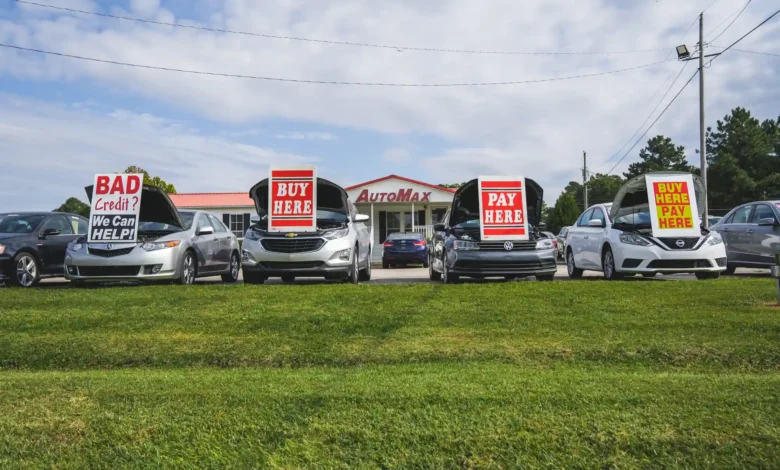
Every month, thousands of drivers with damaged credit type the same hopeful phrase into a search engine: “$500 down on a car no credit check.” The promise sounds almost too good to be true — drive off the lot today with only five hundred dollars upfront while your credit history sits quietly on the sidelines. In a narrow sense, the offer is genuine: a particular kind of dealership, known as buy-here-pay-here, really does finance vehicles in-house without pulling your traditional credit report. But that short phrase hides the second half of the story, a half written in higher interest rates, strict payment schedules, repossession clauses, and contracts that can quietly double the price of the car. This guide walks through exactly how these arrangements work, what they truly cost, the warning signs that should send you walking, and the alternatives worth exhausting before you sign anything.
The phrase itself deserves a careful translation because every word is doing marketing work. “$500 down” means five hundred dollars of your cash changes hands at signing, which lowers the amount you finance but does not lower the car’s price. “On a car” obscures the fact that these offers almost always apply to older, higher-mileage used inventory rather than anything fresh off a franchise lot. And “no credit check” means the dealer does not base its decision on a traditional credit-score review — it does not mean there is no review at all, no paperwork, and no binding contract. Understanding those three distinctions before you visit a lot is the difference between making an informed decision and signing something you will regret for the next three or four years.
The Buy-Here-Pay-Here Model Behind Most $500-Down Offers

Nearly every “$500 down on a car no credit check” advertisement traces back to the same business model: buy-here-pay-here financing. Instead of sending your application to a bank or credit union, the dealership finances the vehicle itself and collects your payments directly, often weekly or biweekly, at the store or through its own finance office. The Consumer Financial Protection Bureau describes these dealers as businesses that typically finance auto loans in-house for borrowers with no credit history or poor credit, which is precisely the audience these ads are chasing. The convenience is real — one building handles the sale, the loan decision, and the payment window — but that convenience comes bundled with pricing power that sits entirely on the dealer’s side of the desk.
Because the dealer is both the seller and the lender, it sets the vehicle price, the down payment, the interest rate, the payment schedule, and the repossession terms with very little outside discipline. The CFPB warns that interest rates on these in-house loans tend to run higher than bank or credit-union financing, which means the total amount you repay over the life of the loan climbs steeply even when the monthly figure looks manageable. Some contracts also permit the installation of GPS tracking or starter-interrupt devices that the dealer can use after a missed payment, a practice the CFPB has flagged for buyers to ask about explicitly. None of this makes every buy-here-pay-here dealer dishonest, but it does mean the contract deserves far more scrutiny than a standard bank auto loan.
What Dealers Actually Check When They Skip the Credit Score
“No credit check” is one of the most misunderstood phrases in car advertising, so it is worth stating plainly what it does and does not mean. It means the dealer will not pull your FICO score from the three major bureaus and reject you because the number is low. It does not mean the dealer hands keys to anyone who walks in with five hundred dollars. Expect to provide government-issued photo identification, proof of your current address, recent pay stubs or benefit statements, bank statements showing regular deposits, proof of insurance before the car leaves the lot, and personal or employment references. The dealer is still making a lending decision; it is simply underwriting you with current documents instead of a credit file.
The smartest way to approach this is to assemble a complete document folder before you ever test-drive anything. Gather your ID, two recent pay stubs or your benefits award letter, three months of bank statements, a utility bill or lease showing your address, your insurance card or a binder from an agent, and the names and phone numbers of several references. A dealer that reviews this folder carefully is actually doing you a favor, because it is checking whether the payment fits your real budget rather than setting you up to fail. Conversely, a dealer that waves away documentation and rushes you to the finance office is signaling that it cares more about closing the sale than about whether you can sustain the payments.
The Real Cost: APR, Fees, and the Total You Will Repay
The number that matters most in any “$500 down on a car no credit check” deal is not the down payment and not even the monthly payment — it is the total of payments, the full amount you will hand over before the title is yours. Because in-house loans carry higher annual percentage rates than conventional auto financing, a modestly priced used car can end up costing dramatically more than its sticker price once interest accrues over a three- or four-year term. A $9,000 car at a high APR can easily demand $14,000 or more in total payments, and the $500 you put down barely dents that arithmetic. Always ask the dealer to show you the amount financed, the finance charge, the APR, the number of payments, and the total of payments in writing, then do the subtraction yourself before emotion takes over.
Beyond interest, the contract can carry a second layer of cost in fees and add-on products. Documentation fees, reconditioning charges, extended service contracts, GAP coverage, theft-deterrent etching, and prepaid maintenance plans are frequently presented as standard or even required, and each one is financed at that same high rate when you roll it into the loan. The Federal Trade Commission’s longstanding advice applies perfectly here: negotiate the “out-the-door” price — the total price including taxes and fees, before financing — before you discuss monthly payments at all, and feel free to decline any add-on you did not ask for. Read the retail installment contract line by line, confirm the down payment is listed as $500, and never sign a document with blank spaces the dealer promises to “fill in later.”
Red Flags in $500-Down Ads That Should Make You Walk Away
Some “$500 down on a car no credit check” advertisements are honest descriptions of in-house financing, and others are traps dressed up as generosity. Treat any ad as suspicious if it promises guaranteed approval to literally everyone, refuses to quote an APR or total price over the phone, advertises a car at a price that seems far below market value, or pressures you to “sign today because the deal expires tonight.” Legitimate dealers can put their terms in writing without theatrics. Also be wary of lots that will not show you the federally required Buyers Guide on the vehicle’s window, which discloses whether the car is sold as-is or with a warranty — its absence suggests the dealer is comfortable skipping legal basics.
The most serious red flag is a dealer that plays games with your application itself. The FTC has taken enforcement action against dealerships that falsified customers’ income and down-payment information to push loans through, a reminder that you should always review your final financing application and confirm it shows your real income and your real $500 down payment. Never let a salesperson inflate your earnings “to help you qualify,” because that fiction becomes your legal problem the moment you sign. And if a dealer demands payment through unusual channels, adds fees you never agreed to, or becomes hostile when you ask questions, walk out — there are other lots, and no car is worth a contract built on deception.
Smarter Alternatives Worth Trying Before You Sign
Before committing to a “$500 down on a car no credit check” contract, it is worth spending a week testing options that could save you thousands. Start with your own bank or a local credit union: even with imperfect credit, a preapproval gives you a real APR to compare against the dealer’s offer, and the FTC specifically recommends shopping for financing before shopping for the car. A credit union in particular may look past a thin file when it sees steady income and a reasonable debt load. Bring that preapproval to the dealership — sometimes the dealer will beat it, and if not, you simply use your own financing and keep the negotiation focused on the car’s price.
Other alternatives deserve honest consideration too. A trusted cosigner with stronger credit can unlock dramatically better terms, though both parties should understand the shared risk. Buying a cheaper, simpler car with a larger down payment you saved over two or three months often beats financing an expensive one at a punishing rate. And timing matters: if your current vehicle still runs, delaying the purchase while you pay down a card balance or two can lift your profile enough to qualify for conventional financing. Run the total-of-payments math on each path; the “$500 down on a car no credit check” route almost never wins that comparison, which is exactly why the comparison is worth doing.
How to Protect Yourself at the Dealership
Protection at a buy-here-pay-here lot is mostly a matter of slowing down and insisting on paper. Settle the out-the-door price in writing before financing enters the conversation, so the dealer cannot quietly inflate the car’s price to offset an attractive payment quote. Arrange an independent mechanical inspection by a mechanic of your choosing — a reputable dealer will not object, and a $100 inspection can reveal thousands in hidden problems on the high-mileage inventory these lots typically carry. Read the Buyers Guide, confirm warranty terms, and get a vehicle history report so you know about accidents, title brands, and odometer issues before money changes hands.
On the financing side, ask directly whether your on-time payments will be reported to the credit bureaus, and get the answer in writing — the CFPB notes that some buy-here-pay-here dealers report only negative information like late payments, which means your perfect payment history might do nothing for your credit while one slip damages it. Clarify the late-payment grace period, the exact late fee, the repossession trigger, and whether the contract permits GPS or starter-interrupt devices. Keep a signed copy of every document, photograph the odometer and the car’s condition at delivery, and store payment receipts where you can find them. Boring paperwork discipline is the entire game.
Conclusion
A “$500 down on a car no credit check” offer is neither a scam nor a bargain by default — it is a specific financing product with a specific cost structure, and it deserves to be evaluated with a calculator rather than with hope. The honest math is that in-house dealer financing opens the door for buyers whom banks turn away, but it charges a steep toll for that access in the form of higher rates, fees, and contractual leverage that favors the dealer. Anyone considering one of these deals should walk in knowing the total of payments, the APR, the fee schedule, and the repossession terms before falling in love with the car.
The strongest position you can put yourself in is to treat the $500-down offer as your fallback rather than your first stop. Shop your financing first, compare the total cost against a bank or credit-union loan, consider a cheaper car or a short delay, and only sign the in-house contract if the numbers genuinely work within your budget. Cars are tools, not trophies, and the right deal is the one you can still afford in month thirty without dread. Do the unglamorous homework now, and the keys you drive away with will feel like freedom instead of a trap.
Frequently Asked Questions
Can I really drive away with $500 down and no credit check? Yes, it is genuinely possible through buy-here-pay-here dealerships that finance vehicles in-house without a traditional credit-score review. However, “possible” is doing a lot of work in that sentence: you will still need to show identification, proof of income and residence, insurance, and references, and you will still sign a binding retail installment contract with an interest rate, payment schedule, and repossession terms. The $500 covers only the upfront portion — the remaining balance, plus interest and fees, is financed over the loan term. Treat the advertisement as an invitation to apply, not a promise of effortless approval.
Will a $500-down no-credit-check loan help rebuild my credit? Often it will not, and this is one of the costliest misunderstandings in this corner of the market. The CFPB has noted that many buy-here-pay-here dealers report only negative information, such as late or missed payments, to the credit bureaus while never reporting your on-time payments. That means months of perfect payments may do nothing for your score while a single slip actively harms it. If rebuilding credit is part of your goal, ask the dealer — before signing — whether it reports positive payment history to all three major bureaus, and get the answer written into your contract.
What documents should I bring to a no-credit-check dealership? Arrive with a complete folder: a government-issued photo ID, proof of your current address such as a utility bill or lease, your two most recent pay stubs or a benefits award letter, three months of bank statements, proof of insurance or an insurance binder, and contact details for several personal or employment references. Some dealers also ask for proof of a working phone number. Having everything ready signals that you are a serious, organized buyer, speeds up the process, and — just as importantly — lets you spot immediately if a dealer is cutting corners on its own verification duties.
What happens if I miss a payment on a buy-here-pay-here loan? Missing a payment triggers the contract’s default provisions, which tend to be stricter than those on bank auto loans. Expect a late fee immediately, aggressive collection contact within days rather than weeks, and repossession far sooner than most borrowers imagine — some contracts allow the dealer to recover the vehicle after a single missed payment. If your contract permits a GPS tracker or starter-interrupt device, the dealer may also disable the car remotely. The practical lesson is to choose a payment amount with real breathing room in your budget and to contact the dealer the moment you foresee trouble, before the default machinery starts moving.