Cataract Surgery in Abu Dhabi: What You Need to Know Before Choosing a Specialist

Vision is one of the most essential senses we rely on every single day, yet it is also one of the most taken for granted — until something goes wrong. Cataracts, a condition in which the natural lens of the eye becomes progressively clouded, affect millions of people worldwide and are among the leading causes of preventable blindness. For residents and expatriates living in the UAE, understanding the options available for treatment is a critical step toward preserving long-term eye health. Fortunately, the region has seen remarkable growth in ophthalmic care, and patients today have access to world-class surgical expertise without needing to travel abroad.


Understanding Cataracts: More Than Just Blurry Vision
Cataracts develop gradually, often beginning as a slight blurring or dimming of vision that many people initially attribute to aging or fatigue. Over time, the clouding intensifies, making everyday tasks such as reading, driving, or recognizing faces increasingly difficult. Colors may appear faded, glare from lights can become unbearable, and night vision often deteriorates significantly. While cataracts are most commonly associated with aging, they can also result from prolonged UV exposure, diabetes, certain medications, or previous eye injuries.
The condition is not painful in the traditional sense, which is part of why many people delay seeking treatment. However, waiting too long can complicate the surgical process and, in some cases, lead to secondary complications such as glaucoma. Early consultation with an ophthalmologist is always advisable, even if surgery is not yet necessary. A specialist can monitor the progression and advise on the optimal timing for intervention.
Risk Factors That Accelerate Cataract Development
Living in a region with intense sunlight and high temperatures, as is common across the Gulf, can accelerate the development of cataracts due to increased UV radiation exposure. Wearing quality UV-protective sunglasses and wide-brimmed hats can help reduce this risk. Additionally, smoking, excessive alcohol consumption, and poorly managed blood sugar levels in diabetic patients are all known to hasten lens clouding. Awareness of these factors allows individuals to make lifestyle adjustments that may slow the progression of the condition.
The Surgical Solution: How Modern Cataract Procedures Work
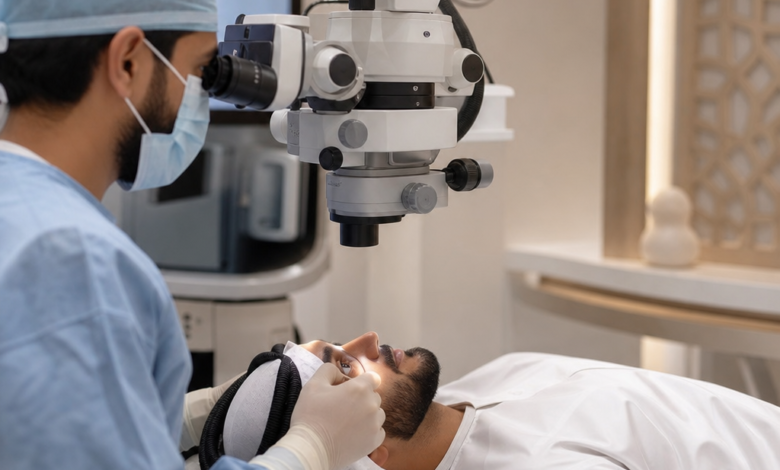
Cataract surgery is one of the most commonly performed and safest surgical procedures in the world. The standard technique used today is called phacoemulsification, in which an ultrasonic device breaks up the clouded lens into tiny fragments that are then gently suctioned out of the eye. Once the natural lens is removed, an artificial intraocular lens (IOL) is implanted in its place. This IOL is designed to restore clear vision and, depending on the type chosen, may also correct pre-existing refractive errors such as astigmatism or presbyopia.
The procedure is typically performed under local anesthesia and takes less than thirty minutes per eye. Most patients experience a dramatic improvement in vision within the first few days following surgery, with full recovery generally achieved within four to six weeks. The minimally invasive nature of modern cataract surgery means that stitches are rarely required, and the risk of serious complications is extremely low when performed by an experienced surgeon.
Choosing the Right Intraocular Lens
One of the most important decisions a patient makes before cataract surgery is selecting the appropriate IOL. Monofocal lenses correct vision at a single distance, typically for distance vision, meaning reading glasses may still be needed afterward. Multifocal and extended depth-of-focus lenses, on the other hand, are designed to provide a broader range of clear vision, potentially reducing dependence on glasses altogether. Toric lenses are specifically engineered to correct astigmatism. A thorough pre-operative assessment by a qualified ophthalmologist will help determine which lens type is best suited to each patient’s lifestyle and visual needs.
Why Location and Facility Quality Matter
Choosing where to have cataract surgery is just as important as choosing who performs it. The quality of diagnostic equipment, the sterility of the surgical environment, the availability of advanced IOL options, and the level of post-operative care all play a significant role in outcomes. Patients should look for facilities that are internationally accredited, staffed by board-certified ophthalmologists, and equipped with the latest ophthalmic technology. Transparency about pricing, surgical techniques, and expected outcomes is also a hallmark of a trustworthy provider.
It is also worth noting that systemic health conditions can influence surgical planning and recovery. Patients with vascular conditions, for instance, may require additional pre-operative evaluation. According to information provided by Stanford Health Care’s vascular and vein specialists, circulatory health can have broader implications for healing and tissue perfusion — a consideration that experienced surgical teams factor into their pre-operative assessments.
Cleveland Clinic Abu Dhabi: A Benchmark in Ophthalmic Excellence
For patients seeking a globally recognized standard of care in the UAE, Cleveland Clinic Abu Dhabi stands as one of the most respected names in the region. The institution brings together internationally trained ophthalmologists, cutting-edge surgical technology, and a patient-centered approach that prioritizes both clinical outcomes and the overall care experience. With a comprehensive ophthalmic program that covers everything from initial diagnosis to post-surgical follow-up, the facility is equipped to handle even the most complex cases with precision and expertise.
For those exploring their options, cataract surgery abu dhabi at Cleveland Clinic Abu Dhabi offers patients access to advanced phacoemulsification techniques, a wide selection of premium intraocular lenses, and a multidisciplinary team that ensures every aspect of a patient’s health is considered before, during, and after the procedure. The clinic’s reputation for clinical excellence, built on decades of global healthcare leadership, provides patients with the confidence they need when making such an important medical decision.
Preparing for Surgery and What to Expect During Recovery
Before undergoing cataract surgery, patients will typically attend one or more pre-operative appointments during which the eye is measured precisely to determine the correct IOL power. Patients are usually advised to stop wearing contact lenses for a period before these measurements are taken, as lenses can temporarily alter the shape of the cornea. Any existing medications should be disclosed to the surgical team, as some may need to be paused prior to the procedure.
Recovery is generally straightforward. Patients are advised to avoid rubbing the eye, swimming, and strenuous physical activity for several weeks. Prescription eye drops are typically used to prevent infection and reduce inflammation. Most people are able to return to light daily activities within a day or two, though driving should be avoided until the surgeon confirms that vision has stabilized sufficiently.
The Emotional Side of Vision Restoration
It is easy to focus solely on the clinical aspects of cataract surgery, but the emotional impact of restored vision should not be underestimated. Many patients describe the experience of seeing clearly again — often for the first time in years — as profoundly moving. Colors appear more vivid, faces become sharper, and the world regains a clarity that had slowly faded. This restoration of visual independence often has a meaningful effect on mental well-being, social engagement, and overall quality of life. Interestingly, discussions around physical health and aging, such as the widely noted observations about Prince Charles’s fingers, highlight how visible physical changes can prompt broader conversations about health awareness and the importance of seeking timely medical advice.
Conclusion: Taking the First Step Toward Clearer Vision
Cataracts are a manageable condition, and with the right surgical team and facility, the path to restored vision is well within reach. Whether you are in the early stages of noticing visual changes or have been living with significant impairment for some time, the most important step is to seek a professional evaluation. The advances in modern ophthalmic surgery mean that outcomes are better than ever, and the procedure itself has become remarkably safe and efficient. For those in the UAE, world-class care is closer than many realize — and taking that first appointment could mark the beginning of seeing life in a whole new light.