Boiler Warning Signs Every UK Homeowner Should Know Before Winter Arrives

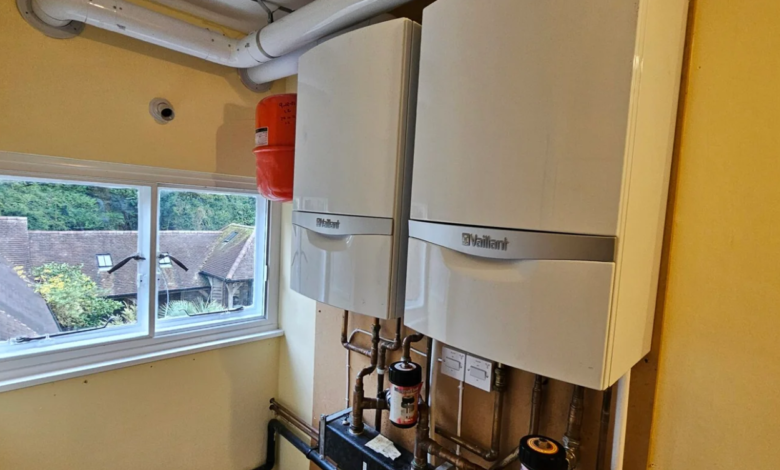
Most of us only think about the boiler when it stops working, and it almost always chooses its moment badly: the coldest morning of the year, ten minutes before the school run, or the weekend the in-laws arrive. Yet boilers very rarely fail without warning. They tend to drop hints for months beforehand, in the form of a pressure gauge that keeps sliding, an unfamiliar noise from the airing cupboard, or an energy bill that creeps upward for no reason you can put your finger on.Learning to read those hints is one of the more genuinely useful pieces of home maintenance knowledge a UK homeowner can pick up. It turns an emergency into a planned decision, and a planned decision is almost always the cheaper one.


How long should a boiler actually last?
A modern condensing boiler that has been serviced annually will usually give somewhere between ten and fifteen years of dependable service. Plenty carry on well past that mark. Others give up sooner, and when they do the cause is nearly always one of three things: the system was never flushed properly, the boiler was the wrong size for the property, or it simply went years without being looked at.
Age on its own is not a reason to replace anything. A twelve-year-old boiler that fires reliably, holds pressure and heats the house evenly is doing its job. But once a boiler passes the decade mark, the arithmetic starts to shift. Repairs cost more, parts get scarcer, and every pound spent patching an inefficient appliance is a pound not spent on one that would cut your running costs.
Seven signs your boiler is trying to tell you something
1. Your heating bills are climbing but your habits have not changed
This is the most commonly ignored signal, largely because energy prices move around enough to disguise it. Modern condensing boilers turn well over ninety per cent of the fuel they burn into usable heat. Older non-condensing models often manage only around two thirds, with the rest disappearing up the flue. If your consumption in kilowatt hours has risen year on year while your household routine has stayed the same, the boiler is the first place to look.
2. Repairs have become a recurring line in your budget
A useful rule of thumb: two callouts in a single heating season is the point at which repair stops being the sensible option. Individually each bill feels manageable, which is exactly the trap. Add up what you have spent over three winters and compare it with the cost of a properly specified replacement, and the picture often looks very different.
3. Parts are getting harder to find
Manufacturers only support discontinued models for a limited period. Once a heat exchanger or printed circuit board has to be tracked down through specialist suppliers, you are looking at longer waits and higher prices every time something goes wrong. If your engineer has started using phrases like “if I can get hold of one”, treat it as a countdown.
4. It has started making noises it never used to make
Banging, gurgling or a rumble like a kettle coming to the boil is known in the trade as kettling. It is usually caused by limescale or corrosion debris building up on the heat exchanger, restricting water flow so that small pockets overheat. Households across much of the South East and East of England sit in hard water areas, which makes this a particularly common complaint. Caught early it is often fixable. Left alone, it shortens the life of the boiler considerably.
5. Radiators are slow to warm up or have cold patches
Where the cold spot sits tells you a great deal. Cold across the top of a radiator usually means trapped air, and bleeding it will sort the problem out in minutes. Cold along the bottom points to sludge, a build up of corrosion products that settles in the lower part of the radiator and blocks circulation. Sludge is a system problem rather than a boiler problem, and a power flush will often restore performance without any need to replace the appliance.
6. The pressure keeps dropping
Topping up a sealed system once or twice a year is normal. Doing it every few weeks is not. Persistent pressure loss usually means either a leak somewhere in the pipework or an expansion vessel that has lost its charge. Neither will fix itself, and both get more expensive the longer they are ignored.
7. Anything that looks like a safety concern
This one is not a maintenance question, it is an urgent one. A gas flame should burn crisp and blue. A lazy yellow or orange flame, black or sooty marks on the boiler casing, or unusual condensation on nearby windows can all indicate incomplete combustion. So can headaches, dizziness or nausea that ease when you leave the house.
If you suspect carbon monoxide, stop using the appliance, open windows, get everyone out and call the National Gas Emergency Service on 0800 111 999. Every home with a gas appliance should also have an audible carbon monoxide alarm fitted, and it costs very little to put that right if yours does not.
Repair or replace: making the call
There is no single formula, but a few questions will get you most of the way there. How old is the boiler, and how much longer would you realistically expect it to run? What has it cost you in repairs over the past three years? Is the quoted repair a minor component or a major one such as the heat exchanger? And how long do you plan to stay in the property?
If the boiler is under eight years old and the fault is a discrete component, repair is almost always the right answer. If it is past twelve, the repair is substantial, and your bills have been rising, replacement usually wins on both cost and comfort.
The most valuable thing here is an engineer who will tell you honestly when a repair still makes sense rather than reaching straight for the sales pitch. Established local firms such as Plumb Heating Ltd, which covers Hemel Hempstead and the surrounding Hertfordshire towns, will carry out a free survey and set out both options before you commit to anything. A quote produced without someone actually looking at your system, your pipework and your hot water demand is a guess dressed up as a number.
Choosing the right type of boiler, not just the right brand
Most UK homes run one of three configurations. A combi heats water on demand, takes up the least space and suits smaller properties with one bathroom. A system boiler works alongside a hot water cylinder and copes far better with two or more bathrooms drawing at once. A conventional or regular boiler uses both a cylinder and a feed tank in the loft, and is still the practical choice in some older homes with low mains pressure.
Sizing matters more than most homeowners realise, and getting it wrong in either direction causes problems. An undersized boiler will struggle on cold days. An oversized one short cycles, switching on and off repeatedly, which wastes fuel and wears the components out faster. Output should be calculated from the heat loss of your property and your actual hot water demand, not simply matched to whatever was there before.
The installation matters as much as the boiler
It is worth saying plainly: a premium boiler fitted badly will perform worse than a mid range one fitted properly. The appliance is only part of what you are buying.
A thorough new boiler installation Hemel Hempstead should include a proper survey before any quote is issued, a fixed price agreed in writing with no open ended extras, a system flush or the fitting of a magnetic filter to protect the new unit from existing debris, correctly specified controls, and full commissioning with the paperwork to match. That documentation is not bureaucracy. You will need the Benchmark certificate to validate the manufacturer warranty, and it is one of the first things a buyer’s solicitor asks for when you come to sell.
All gas work must be carried out by an engineer on the Gas Safe Register, and you are entitled to ask to see the card. Check that the categories listed on the back actually cover the work being done, because registration is specific to appliance type rather than blanket approval.
Do it in spring, not in January
If you have concluded that replacement is coming, the timing is largely within your control, and warmer months are the moment to act. Engineers have more availability, lead times are shorter, and you are not making a five figure decision under pressure with a cold house and three quotes you have not had time to compare.
Ask any heating firm which weeks of the year they are busiest and the answer will be the first genuine cold snap. That is precisely when homeowners pay a premium for whatever can be fitted fastest, rather than what is right for the property.
The short version
- Book an annual service, and keep the records. It protects your warranty and catches faults early.
- Watch your pressure gauge and your consumption figures rather than only your monthly bill.
- Two repairs in one winter is the signal to price up a replacement.
- Fit a carbon monoxide alarm, and treat any yellow flame or sooty marking as urgent.
- Get more than one quote, and be wary of any figure produced without a site visit.
- Plan the work for spring or summer if you possibly can.
A boiler is one of the few pieces of equipment in a house that quietly determines both your comfort and a significant share of your running costs. Paying a little attention to what it is telling you, well before it fails, is usually the difference between a scheduled upgrade and a very expensive emergency.