Understanding what does asbestos tile look like requires a balance between historical knowledge and careful visual observation. Many vintage properties across the United Kingdom feature durable vinyl or asphalt floor coverings installed during mid-century renovations. Identifying these materials helps homeowners make informed decisions before beginning any structural alterations or decorative updates, ensuring safety remains paramount.

Microscopic mineral fibers were blended directly into plastic, rubber, and binder materials, making pure visual identification somewhat tricky for untrained eyes. Homeowners asking what does asbestos tile look like must evaluate physical dimensions, color patterns, and age indicators rather than searching for raw fibers. Intact flooring materials generally present very low health risks when left completely undisturbed in residential environments.
Key Physical Indicators: Size, Thickness, and Dimensions
The most famous physical clue for anyone wondering what does asbestos tile look like is the classic nine-inch square shape. These specific imperial measurements were exceptionally popular across British housing developments during the fifties, sixties, and seventies. Modern floor tiles rarely match these exact dimensions, making nine-inch squares a reliable starting warning sign for property owners.
In addition to smaller nine-inch squares, twelve-inch options and thicker asphalt variants were regularly fitted in commercial and domestic settings throughout Britain. Older asbestos-containing products typically appear noticeably thicker, denser, and far more rigid than lightweight modern sheet vinyl. Measuring suspect tiles with a standard ruler provides immediate clues regarding their probable era of manufacture and potential risks.
Visual Characteristics: Colours, Patterns, and Surface Finish
Examining surface decoration helps clarify what does asbestos tile look like under normal room lighting conditions within vintage homes. Popular mid-century color schemes included earthy terracottas, muted greys, creamy beiges, deep greens, and dusty blues. These muted shades reflected popular interior design preferences found throughout classic post-war British residential properties across urban and rural locations.
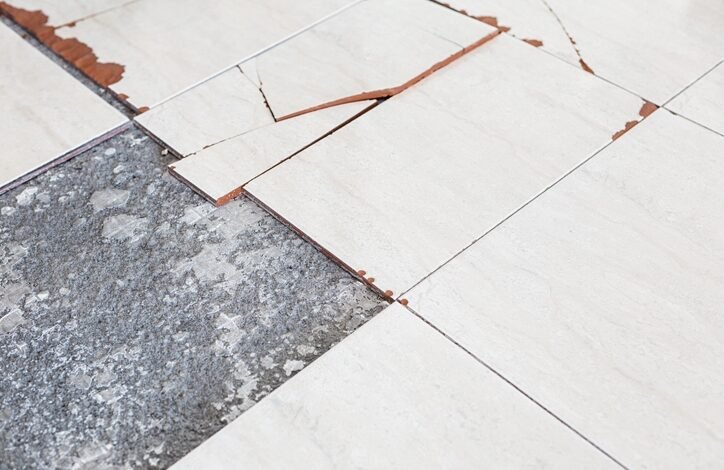
Beyond solid colors, these flooring materials frequently feature distinctive marbled, streaked, or speckled surface patterns designed cleverely to disguise daily wear. Over decades of foot traffic, asphalt and vinyl compounds age, creating a slightly oily, discolored, or chalky finish. Recognizing these faded marbled aesthetics helps homeowners identify suspect flooring materials hidden under modern coverings.
What Lies Beneath: Black Mastic Adhesive & Underlayment
Determining what does asbestos tile look like involves inspecting the subfloor adhesive hidden directly beneath the main tile layer. A thick, dark, tar-like substance known as bitumen mastic was universally applied to secure tiles onto concrete subfloors. This underlying black adhesive very frequently contains chrysotile fibers, even when top tiles do not contain any dangerous substances.
When original tiles loosen or detach over time, this dark adhesive leaves behind characteristic black grid marks across concrete bases. Anyone lifting old carpet who discovers sticky dark residues should exercise extreme caution and avoid aggressive mechanical scraping. Recognizing this distinctive black glue provides essential context when assessing total room flooring safety during initial renovation inspections.
Common Locations for Asbestos Tiles in British Properties
Knowing where to look helps answer what does asbestos tile look like within typical UK home layouts and architectural floorplans. High-traffic ground floor zones such as kitchens, utility rooms, entrance hallways, and pantries frequently retain these durable historical coverings. Their waterproof qualities made them ideal choices for areas exposed to constant foot traffic and everyday household moisture.
Secondary structures like enclosed porches, integral garages, cellars, and under-stairs storage cupboards often feature original vintage floor coverings. Public council housing, historic school buildings, and church halls built prior to late nineties regulations also contain extensive installations. Checking these specific spaces usually reveals intact vintage tiles hiding beneath modern carpets or floating laminate floors.
Safe Inspection Protocol: How to Check Without Disturbing
Homeowners investigating what does asbestos tile look like must prioritize safe inspection practices above all other renovation concerns. Intact, undamaged tiles bound securely in synthetic matrices pose minimal immediate health risks to building occupants during routine daily use. Conducting a purely visual check without lifting, chipping, or drilling ensures dangerous airborne dust remains unreleased.
Power tools, aggressive sanding equipment, scrapers, and stiff wire brushes must never be used on suspect historical materials. Accidental friction breaks the protective synthetic matrix, releasing microscopic mineral dust directly into indoor living spaces and ventilation. Simply taking clear photographs and noting down tile dimensions ensures full safety during preliminary home assessments.
Definitive Identification: Testing and Professional Assessment
While learning what does asbestos tile look like provides valuable context, laboratory testing remains the sole definitive identification method available. Certified technicians analyze tiny material samples under specialized polarized light microscopes to confirm fiber presence precisely and safely. Relying exclusively on sight can lead to false assumptions or unnecessary financial anxiety for property owners.
Homeowners can utilize UKAS-approved home sampling kits or hire qualified asbestos surveyors to assess suspect areas safely and thoroughly. Surveyors provide detailed reports outlining material conditions alongside practical management or encapsulation recommendations for long-term safety. Obtaining professional testing guarantees total peace of mind before starting major home renovation or extension projects.
Conclusion
Recognizing what does asbestos tile look like comes down to spotting nine-inch imperial dimensions, marbled color palettes, and underlying black bitumen adhesive. While these visual clues offer strong indications, intact materials remain safe when properly managed and left untouched. Seeking UKAS-accredited professional advice ensures your home improvements proceed safely, smoothly, and in full compliance with environmental health standards.
Frequently Asked Questions
Can you tell if a floor tile has asbestos just by looking at it?
Visual checks offer helpful clues like nine-inch dimensions or marbled patterns, but microscopic fibers remain completely invisible to the naked eye. Only UKAS-accredited laboratory testing provides total confirmation regarding asbestos content within older flooring materials.
When were asbestos floor tiles banned in the UK?
Importation and use of chrysotile asbestos were progressively restricted until a total UK ban was officially established in November 1999. Properties constructed or renovated after this date do not contain asbestos floor tiles or associated adhesive products.
Is black tile adhesive under vinyl floors always asbestos?
Thick black bitumen mastic used beneath vintage tiles very frequently contains chrysotile asbestos fibers within its formulation. Any dark tar-like residue found beneath older flooring should be treated as suspect until tested professionally by qualified surveyors.
Is it safe to walk on undamaged asbestos floor tiles?
Undamaged, non-friable floor tiles hold fibers tightly inside the synthetic binder matrix during normal use. Walking on intact, sealed tiles poses negligible health risks provided the surface is not broken, sanded, scraped, or drilled into.
Can I lay new flooring over existing asbestos tiles?
Laying new floating laminate, engineered wood, or luxury vinyl directly over intact, flat asbestos tiles is common practice in the UK. This encapsulation method seals the old material safely without creating hazardous airborne dust through unnecessary physical removal.
You may also read: Key Factors Influencing Your Total Installation Cost