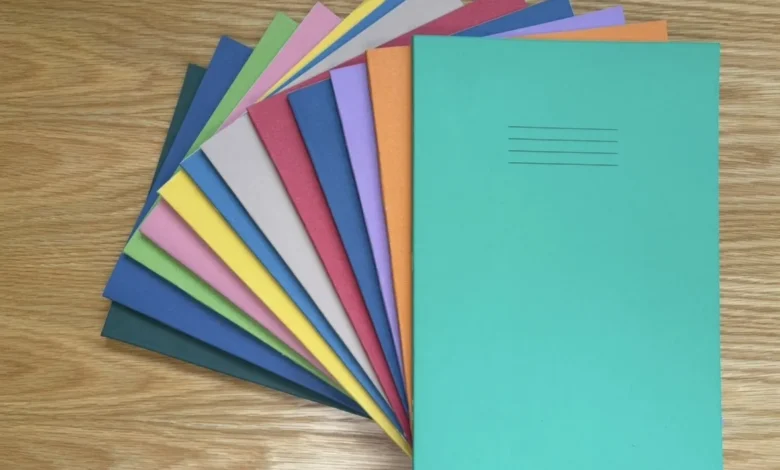
Exercise books are used in almost every lesson throughout the school year. Whether pupils are practising spelling in primary school, solving mathematical problems or completing science experiments, these books provide a permanent record of learning and progress. Although they are one of the most common classroom resources, the quality of exercise books can have a real impact on how pupils learn and how teachers manage their classrooms.


For schools working within tight budgets, it can be tempting to focus only on price when ordering stationery. However, choosing durable, well-made exercise books often delivers better value in the long term. Better quality books last longer, improve classroom organisation and help pupils take greater pride in their work.
Why Exercise Books Are Still Essential in Modern Classrooms
Digital technology has become an important part of education, but written work remains a key element of learning across UK schools. Exercise books provide pupils with a structured place to complete classwork, record teacher feedback and revise previous topics.
When schools are reviewing their classroom stationery requirements, products such as school exercise books continue to be one of the most important resources to purchase. They are used across almost every subject and support pupil from the beginning of primary education through to GCSEs and beyond.
Because exercise books are handled every day, schools should look for products that offer the right balance of quality, durability and value for money.
Supporting Better Presentation
Presentation is an important part of classroom learning. When pupils are encouraged to keep their work neat and organised, they often develop habits that benefit them throughout their education.
A good quality exercise book makes this easier by providing:
- Clearly ruled pages.
- Strong covers that remain in good condition.
- Secure binding that keeps pages together.
- Paper that supports everyday writing.
Teachers regularly encourage pupils to date their work, write lesson titles and present their notes clearly. A well-made exercise book provides a consistent format that supports these expectations throughout the academic year.
Books that remain tidy also become useful revision resources, allowing pupils to find previous work quickly when preparing for assessments.
Helping Teachers Manage Their Classrooms
Reliable classroom resources help lessons run more smoothly.
When every pupil uses the same style of exercise book, teachers can establish consistent routines from the beginning of the school year. Books are easier to collect, marking becomes more efficient and pupils know exactly where to record their work.
Many schools also introduce simple systems that improve organisation, including:
- Colour coding books by subject.
- Using standard presentation rules.
- Labelling books clearly.
- Completing regular book checks.
- Keeping classroom storage organised.
These routines save valuable lesson time and help pupils develop responsibility for their own learning.
Better Quality Books Last Longer
Exercise books receive a great deal of daily use. They are carried between classrooms, placed inside school bags and handled by both teachers and pupils throughout the week.
Books with weak covers or poor binding often become damaged before the end of the school year. Torn pages, loose bindings and bent covers can make them difficult to use and reduce their overall lifespan.
Investing in better quality exercise books offers several advantages:
- Increased durability.
- Better protection for written work.
- Fewer replacements during the year.
- Improved appearance throughout the term.
- Better value over time.
Although the initial purchase price may be slightly higher, stronger products often reduce long-term costs by lasting significantly longer.
Different Subjects Have Different Requirements
Not every lesson requires the same type of exercise book.
English lessons usually involve extended writing, while mathematics often requires squared pages for calculations. Science lessons regularly combine written observations with diagrams, and geography may include maps and tables.
Choosing exercise books that suit each subject allows pupils to complete their work more effectively.
Schools should also consider the age of their pupils. Younger children often benefit from larger pages that support handwriting development, while older pupils may require books that provide enough space for detailed coursework and revision notes.
Selecting suitable exercise books for each department helps teachers deliver lessons more efficiently.
Supporting Learning Beyond the Classroom
Exercise books are not only used during lessons. Many pupils take them home to complete homework, revise for examinations or catch up on missed work.
A durable exercise book keeps notes organised throughout the year, making revision much easier.
Instead of searching through loose worksheets, pupils can quickly find previous lessons, teacher comments and completed exercises in one place.
Parents also benefit from exercise books because they provide a clear record of what their children have been learning at school.
This makes it easier to support homework and discuss progress outside the classroom.
Choosing a Reliable Education Supplier
Schools purchase classroom resources throughout the year, so reliability is just as important as product quality.
Working with a specialist education supplier allows schools to source products that are designed specifically for classroom use.
In Class Tomorrow supplies schools, academies and teachers across the UK with classroom stationery and educational resources that support everyday teaching. Choosing a supplier that understands the education sector helps schools source dependable products while simplifying procurement.
Reliable suppliers also make it easier to place repeat orders if additional stock is needed during the academic year.
Planning Purchases for Better Value
Ordering exercise books should form part of a wider purchasing strategy.
Schools that plan ahead often benefit from:
- Better stock availability.
- Simpler budget management.
- Reduced emergency orders.
- Consistent products across departments.
- Improved value from bulk purchasing.
Reviewing previous years’ usage can also help schools estimate how many exercise books will be required for each year group and subject.
Keeping a small reserve of stock ensures new pupils and replacement books can be provided without disrupting lessons.
Creating a Positive Learning Environment
The classroom environment influences how pupils approach their work.
When pupils receive good quality learning resources, they are more likely to value them and take pride in the work they produce. Exercise books that remain clean, organised and easy to use encourage better presentation and reinforce positive classroom routines.
Teachers also benefit from working with resources that support consistent lesson delivery throughout the year. Reliable exercise books reduce interruptions caused by damaged stationery and allow more time to be spent on teaching.
Although exercise books are one of the simplest items found in schools, they remain one of the most important. They provide a record of progress, support assessment and help pupils build good organisational habits from an early age.
By investing in high quality exercise books, schools can create classrooms that are better organised, easier to manage and more focused on learning. Choosing durable products from trusted education suppliers ensures pupils have reliable resources that will support their education throughout the entire academic year while also providing excellent long-term value for school budgets.