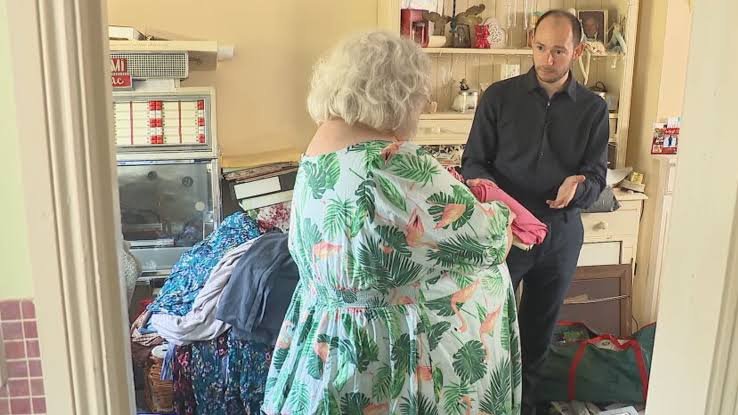
Three Million UK Adults May Be Living With Hoarding Disorder
For a long time, hoarding has been packaged as entertainment. Television shows turned overflowing homes into a spectacle and the people inside them into curiosities. The truth is far less comfortable.


Hoarding disorder is a recognised mental health condition, and it touches more lives than most people would guess. Follow along as we look at what’s actually driving it, the risks that build up behind closed doors, and where to turn for proper support.
Hoarding Finally Reached the Floor of the Commons
On 22 October 2025, hoarding and mental health were debated on the Floor of the House of Commons for the first time. The debate was led by Paulette Hamilton, MP for Birmingham Erdington and a former district nurse, who described walking into homes where extreme clutter wasn’t an oddity but a visible sign of deep, unmet need. For a problem that affects so many people, it had stayed out of public view for a long time.
Figures cited in the debate put hoarding disorder at 2-5% of the population, which works out at roughly 1.2 to 3 million people in Britain. BBC reporting on the debate has put the upper estimate higher still, at around four million. According to HoardingUK, only around 5% of people who hoard ever come to the attention of professional services.
That gap is the real problem. It leaves the vast majority coping alone, often in silence, while the situation in their homes slowly gets worse. The cost lands on families, the NHS, housing providers and emergency services, usually at the point of crisis instead of early on when help would do the most good.
What Pushes Someone to Hold On to Everything
Hoarding is rarely about laziness or a love of clutter. It usually grows out of something painful. Trauma, grief and anxiety are common threads, and the behaviour often starts after a major loss or upheaval like bereavement, divorce or eviction. For some people, holding on to objects feels safer than letting go of a connection to the past.
Age and health play a part too. Cognitive decline can make sorting and discarding much harder, and social isolation tends to make everything worse. Many people who hoard live alone, which means there’s often no one nearby to notice the problem building until it’s severe. Around 92% of people who hoard have at least one other mental health condition, with depression, anxiety and OCD among the most common.
The objects themselves aren’t the real issue. Someone might keep stacks of newspapers, broken appliances or bags of clothes they’ll never wear, but the items are standing in for something else. Until that underlying distress is dealt with, the clutter is very hard to shift for good.
The Dangers Stack Up Quietly
Left unchecked, a hoarded home becomes genuinely dangerous, and the risks tend to creep up slowly until they hit a tipping point. The main ones include:
- Fire. Stacks of paper, fabric and general clutter help flames spread fast and block escape routes.
- Structural strain. The sheer weight of stored items can damage floors and ceilings over time.
- Pest infestation. Food waste and tight gaps give rodents and insects somewhere to thrive.
- Trips and falls. Narrow pathways through a packed home are an obvious hazard, especially for older residents.
These aren’t rare outcomes. Fire crews and housing teams deal with them regularly, which is part of why MPs pushed for a proper national plan instead of leaving every council to work it out alone.
Why Support Has to Come First
Here’s the part that often gets missed. Clearing a hoarded home without dealing with the mental health side rarely works. If someone is pushed into a forced clear-out, the clutter tends to return, sometimes within months, because the reasons behind it were never touched.
The better starting point is support. A GP can assess someone and refer them on to mental health services, and Hansard described cognitive behavioural therapy (CBT) as one of the most effective treatments for hoarding disorder. Charities do a lot of the heavy lifting too. Groups such as HoardingUK and Clouds End run confidential support sessions and can help someone take the first steps at their own pace, without judgement.
When a clean-up is finally needed, the way it’s handled matters. Specialist firms like ICE Cleaning offer hoarder clearance that’s designed to work at the person’s pace, not around them.
What a Professional Clearance Actually Involves
A proper clearance doesn’t start with bin bags. It starts with a risk assessment to check for biohazards, structural problems and anything else that needs special handling. From there, the clearing is usually done in phases, which gives the person time to make decisions about what stays and what goes.
Waste is then removed and documented so it’s disposed of correctly, and the property gets a deep clean and sanitisation at the end. Done well, this leaves behind a safe home and a person who still feels some ownership over what happened. That sense of control is often what makes the change last.
Patience Works Better Than a Forced Clear-Out
Hoarding disorder has spent too long being treated as a punchline or a TV plot. The reality is millions of people living with a serious condition and very little support to draw on. The Commons debate was a sign that this might slowly start to change.
If you’re worried about someone, the kindest first move is to talk, not to tidy. Get them to a GP, point them towards a charity that understands the condition, and treat any clean-up as the last step instead of the first. Change is possible, but it tends to stick only when the person is genuinely supported through it.