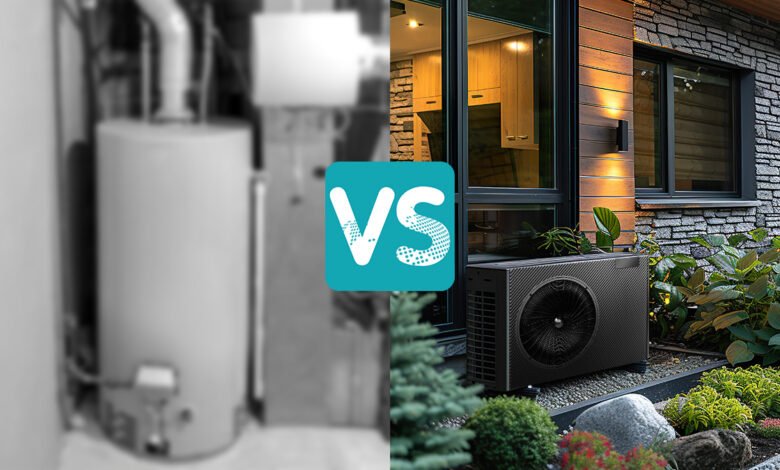


UK homeowners are deeply divided over the future of home heating. Some people swear by traditional gas systems, while others champion new air source technology. It’s true that the public discussion often becomes highly political, but the practical choice depends entirely on your specific property.
To help you figure out which side of the fence your home falls on, let’s take a closer look at how these systems work in the real world.
Home Suitability and Technical Realities
Air source heat pumps operate at lower flow temperatures than traditional systems. They work beautifully in well-insulated, modern properties that feature underfloor heating or oversized radiators. Because they distribute heat gently over a long period, they keep a tight, modern home warm without using excessive electricity.
On the flip side, they often perform poorly in draughty Victorian terraces. For these older properties, reaching a comfortable temperature requires significant additional investment in solid wall insulation and double glazing. Without these costly upgrades, you’ll find a heat pump runs inefficiently and costs a fortune. For many traditional British homes, an efficient gas boiler remains the practical choice for now.
Running Costs and Price Cap Realities
Running costs depend heavily on current Ofgem price cap rates. Electricity costs significantly more per unit than gas, which often surprises people. However, a heat pump is incredibly efficient, often converting one unit of electricity into three or four units of heat.
Data from the Energy Saving Trust shows that on a standard variable tariff, running costs for both systems sit at near parity. You can tilt the financial balance in your favour if you switch to a specialist time-of-use tariff designed for heat pumps. You can also save money by disconnecting your gas meter completely, which eliminates the daily gas standing charge from your energy bills.
Installation Disruption and Noise
Replacing an old combi boiler with a new model is usually a simple job. It typically takes a Gas Safe engineer one or two days, and the disruption to your daily life is minimal. The new unit fits in the same cupboard, and your existing pipework stays intact.
A heat pump installation is a much larger project that usually takes three to five days. Installers must place a large fan unit outside your home, fit a hot water cylinder inside, and often replace small pipes with wider ones. There is also the question of noise, which people rarely discuss honestly. While top-tier units are very quiet, the outdoor fan still produces a steady hum that you don’t want to ignore if you live close to your neighbours.
The Manufacturers Bridging the Gap
The heating market is changing rapidly as major companies invest in both technologies. Many of the best boiler brands in the UK are now the exact same names driving the transition to air source technology. They use their existing engineering infrastructure to build low-carbon alternatives.
For example, companies like Worcester Bosch and Vaillant consistently top Which? boiler reliability surveys. At the same time, these brands manufacture some of the most popular heat pumps on the market.
Most MCS-certified installers know that homeowners often choose these familiar names because they trust their long history of customer support. Buying from an established brand gives you peace of mind, whether you opt for a gas system or a low-carbon option.
The Right Heating System for Your Property
UK energy policy is moving towards low-carbon alternatives, and the government offers a £7,500 Boiler Upgrade Scheme grant to help with upfront costs. This financial support makes a heat pump much more competitive with a traditional boiler replacement. However, you don’t want to ignore the unique layout of your own property before making a final commitment.
Instead of following general trends, assess your insulation levels and speak to local engineers. If you own a modern, airtight home, a heat pump is a future-proof option that will lower your emissions. If you live in a cold, uninsulated historic property, upgrading your boiler and fixing your insulation should be your priority. Trust your building fabric to dictate your choice.