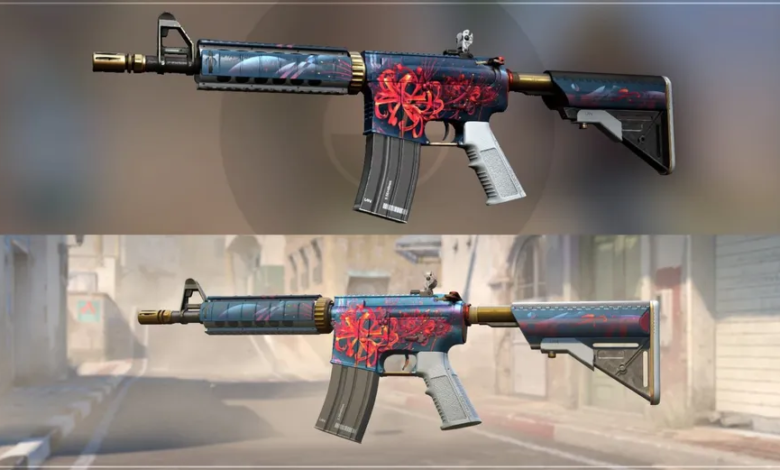
When Counter-Strike 2 replaced CS:GO in September 2023, skin trading did not disappear with the old client. The switch was a free update on the same Steam app, and every inventory carried over intact. A csgo upgrader continued to have a place because existing weapon skins remained with their owners and the skin economy moved straight into CS2. Industry trackers such as CSMarketCap and Pricempire estimate that economy in the billions of dollars, so the items feeding these tools kept their value.

Why the CSGO Upgrader Survived the Move to CS2
CS2 became available on September 27, 2023, replacing CS:GO as Valve’s active Counter-Strike game. It took over the existing app instead of launching as a separate title, so players found the new game with their old items still in place. Valve kept issuing new finishes, cases, and stickers, so the pool of tradable items kept growing. That continuity explains why “CSGO” still appears in upgrader names. The label points to where the supported skins came from. It does not mean a separate game client.
How Upgrades Work in CS2
Valve and third-party platforms handle upgrades in different ways.
Valve Contracts and Third-Party Tools
Valve’s Trade Up Contract has fixed rules. Steam Support states that players exchange 10 weapon skins of the same rarity for one skin of the next rarity up, drawn at random from the collections behind the inputs. The rarities climb from Consumer and Industrial through Mil-Spec, Restricted, Classified, and Covert. Third-party services work differently. They let you point one item at a higher-value target and show the probability before you commit, so the choice rests on the input’s value, the target’s value, and the displayed odds.
What the 2025 Update Changed
On October 23, 2025, Valve expanded Trade Up Contracts. Five StatTrak Covert items could then produce a StatTrak knife, while five regular Covert items could produce a regular knife or gloves from a represented collection. This was the first contract route to gold-tier items, which had only ever come from opening cases. Before it, Covert weapons were the top normal rarity with nothing above them to trade into. The change gave Covert skins a direct use as inputs and a fresh source of demand, so a Covert skin can now be kept, sold, or fed into a contract depending on its price and the odds.
Judging an Older Skin Before You Upgrade
Age and rarity alone do not determine an older skin’s usefulness. Float, exterior, collection, finish, StatTrak status, pattern, and demand affect its value. Float runs on a scale from 0 to 1 and sets the exterior, from Factory New to Battle-Scarred, so a low float on a clean finish can lift a common skin well above its usual price. Return also has to be weighed against risk. A more expensive target usually carries a lower chance and a larger loss, and a failed third-party attempt takes the full item staked, with no partial refund.
What to Check Before Using an Older Skin
Before using an older skin, players should review:
● Current market value
● Float and exterior
● Collection eligibility
● Rarity and StatTrak status
● Available contract or upgrade routes
A valuable skin carries more exposure than a low-cost item, so knowing its real resale value after fees shows the true amount on the line. GudDrop provides a dedicated upgrade environment where players can weigh inputs, targets, and displayed probabilities together before deciding.
Where the CSGO Upgrader Stands in CS2 Today
The csgo upgrader did not disappear when CS:GO ended. Its role shifted as legacy skins moved into CS2 and Valve expanded its contract system, and the 2025 Covert update opened a contract path from five Covert items to knives or gloves. Older skins can still hold value, but their best use depends on their characteristics, prices, mechanics, and risk. GudDrop puts the input, the target, and the displayed odds in one place, so players can compare them before committing instead of guessing.