
While thread facial lifting treatments might appear straightforward, they are much more complex in reality. Knowledge of facial anatomy, materials and their properties, patient selection, hygiene, and the recognition of adverse events are essential competencies for anyone performing these procedures. High-quality training will equip you with the skills to move away from the concept of lifting and towards a safer and more realistic treatment plan.


For anyone considering entering the world of advanced non-surgical aesthetics, enrolling in a PDO thread face lift training course can provide more than just a technique to replicate. High-quality education can improve clinical judgement, control of technique, and ability to determine whether a client is suitable for a particular treatment.
Build a Strong Foundation Before Practising
A good course should start by covering the basics. The various types of threads, what they are designed for, and how their material properties can influence their application and tissue reaction. Absorbable threads can be used to provide support, stimulate collagen production or refine facial contours. The desired result will depend on the patient’s anatomical features and the chosen technique.
Anatomy should feature prominently in any good training. You need to know about the skin layers (know more about human skin), fat pads, retaining ligaments, muscle, nerves and blood vessels that can affect outcomes and safety. Surface landmarks have their place, but they should never replace an accurate understanding of the underlying structures.
There should also be a clear explanation of the limitations of treatment. Not every patient is a candidate for thread treatment, and some patients may not be suitable where there is severe skin laxity, volume loss or medical contraindications. An honest appraisal of the situation benefits both the patient and you.
Develop Practical Skills for Every Treatment
It is only when we have applied the theory in the treatment room that it really comes alive. Good practical training should cover how to prepare the area, maintain asepsis, how to position the patient, use of instruments and assessment of symmetry.
Other important practical elements may include:
- Facial assessment and treatment planning
- Selection of products for specific tissue types and treatment aims
- Planning of entry points and controlled threading
- Achieving adequate tension without over-tightening
- Identification of asymmetry, dimpling or visibility of threads
- Documentation of the treatment and aftercare instructions
The objective is not to create the same result for every face. We must learn to adjust our approach to suit each patient and provide proportional and achievable results.
Treat Consultation and Complication Management as Core Skills
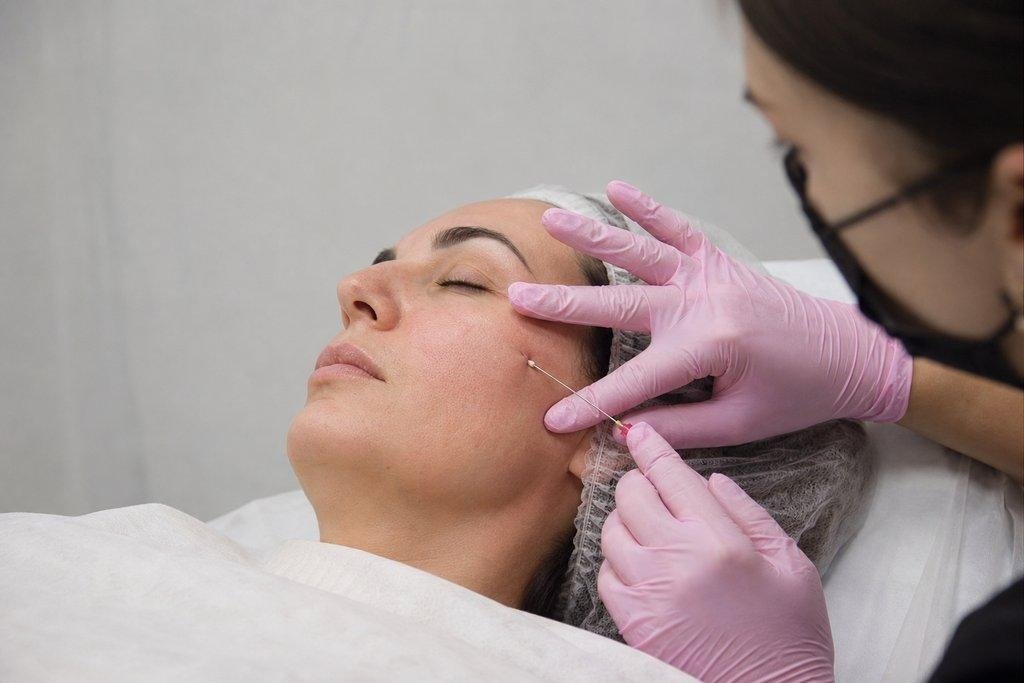
Consultation is not just a prelude to treatment. It is where we assess the expectations, suitability and risks for the patient. Patients may bring photos with them, unrealistic expectations, or a perception of downtime that needs to be addressed.
A comprehensive consultation should take into account skin quality, facial dynamics, volume loss, previous aesthetic treatments, medications and relevant medical history. Active skin infection or inflammation within the planned treatment area is a significant restriction to treatment, and we should delay treatment until the problem has resolved.
Informed consent should include potential side effects (https://www.cochranelibrary.com/cdsr/doi/10.1002/14651858.CD009445.pub2/full) such as tenderness, swelling, bruising or tightness, as well as rarer complications that require prompt intervention. The patient should also receive aftercare instructions and clear guidance on how to contact you if problems occur.
Recognise Problems and Know When to Escalate
There is no such thing as a risk-free treatment. Your training should provide you with the skills to identify potential issues as they occur, not just the ideal outcome. Pain, discolouration, unusual swelling, asymmetry or signs of infection require appropriate evaluation and escalation.
High-quality education also covers the issue of professional boundaries. You need to know when to call a doctor, when to refer on and when to avoid treating or correcting something that lies outside your training or expertise. Keep full records, including the type and lot number of products used and a record of your treatment, in case you are called upon to assist the patient.
Prior to making your decision, wait 48 hours to consider the curriculum, practical supervision, assessment and post-course support, rather than choosing based on convenience alone.
Prior to introducing thread treatments to your business, make sure your insurance, regulations and property guidelines allow you to provide these specific procedures and products. Develop a policy for product stocking, dating and traceability, and schedule a process evaluation.
A regular follow-up of healing, rather than just before and after photos, will give you a better indication of whether adjustments need to be made to patient selection or treatment in your practice, on an ongoing basis and with a larger sample size.
The training should also cover when threads should be placed in relation to other treatments. Recent dental work, injectables, energy-based treatments or scheduled surgeries can all influence the treatment plan, the recovery process and when follow-up visits should take place, which is why it is important to have a clear timeline to reduce the potential risks.
Prepare Carefully Before Treating Your First Patient
The end of the course is only the beginning of your journey. You build confidence through careful selection of cases, reflection on your experience, further study of anatomy, and appropriate mentoring, where available. The early treatments you perform should be conservative, allowing sufficient time for consultation, preparation, treatment and follow-up.
You should also stay up-to-date with changes in technique, product, and professional expectations. Safer outcomes usually come from careful planning and execution, not excessive correction.
Check Your Process Before Scheduling Treatment
Look for courses that focus on anatomy, assessment, practical skills, and management of complications, rather than those that make big promises. After you have completed the course, check your consultation form, aftercare process, emergency management plan, and treatment documentation before scheduling your first model or patient.