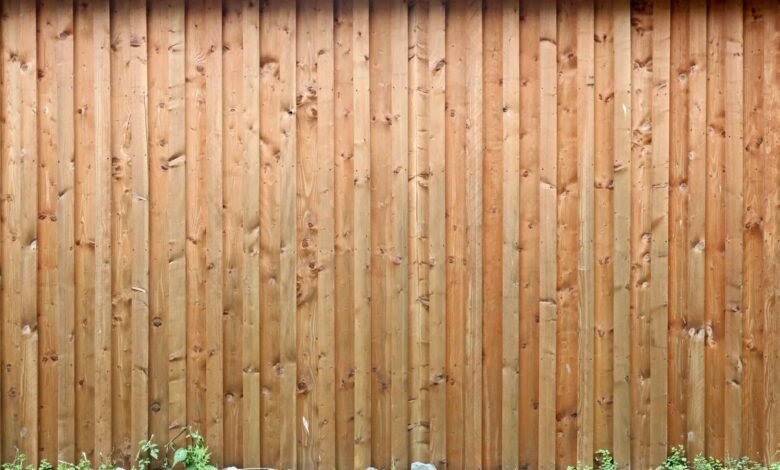
Closeboard is the strongest and longest-lasting timber fencing you can buy, built from overlapping vertical featheredge boards fixed to solid horizontal rails. It costs more than a standard lap panel and takes longer to fit, so it earns its place on exposed boundaries, security fences and any run that has to stand for decades rather than years. On a sheltered garden divide, it is often more fence than the job needs.


What makes a fence “closeboard”?
The defining feature of closeboard fencing is the vertical featheredge board, a timber board that is thicker on one edge than the other. Each board is tapered, so laying one over the edge of the next produces a dense, overlapping surface with no gaps and no way to see through. This overlap is what gives the fence its strength and its full privacy, and it is the reason closeboard is sometimes sold under the name featheredge fencing.
Behind the boards sits the structure that carries them. The featheredge boards are nailed to horizontal arris rails, triangular-section timber rails that run between the posts and take the load. A capping rail along the top shields the exposed board ends from rain, which is where rot usually starts, and a gravel board along the bottom keeps the boards clear of wet ground. Ready-made closeboard fencing panels arrive with the boards, rails and capping already assembled, so the same robust build drops in between posts instead of being nailed up on site. Put together, these parts make a fence that behaves more like a built structure than a slotted-in panel.
Closeboard vs lap panels: the real difference
Most people choosing closeboard are really deciding between it and a lap panel, so it helps to see the two side by side rather than in isolation. The short version is that lap wins on price and speed, closeboard wins on strength and lifespan, and the right choice depends on which of those matters more for the boundary in question.
| Closeboard | Lap panels | |
| Construction | Vertical featheredge boards on arris rails | Thin horizontal slats in a frame |
| Strength | High, resists wind and impact | Moderate, lighter build |
| Privacy | Full, no gaps | Full, but thinner slats |
| Lifespan | 15 to 20+ years when pressure-treated | Typically shorter |
| Cost | Higher material and labour | Low, budget option |
| Best for | Exposed, security or long-term boundaries | Everyday garden and screening fences |
The table makes the trade-off plain. If the fence sits in a windy, open position, marks a security boundary or needs to outlast the people fitting it, the extra spend on closeboard returns itself over time. If it divides two sheltered gardens and simply needs to give privacy at low cost, lap does the same visual job for less.
Ready-made panels or built board by board?
Closeboard comes in two forms, and the choice between them is as important as the material itself. You can buy pre-assembled closeboard panels that drop between posts like any other panel, or you can have the fence built on site, board by board, onto rails fixed between the posts. Each suits a different situation.
Ready-made panels are faster and cheaper to install because the assembly work is already done, and they suit level ground where a standard height is fine. The board-by-board approach costs more in labour but gives two real advantages: it follows sloping ground, because each section can step or rake to match the gradient, and it allows any height and any repair down to a single board. Where the ground moves or the run is long and exposed, building on site produces the stronger, more adaptable result. Where the ground is flat and the budget is tight, the panel version gives most of the strength for less effort.
Where closeboard is worth the money, and where it is not
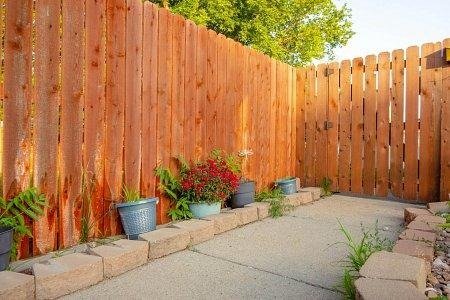
Closeboard is worth its higher cost wherever strength, security or longevity outweigh price, and it is overkill wherever they do not. Being honest about which situation you are in is the difference between a fence that justifies its cost and one that simply ties up money in a boundary that never needed it.
It earns its keep in these cases:
- Exposed and windy sites, where a lighter lap panel would flex, rattle or blow out, and the dense closeboard construction holds firm.
- Security and boundary fences, where the solid, gap-free face and robust build make the fence hard to climb or force.
- Long-term boundaries, where paying more once for a fence that lasts 15 to 20 years beats replacing a cheaper one twice in the same period.
- Sloping ground, where board-by-board closeboard follows the gradient cleanly instead of leaving triangular gaps under panels.
By contrast, a sheltered fence between two gardens, a short decorative run or a temporary boundary rarely repays the extra outlay. In those cases the money is better spent on good posts and a lap panel, or on a decorative option that suits the spot.
Fitting closeboard: posts, gravel boards and capping
Closeboard is heavy, so the posts and base matter more than with any lighter fence. The whole point of the material is longevity, and a strong fence on weak posts or sitting in wet soil throws that advantage away. Getting the supporting parts right is what turns good boards into a fence that actually lasts.
Concrete posts and concrete gravel boards give the longest-lasting result, because no timber sits in the damp ground where rot begins, and they carry the weight of the boards without movement. Timber posts give a warmer, all-wood look and suit board-by-board work where arris rails are morticed into the post, but the buried section needs proper protection. Whichever you choose, the gravel board at the base lifts the featheredge boards clear of standing water, and the capping rail along the top sheds rain off the vulnerable board ends. Those two components, top and bottom, protect the parts of the fence that fail first.
Lifespan, cost and treatment
A pressure-treated closeboard fence commonly lasts 15 to 20 years or more, which is the figure that justifies its higher price. Pressure treatment forces preservative deep into the timber rather than coating the surface, so the boards resist rot and insect attack for far longer than dip-treated wood and need little maintenance in between. For a fence meant to stand for decades, this treatment is not an upgrade to consider but the standard to insist on.
The cost sits above lap fencing on both counts, materials and labour, and board-by-board installation adds more still. Set against its lifespan, though, the sum often works out lower per year than repeatedly replacing a cheaper fence, especially on an exposed site where lighter panels fail early. The sensible way to judge closeboard is not by the upfront price of the boards but by the cost of the whole boundary spread across the years it will actually stand.