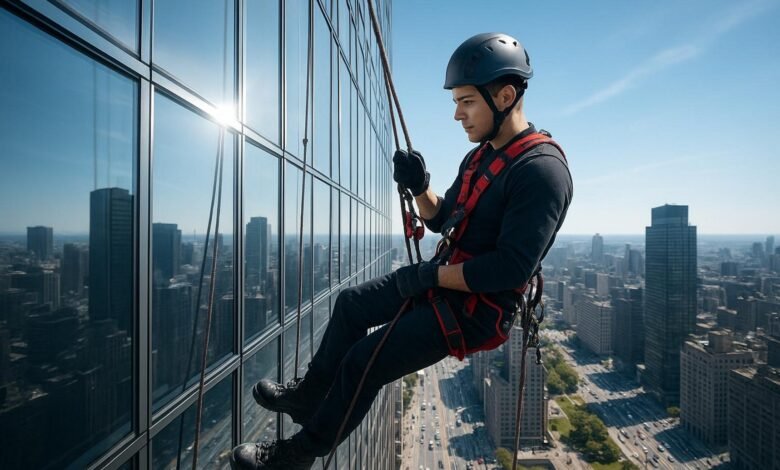
Modern buildings are often tall, detailed, and hard to reach. Keeping them safe and looking good can be difficult, especially in busy city areas. This is where rope access specialists help. They use a tightly controlled two-rope system, strong training, and clear safety rules that follow international standards. With this setup, they can work on walls, windows, and key outside parts of a building with very little disruption.


Rope access also has a lower accident rate than many older access methods. If you are looking for skilled rope access specialists Camden Town and beyond, it helps to know how they work and why their method is trusted.
Rope access is a professional way of working at height that comes from climbing and caving techniques. It lets technicians reach areas that are awkward, high, or blocked, using ropes, harnesses, and solid anchor points. Because it is flexible and quick to set up, it is used for many types of building maintenance and inspection work.
What Is Rope Access in Building Maintenance?
Rope access is a specialist method that lets trained workers reach high or tight spaces on buildings and structures without relying on large, expensive access systems. It is known for being safe, quick, and efficient for many maintenance jobs. Unlike scaffolding or heavy machines, rope access can usually be installed and removed fast, so work can start and finish sooner.
Rope access is used across many settings, from tall office towers to complex industrial sites. It is a practical way to carry out work like facade checks, window cleaning, and repairs on buildings that are very tall or have tricky design features. This flexibility makes it a popular choice for building managers who want dependable maintenance with minimal fuss.
How Rope Access Differs from Traditional Methods
Rope access is very different from common methods like scaffolding, cranes, or Building Maintenance Units (BMUs). Scaffolding can work well for some large projects, but it often takes a long time and costs a lot to put up and take down. It can also block entrances and walkways, and it can affect how a building looks and operates day to day. BMUs are complex machines that need regular checks, load tests, and certification. If a BMU fails, exterior maintenance can stop completely, and small issues can get worse while work is delayed.
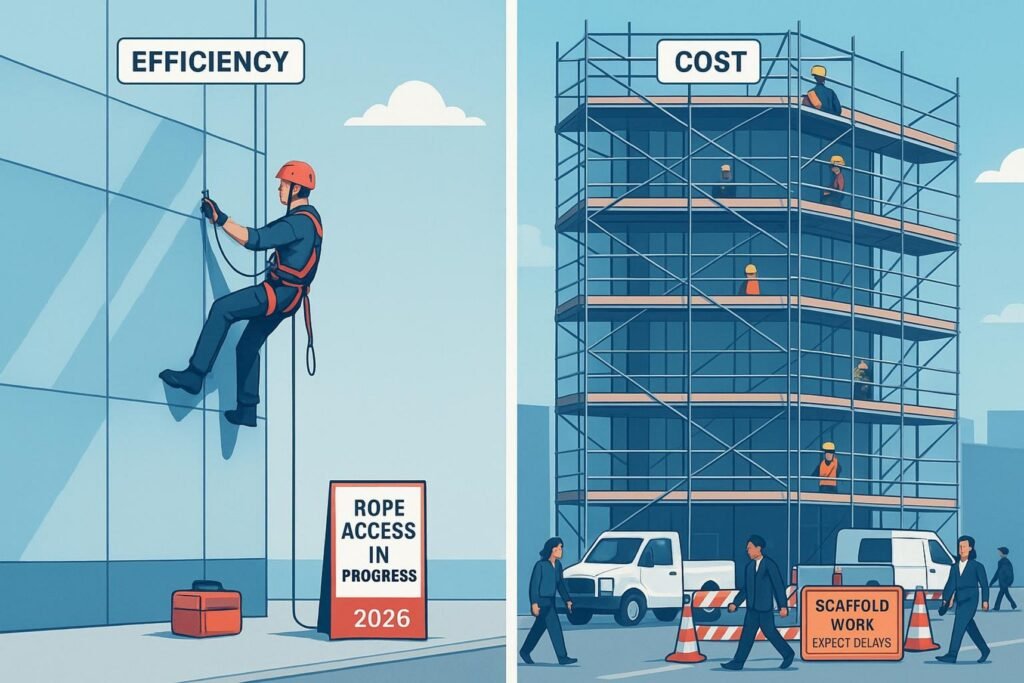
Rope access usually needs much less setup time, often a few hours rather than days or weeks. This cuts labour costs and shortens the overall job. It also takes up very little space at ground level, which helps in busy streets or buildings that are still in use. Another benefit is reach: rope access technicians can move across curved glass walls, recessed windows, and tight internal areas that machines may not be able to reach, giving wider coverage and more accurate work.
Where Rope Access Is Commonly Used
Rope access is used in many places where work at height is needed. High-rise buildings are a common example, where technicians carry out work on tall residential blocks, offices, and commercial buildings. Rope access is also widely used in industrial locations such as offshore platforms, wind turbines, and telecom towers, where other access methods may be too expensive or simply not possible.
It is also used for bridges, dams, and other large structures. Because rope access teams can arrive quickly and reach difficult points like roofs, spires, and atriums, it works well for routine visits and urgent repairs. This flexibility helps keep inspection and repair work moving safely, even on complicated structures.
Key Responsibilities of Rope Access Specialists
A rope access specialist does much more than “go up on ropes.” The job requires strong skills, careful working habits, and a serious focus on safety. Their work is guided by structured training, strict certification steps, and clear national and international safety rules.
Before work starts, specialists carry out detailed site checks. They look for hazards, choose the safest setup, and prepare a rescue plan. Each job also requires risk assessments and ongoing checks while the work is happening, to protect both the team and people in or near the building. With this approach, they can complete many tasks accurately, even in places where other access methods do not work well.
Typical Building Maintenance Tasks Performed at Height
Rope access specialists handle many building maintenance tasks. This includes high-level cleaning of windows, cladding, and roof areas, helping buildings stay presentable and reducing damage from dirt and pollution. They also carry out repairs such as sealing leaks, replacing broken panels, and fixing cracks or weather damage on building exteriors. Gutter work is also common, including clearing blocked gutters and downpipes to prevent water issues.
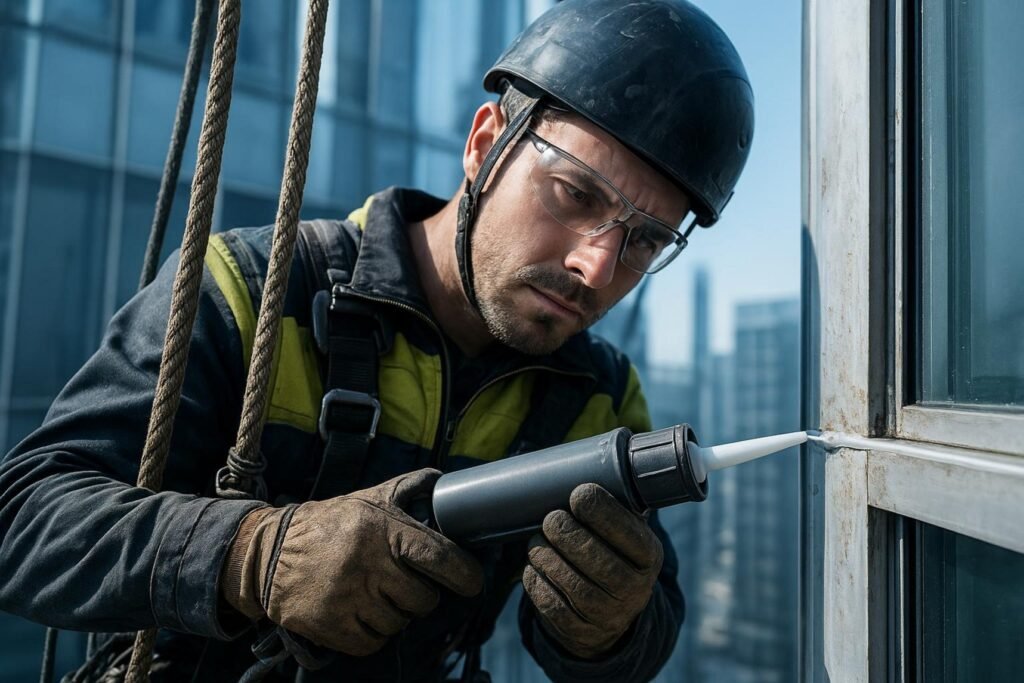
They may also install bird deterrent systems on ledges and roofs, fit signage, or attach banners and displays in high or awkward places. Because they can get close to problem areas, they can often find and fix leaks in roofs, facades, and windows quickly, stopping small faults from turning into expensive repairs.
Specialized Roles in Inspection, Cleaning, and Repair
Many rope access technicians build deeper skills in specific areas. For inspections, they carry out close-up facade and structural checks, sometimes needed for legal or insurance reasons (for example, New York’s Façade Inspection & Safety Program). Being close to the surface helps them spot small problems like fine cracks, tiny holes in sealant, or slight panel movement that may not show up from the ground or by drone. They can also map defects, measure them, and confirm what repairs are needed.
For cleaning, they use methods and cleaning products that match the surface, such as glass, metal cladding, brick, or stone. For repairs, work can include concrete fixes, sealant replacement, terracotta unit changes, and copper roof repairs. Rope access teams are supervised by a Level 3 IRATA-certified technician, who oversees safe working and can lead rescues if needed.
Common Maintenance and Inspection Services Performed with Rope Access
Rope access stands out because it supports so many different maintenance services. It helps buildings look good and stay structurally sound, even when access is difficult. This makes it a strong choice for planned maintenance, especially on buildings with hard-to-reach areas.
Facade Cleaning and High-Rise Window Washing
Looking after the outside of a building matters for appearance and long-term protection. Rope access is an efficient and accurate way to clean facades and wash high-rise windows. Technicians can clean glass, cladding, and other surfaces, removing pollution, stains from weather, and biological growth that can slowly damage materials. Rope access causes far less disruption than many older methods, which is helpful for occupied buildings and busy city streets. It also works well on unusual building shapes, curved glass walls, and large glazed areas, giving an even, clean finish.
Many owners choose Annual Maintenance Contracts (AMCs) that include regular rope access cleaning visits. This planned schedule helps prevent heavy build-up of dirt, protects facade materials, and can lower long-term costs compared to one-off callouts.
Building Facade Inspections and Surveying
Regular facade inspections support safety, compliance, and good asset management. Rope access teams can do close-up inspections that are often more useful than checks done from the ground or by drone. Technicians can examine the facade closely and spot issues like fine cracking, failed sealant, loose fixings, or water entry routes that are easy to miss from a distance.
This approach supports clear defect mapping, photos, and accurate measurements. Building managers can use this data to spot repeat issues, follow condition changes over time, and focus on higher-risk areas first. Combining inspections with cleaning visits can also improve value, because each visit covers more work without extra setup.
Repairs, Painting, and Sealant Application
Over time, building exteriors can develop cracks, surface damage, and general wear. Rope access technicians can complete targeted repairs at height, such as sealing window and facade leaks, replacing damaged panels, repairing concrete, and applying protective coatings or new paint. Since they can reach awkward areas, they can provide full coverage and a neat finish, even at very high levels.
Because rope access avoids large scaffold builds, repair work can often be completed faster and at lower cost, especially for smaller or medium-sized jobs. Whether the goal is repainting for appearance or applying sealant for waterproofing, rope access offers a flexible and accurate way to keep the building protected and reduce the chance of bigger structural problems later.
Core Rope Access Techniques and Equipment Used
Rope access works well because it combines proven movement methods with specialist equipment that is kept in excellent condition. Together, these let technicians move and work safely on vertical and horizontal surfaces. Techniques and equipment follow strict international standards to stay reliable in demanding conditions.
Key Rope Access Techniques: Ascent, Descent, and Work Positioning
Rope access is built on key movement skills. Ascent means climbing the working rope using mechanical ascenders that grip the rope and allow steady upward movement. Descent uses a descender device that controls speed and gives smooth, controlled lowering. During both ascent and descent, a separate backup device stays connected to the safety line, giving continuous fall protection.
At the work area, work positioning is important. The technician hangs from the working line while the safety line stays in place as an independent backup. By adjusting ropes and using positioning lanyards, they can keep a stable, comfortable position with both hands free for tools.
More advanced methods include Rope-to-Rope Transfers to move between anchor lines, Traversing to move sideways across a facade, and Aid Climbing to progress using fixed points on the structure, often useful in tight or complex areas. These methods are set out in the IRATA International Code of Practice (ICOP) to keep work consistent and safe.
Essential Equipment: Ropes, Harnesses, and Anchors
Rope access equipment is built for safety and performance. A key rule is the twin-rope system: each technician uses two separately anchored ropes at all times. One rope is the working line, and the other is the independent safety line. Both are usually low-stretch (static) ropes, fixed to secure, load-tested anchor points so that one failure does not lead to a fall.
Technicians wear a full-body harness with secure attachment points that spread load across the body to reduce injury risk. Main devices include descenders for controlled lowering, ascenders for climbing, and backup devices that attach to the safety line and lock automatically if a fall happens. High-strength carabiners and maillon rapides connect equipment securely. All gear must meet strict standards (including LOLER in the UK) and is checked, tested, and maintained regularly.
Rescue Operations and On-site Drills
Every rope access job must include rescue planning and readiness. Before work starts, the team prepares a rescue plan that explains how to recover an injured or unconscious technician quickly and safely. This is not treated as a “maybe”; it is a required part of each job, as set out by ICOP 2.11.11.
Teams train in assisted rescue (one technician helps another) and self-rescue. A common skill is “Pick-Off from Descent,” where a rescuer reaches and recovers a casualty who is suspended. On-site practice drills and checks help keep these skills sharp, so the team can respond quickly if something goes wrong.
How Rope Access Improves Safety in Building Maintenance
In rope access, safety is the main priority. The whole system is built around reducing risk, backed by clear rules, strong training, and equipment that adds multiple layers of protection.
Double Rope Systems: Minimizing Risk of Falls
The main safety feature in rope access is redundancy, especially the double rope setup. Each technician is connected to two separately anchored ropes: a working line and an independent safety line. If one line or device fails, the other is already in place to protect the technician. This reduces fall risk and can provide stronger protection than many traditional methods that may rely more heavily on single systems.
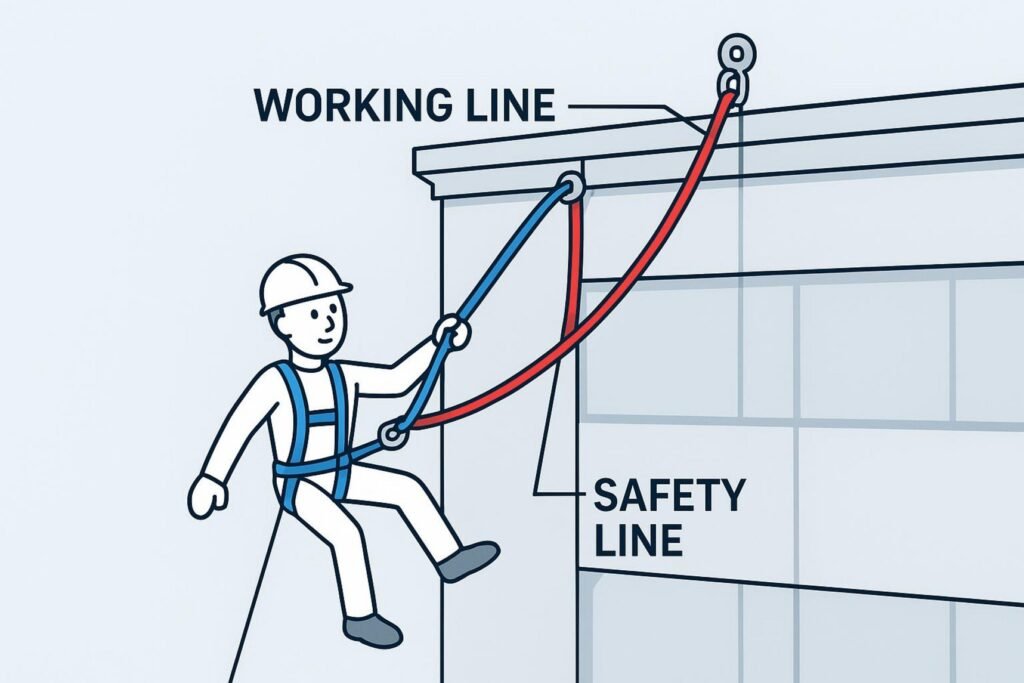
The “two points of attachment” rule is strict and is followed at all times. It gives technicians confidence to focus on the task while staying protected by a system built to handle failures safely.
Importance of Fall Arrest Devices and Backup Systems
Extra protection comes from fall arrest devices and backup systems that lock automatically if a fall or sudden drop occurs. Mobile backup devices attach to the safety line and are made to grab the rope under sudden load, stopping a fall quickly. This creates an automatic safety layer beyond the working line.
With these systems in place, even if there is equipment trouble or a mistake on the working line, the technician remains secured. This layered approach is a key part of safety for any professional rope access in London team.
Emergency Preparedness and Rescue Procedures
Emergency planning is a major part of rope access safety. Before work begins, the rescue plan is created and explained to the whole team. It covers how to recover an injured or unresponsive technician from any rope position. Rope access technicians are trained for their main tasks and also for assisted and self-rescue methods.
All work is supervised by a Level 3 IRATA-certified technician, who is trained to oversee the job and manage complex rescues. Regular drills and ongoing practice help teams carry out rescues quickly, reducing the time someone may be left hanging or in distress.
Accident Rate Comparison: Rope Access vs. Scaffolding and BMUs
Rope access also has strong safety data. Recent figures (from 2024) show rope access at about 140 reportable accidents per 100,000 full-time equivalent workers. Traditional scaffolding reports around 540 accidents per 100,000 FTE workers, which is close to four times higher.
This gap highlights how well rope access safety systems work: dual ropes, regular risk checks, strict procedures, and high training standards. Scaffolding also brings risk during build and removal, and BMUs can fail mechanically. Rope access reduces these risks through redundancy and skilled supervision, making it a safer option for many work-at-height tasks.
Training, Certification, and Standards for Safe Rope Access
Rope access safety comes from a clear training and certification system, supported by strict standards. This setup helps confirm that technicians are capable, up to date, and ready for demanding work conditions.
What Are IRATA and SPRAT Certifications?
The main global standard for rope access training and safety is set by the Industrial Rope Access Trade Association (IRATA). It began in the UK in the late 1980s to formalize safe methods based on climbing and caving. IRATA uses three certification levels: Level 1 (new technician), Level 2 (experienced technician), and Level 3 (supervisor/rescue lead). Each level needs hands-on training, practical testing, and written exams. Certification must be renewed every three years.
In North America, the Society of Professional Rope Access Technicians (SPRAT) offers a similar certification structure. Both IRATA and SPRAT are widely accepted and show that a technician has completed strict training and has the skills to work safely at height, including handling emergencies.
Ongoing Skills Development and Assessment
After certification, technicians keep improving their skills through ongoing practice and checks. The IRATA International Code of Practice (ICOP) is the main guide, covering rope systems, equipment rules, training, and rescue planning. Rope access work must follow ICOP, and technicians are checked regularly to confirm they still meet these standards.
Because certification must be renewed every three years, technicians must prove both practical ability and knowledge again. This keeps skills current and supports the industry’s strong safety record.
Legal Regulations Affecting Rope Access Work
In the UK, rope access work follows strong legal rules and British Standards that protect technicians, building occupants, and the public. The main law is the Work at Height Regulations 2005 (WAHR), which requires work at height to be planned, supervised, and done by competent people. It also requires risk assessments and choosing the safest workable method.
Other key rules include the Lifting Operations and Lifting Equipment Regulations 1998 (LOLER), covering inspection and certification of lifting equipment such as ropes and harnesses. The Provision and Use of Work Equipment Regulations 1998 (PUWER) requires equipment to be suitable, maintained, and used by trained people. British Standards like BS ISO 22846-1 and -2, BS 7985, BS 7883, and BS EN 795 also give detailed guidance on rope access systems, anchors, and safe work methods.
How to Choose a Qualified Rope Access Team for Building Maintenance
Choosing the right rope access team affects safety, speed, and work quality. It is not enough that individuals have certificates; the company should also show that it runs work properly, with strong safety management and proven standards.
What to Look for in Credentials and Experience
One of the most important things to check is IRATA accreditation (or SPRAT where relevant). There is a difference between a company that hires IRATA-certified technicians and a company that is IRATA-accredited. IRATA-accredited companies are audited by IRATA to confirm their management systems, work procedures, and safety practices meet strict international requirements. This gives stronger proof that safety is built into the whole operation, including planning and rescue readiness.
Also check the company’s experience and the types of jobs it has completed. A strong team can show it has worked on many building types and can deal with complex designs. Look for clear safety habits: detailed risk assessments, method statements, and rescue plans that match each site. The provider should also show compliance with relevant laws (such as WAHR, LOLER, and PUWER in the UK) and British Standards. Good communication, strong reporting, and the ability to manage a project from start to finish are also signs of a dependable rope access partner.
Maintaining Building Value through Safe Rope Access Practices
Adding safe rope access to a building’s maintenance plan is more than finishing a task quickly. It is a practical way to protect long-term building value. Regular exterior maintenance supports building life, occupant safety, and legal compliance, making it a key part of good building management.
Using an Annual Maintenance Contract (AMC) delivered mainly by qualified rope access specialists as part of a Building Facade Management (BFM) plan helps owners and managers act early instead of waiting for problems to grow. It also means facade work can continue even if mechanical access equipment, such as a BMU, cannot be used. Rope access can support close-up checks that feed into a structured record system. This helps teams spot defects accurately, track previous issues, and plan future spending based on real condition data, reducing the chance of small faults turning into large and expensive repairs.
Rope access also allows faster setup and less disruption, which can support more regular, focused maintenance visits. A plan built around the building’s location, use, and facade materials helps keep the exterior looking good and working properly. By following a structured and safe maintenance program, building managers meet their responsibilities for safety and compliance while also improving day-to-day efficiency and protecting property value over time.