Camping Electric Hook Up: How to Choose a Pitch With Hook-Up and What to Check Before You Book

Camping Electric Hook Up: How to Choose a Pitch With Hook-Up and What to Check Before You Book
An electric hook up pitch is a pitch on a campsite that comes with its own mains electricity supply, and choosing one is the single decision that will shape your whole camping trip more than any other. With an electric pitch, you plug your tent, campervan or caravan into a hook-up bollard and enjoy 230-volt mains power for lights, phone charging, a fridge and a kettle, while without one, you rely on batteries, gas and torchlight. The choice is not simply about comfort, because it affects what you pack, what you can cook, how long you can stay, and how much the trip costs, so it is worth thinking through properly before you book rather than leaving it to chance on arrival.
What Is an Electric Hook Up Pitch?
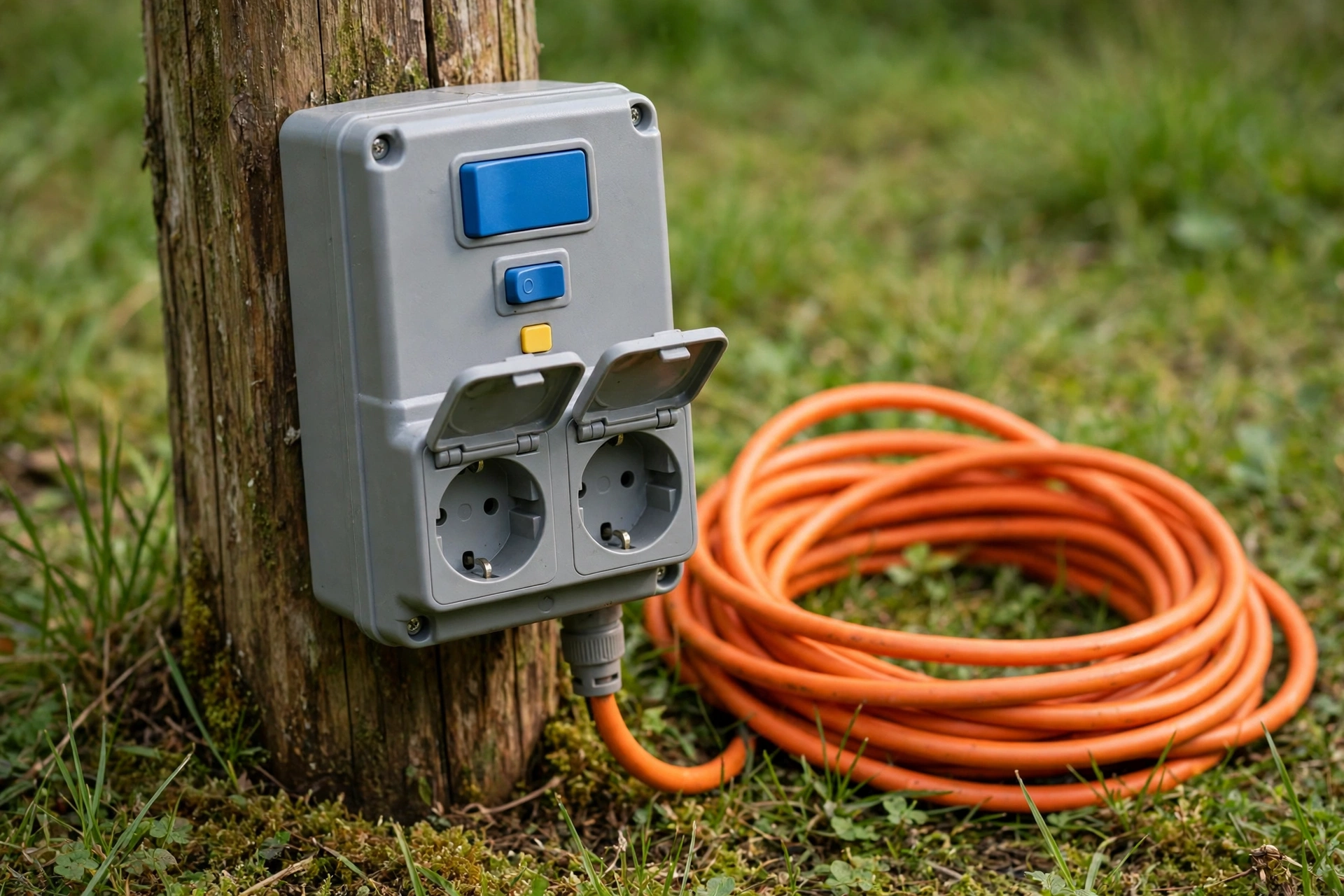
An electric hook up pitch is a marked area on a campsite that includes access to a mains electricity supply, and understanding what that means in practice will help you choose wisely. The power comes from a hook-up bollard, which is a short weatherproof post at the edge of the pitch with one or more sockets under a hinged cover, and you connect to it with a special outdoor cable that runs from the bollard to the mains inlet on your tent, campervan or caravan. Most UK sites supply the hook-up at 16 amps, which gives you roughly 3,680 watts of power, although some smaller sites still offer 10-amp supplies, so the amperage is one of the first things to check when you book.
Electric pitches are usually the most popular pitches on a campsite, and they are often larger, flatter and closer to the facilities than the non-electric grass pitches, which is part of what you are paying for. They are sometimes called hardstanding pitches when the surface is gravel or tarmac rather than grass, and that matters if you are towing a caravan or driving a motorhome, because a hardstanding pitch will not turn to mud in the rain. When you book, the site will usually ask whether you want an electric pitch and what unit you are bringing, because the pitch needs to suit the size of your tent or caravan and the length of your hook-up cable, which is normally 25 metres.
Should You Choose an Electric Pitch or a Non-Electric Pitch?
Choosing between an electric pitch and a non-electric pitch comes down to how you camp, how long you are staying, and what your family genuinely needs, and there is no single right answer for everyone. An electric pitch is the better choice if you are staying for several nights, travelling with children, running a fridge full of food, or charging phones, tablets and cameras every day, because the hook-up takes all of that off your mind and lets you enjoy the site. It is also the right choice if anyone in your party uses medical equipment that needs mains power, such as a CPAP machine, because that is a genuine need and you should tell the site when you book so they can put you on a reliable pitch.
A non-electric pitch is the better choice if you are camping for a single night in summer, travelling light with a gas stove and a torch, and happy to spend the evening by lantern light. Non-electric pitches are usually cheaper, often quieter, and sometimes in the prettiest parts of the site, because they are further from the facilities and the road, and many experienced campers prefer them for short trips precisely because they feel more like real camping. The honest way to decide is to list the things you cannot do without for the length of your stay, and if that list includes a fridge, a kettle and charged devices, book the electric pitch, while if the list is just a stove, a torch and a sleeping bag, save the money and enjoy the grass pitch.
What Should You Check Before You Book an Electric Pitch?
Before you book an electric pitch, there are a handful of questions worth asking the campsite, because the answers will tell you whether the pitch will actually suit your unit and your plans. The first question is the amperage: is the hook-up 16 amps, 10 amps, or something else, because that number decides what you can run at the same time, and a 10-amp supply will trip far more easily than a 16-amp one. The second question is the price: is the hook-up included in the pitch fee, or is it charged per night on top, and if it is charged separately, how much is it, because as of November 2026 most sites charge between £4 and £8 per night for electricity, although some include it in a single all-in price.
The third question is the pitch itself: is it hardstanding or grass, how large is it, and will your unit and awning fit comfortably, because a pitch that is too small will leave you squeezed against your neighbours. The fourth question is the location: how far is the pitch from the toilets, the showers and the children’s play area, and is it near a road that will be noisy at night, because the best pitch is rarely the one closest to the facilities. The fifth question is the rules: does the site allow awnings, barbecues and dogs on electric pitches, and is there a limit on the number of appliances you can run, because knowing the rules before you arrive saves an awkward conversation with the warden on your first evening. Organisations such as The Camping and Caravanning Club list thousands of UK sites with electric pitches and let you filter by exactly these facilities before you book.
How Do You Choose the Best Electric Pitch on a Campsite?
Choosing the best electric pitch on a campsite is a matter of balancing a few competing priorities, and the perfect pitch is the one that fits your family rather than the one that looks best on a map. Start with the hook-up bollard itself: ask for a pitch where the bollard is close to your unit’s mains inlet, because a short cable run is safer and tidier than a 25-metre lead trailing across the grass, and check that the bollard is in good condition with a cover that closes properly. Then think about the ground: a flat pitch will make sleeping, cooking and parking far more comfortable than a sloping one, and a hardstanding pitch will stay firm in the rain while a grass pitch can turn to mud after a single wet night.
Next, think about the sun and the wind, because a pitch that faces the morning sun will dry your tent quickly and warm your awning for breakfast, while a pitch sheltered by a hedge will be calmer on a windy night. Think about your neighbours too: a pitch at the end of a row gives you more privacy and more space for children to play, while a pitch in the middle of a busy field can feel crowded. Finally, think about the walk to the facilities, because a pitch that is a two-minute walk from the showers is a pleasure in the morning and a pitch that is a ten-minute walk in the rain is a chore, and if you are camping with small children or older relatives, that walk matters more than almost anything else.
What Should You Pack for Your Hook Up?
Packing for an electric hook up is mostly a matter of bringing the right cable and a few sensible accessories, and getting this list right will save you a trip to the nearest camping shop. The essential item is the EHU cable itself, which is a 25-metre outdoor-rated lead with a three-pin 16-amp plug on one end and a matching socket on the other, and you should check that it is undamaged before you leave home. Alongside the cable, pack a short mains adaptor so that you can plug ordinary household appliances into the sockets inside your tent or caravan, and a small plug-in socket tester, which confirms in seconds that the bollard is wired correctly before you connect your expensive equipment.
Beyond the electrical kit, pack low-wattage versions of the appliances you plan to use, because a camping kettle that draws 800 watts will run happily on a 16-amp hook-up while a household kettle that draws 2,000 watts will leave you with little power for anything else. A cool box or a small camping fridge is one of the best uses of a hook-up, because it keeps food safe for days without ice, and a set of LED lights will make your evenings far more pleasant than a single torch. Do not forget a torch for the walk to the bollard after dark, a cable tidy to keep the lead off the grass, and a spare fuse or two, because the smallest items are always the ones you miss most when you need them. If you are still building your kit, the Caravan and Motorhome Club has practical advice on choosing hook-up equipment and campsites with electric pitches.
What Can Go Wrong on an Electric Pitch, and How Do You Avoid It?
Several things can go wrong on an electric pitch, but almost all of them are easy to avoid once you know what to watch for, and none of them should put you off booking one. The most common problem is a tripped breaker, which happens when you try to run too many high-wattage appliances at once, such as a kettle, a fan heater and a hairdryer together, and the answer is to run only one heating appliance at a time. The second problem is a cable that is too short, which happens when the bollard is further away than you expected, and the answer is to ask for a pitch with a nearby bollard or to carry a proper outdoor extension cable that is rated for the job.
The third problem is water in the connections, which can happen if the bollard cover does not close properly or if the cable lies in a puddle, and the answer is to keep the connections raised off the ground and sheltered from rain. The fourth problem is a faulty RCD, which is the safety device that should cut the power if it detects a leak, and the answer is to test it by pressing the test button when you first connect, and to report it to the warden if it will not reset. The fifth problem is simply forgetting that the hook-up is not unlimited power: it is a generous supply, but it still has a limit, and the campers who enjoy it most are the ones who add up the watts before they switch everything on.
How Do You Make the Most of Your Electric Pitch?
Making the most of your electric pitch is about using the power wisely rather than using all of it at once, and a little planning will make the whole stay more comfortable. A camping electric hook up is at its best when you use it for the things that genuinely benefit from mains power, such as the fridge, the lights and charging devices, and use gas for the things that gas does better, such as cooking on a hob, because that spreads the load and keeps the breaker happy. Charge your devices overnight when nothing else is running, boil the kettle first thing and switch it off before you turn on the heater, and switch off lights in rooms you are not using, because small habits like these add up over a week.
Think about your evenings too, because an electric pitch lets you enjoy the hours after dark in a way that a non-electric pitch does not. A string of LED lights under the awning, a small speaker for music, and a charged tablet for a film can turn a rainy evening into one of the best parts of the trip, and none of them draws much power at all. And remember that the hook-up is also a safety net: if the weather turns and you need to dry wet clothes, a low-wattage heater or a dehumidifier can make the difference between a miserable morning and a fresh start. If you are planning a family break and want inspiration for places to stay, our guide to Trawsdir Caravan Park in Llanaber, Barmouth shows what a family and dog-friendly park with good facilities looks like.
Conclusion
Choosing a pitch with an electric hook up is one of the best decisions you can make for a family camping trip, and it is a decision that rewards a little thought before you book. Ask about the amperage, the price, the pitch size and the location, choose a flat pitch with a nearby bollard, pack the right cable and low-wattage appliances, and use the power wisely by running one heating appliance at a time. Do those things, and the hook-up will quietly take care of the lights, the fridge, the charging and the kettle, leaving you free to enjoy the campsite itself.
The real point of an electric pitch is not the electricity, but what the electricity makes possible: a warm light on a dark evening, cold food on a hot day, charged phones for photographs, and a kettle that is always ready. Those small comforts add up to a trip that everyone enjoys, including the people who were not sure about camping in the first place. So book the electric pitch, check the details before you pay, and arrive prepared, because the best camping trips are the ones where the practical things are sorted before you leave home, and the only thing left to do is enjoy being outdoors.
FAQs
What is a camping electric hook up?
A camping electric hook up, or EHU, is a mains electricity supply on a campsite pitch that lets you plug your tent, campervan or caravan into the site’s power network. You connect a special outdoor cable from a hook-up bollard on your pitch to your unit, and that gives you 230-volt mains power for lights, phone charging, a small fridge or a kettle. Most UK sites supply EHU at 16 amps as of November 2026. Once you have used a hook-up for the first time, the routine becomes second nature, and most campers say they would not go back to camping without one on a longer stay.
How much does an electric pitch cost in the UK?
An electric pitch in the UK usually costs between £4 and £8 per night on top of the basic pitch fee as of November 2026, although some sites include electricity in a single all-in price and others charge a flat rate for the whole stay. Larger holiday parks can charge more in peak season, while small farm sites may charge less, so it is always worth comparing the total price rather than the headline pitch fee alone. When you compare sites, look at the total price including electricity rather than the headline pitch fee, because a site with a cheap pitch and an expensive hook-up can cost more than a site that includes power.
Is 10 amp or 16 amp better for camping electric hook up?
A 16-amp hook up is better than a 10-amp supply, because it gives you roughly 3,680 watts of power compared with about 2,300 watts on a 10-amp pitch. A 16-amp pitch lets you run a fridge, lights and charging alongside a low-wattage kettle, while a 10-amp pitch will trip far more easily if you run two heating appliances together. Always check the amperage when you book. If you arrive at a site and discover the supply is only 10 amps, you can still camp comfortably, but you will need to be more careful about running heating appliances one at a time.
Can I use a normal extension lead for a camping electric hook up?
No, you should not use a normal indoor extension lead for a camping electric hook up, because household leads are not rated for outdoor use and can be dangerous in wet conditions. You need a proper EHU cable, which is a 25-metre outdoor-rated lead with a three-pin 16-amp plug and socket, and if you need a longer run, use an outdoor-rated extension cable designed for hook-ups rather than a domestic lead. If your cable is damaged or too short for the pitch, do not improvise with a household lead; buy or borrow a proper outdoor-rated cable before you connect anything to the bollard.
Do I need an electric pitch if I am camping in a tent?
You do not need an electric pitch if you are camping in a tent, but many tent campers find one very useful, especially on longer stays or with children. A hook-up lets you run lights, charge devices, power a small fridge and boil a kettle, which makes a big difference on a wet or cold trip. For a single night in summer with a gas stove and a torch, a cheaper non-electric pitch may be all you need. A hook-up is also worth booking if anyone in your party uses medical equipment that needs mains power, because that is a genuine need rather than a luxury, and you should tell the site when you book.


