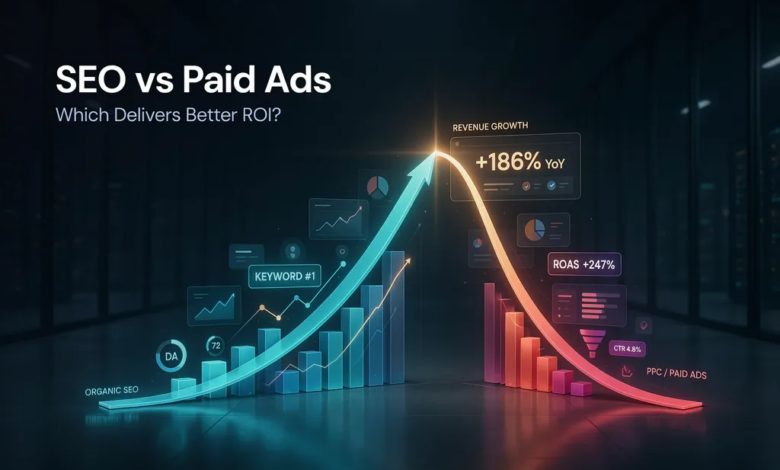
Every business wants more visibility, more leads, and more sales. The challenge is deciding where to invest marketing resources to achieve the best return on investment (ROI). Two of the most popular options are search engine optimization (SEO) and paid advertising. Both can help businesses attract customers online, but they work in different ways and offer different benefits.


When considering seo services, many business owners ask the same question: Is SEO a better investment than paid advertising? The answer depends on business goals, timelines, budgets, and growth plans. Understanding the strengths and limitations of each approach can help companies make smarter marketing decisions.
Understanding SEO Services
SEO is the process of improving a website’s visibility in organic search engine results. The goal is to help businesses rank higher when potential customers search for relevant products, services, or information.
A comprehensive SEO strategy typically includes:
- Keyword research
- Content optimization
- Technical SEO improvements
- Website performance enhancements
- Link-building efforts
- User experience optimization
The SEO services offered by Unique Logic focus on helping businesses improve search visibility while attracting qualified traffic that can convert into customers.
Unlike paid advertising, SEO does not require businesses to pay for every click. Instead, it focuses on building long-term visibility and authority in search engines.
Understanding Paid Advertising
Paid advertising allows businesses to place ads directly in front of potential customers.
Popular paid channels include:
- Google Ads
- Search advertising
- Display advertising
- Social media advertising
- Remarketing campaigns
With paid advertising, businesses bid on keywords or target specific audiences. When users click on ads, the business pays a fee.
The biggest advantage of paid advertising is speed. Campaigns can generate traffic almost immediately after launch, making them attractive for businesses seeking quick results.
The ROI Advantage of SEO
One reason many businesses invest in SEO is its long-term value.
Although SEO often takes time to produce results, it can continue delivering traffic long after optimization efforts are completed.
Some key benefits include:
Sustainable Traffic
Once a webpage ranks well, it can attract visitors consistently without ongoing payment for each click.
Lower Long-Term Costs
While SEO requires investment, businesses are not charged every time someone visits their website through organic search.
Increased Credibility
Many users trust organic search results more than advertisements, which can improve click-through rates and brand perception.
Compounding Returns
As content, authority, and rankings improve, SEO can generate increasing returns over time.
For businesses focused on long-term growth, SEO often becomes one of the most cost-effective marketing channels available.
The ROI Advantage of Paid Advertising
Paid advertising also offers significant benefits, especially for businesses that need immediate visibility.
Fast Results
Unlike SEO, paid campaigns can start generating traffic as soon as ads go live.
Precise Targeting
Businesses can target users based on:
- Keywords
- Location
- Demographics
- Interests
- Online behavior
Easy Scalability
Advertising budgets can be adjusted quickly to support growth or seasonal promotions.
Immediate Data Collection
Businesses can gather valuable insights about audiences, keywords, and conversion behavior almost instantly.
For short-term campaigns or rapid lead generation, paid advertising can provide strong returns.
Comparing Costs Over Time
When evaluating ROI, it is important to consider both short-term and long-term costs.
Paid advertising delivers quick visibility but requires continuous spending. Once the advertising budget stops, traffic typically disappears.
SEO works differently.
While initial optimization requires investment, strong rankings can continue generating traffic without paying for each visitor.
For example:
- A paid ad may generate traffic today but stop tomorrow if the budget ends.
- A well-ranked SEO page may continue attracting visitors for months or even years.
This difference often makes SEO more cost-effective over longer periods.
Which Strategy Generates Better Leads?
Both SEO and paid advertising can generate qualified leads, but they often attract users at different stages of the buying journey.
Paid advertising is excellent for reaching users who are ready to take immediate action.
SEO is effective for attracting users who are:
- Researching solutions
- Comparing options
- Looking for information
- Building trust before purchasing
Because SEO content supports multiple stages of the customer journey, it often helps businesses build stronger long-term relationships with potential customers.
The quality of leads depends largely on strategy, execution, and audience targeting.
The Importance of a Balanced Digital Growth Strategy
The debate between SEO and paid advertising often assumes businesses must choose one or the other.
In reality, the most effective digital growth strategy often combines both approaches.
SEO provides:
- Long-term visibility
- Sustainable traffic
- Strong brand authority
Paid advertising provides:
- Immediate traffic
- Fast lead generation
- Flexible targeting
When used together, these channels can complement each other.
For example:
- Paid advertising can generate leads while SEO efforts are gaining momentum.
- SEO can reduce dependence on advertising over time.
- Paid search data can help identify valuable keywords for SEO campaigns.
This integrated approach often produces stronger overall marketing performance.
Conclusion
Both SEO and paid advertising offer valuable opportunities for business growth, but they serve different purposes. Paid advertising delivers immediate visibility and fast results, while seo services provide sustainable traffic, long-term authority, and ongoing value.
By understanding the strengths of each approach and aligning them with business goals, companies can maximize ROI, attract more customers, and create a stronger online presence in an increasingly competitive digital marketplace.