Everything You Need to Know About HSMS Before Choosing Your Health and Safety Software

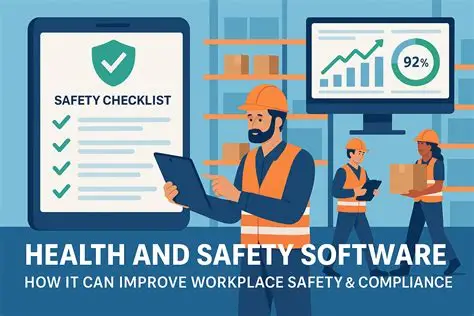
Safety at workplaces has never been more important and complicated than today. As regulations become stricter and non-compliance becomes increasingly expensive, firms are increasingly looking to technology to help them meet their responsibilities. The key to achieving this goal lies in adopting a well-formulated Health and Safety Management System (HSMS) complemented by health and safety software to enable better identification and management of risks. With so many software products available, picking one can be quite a challenge. To make the choice easier, one needs to know first what an HSMS is supposed to do and then use this knowledge to select software accordingly.

What Is Exactly HSMS?
A Health and Safety Management System (HSMS) is an organized framework that includes plans, processes, procedures, and duties intended to assist an organization in managing health and safety risks associated with its operations. Unlike responding to a situation after an accident occurs, an HSMS will create a positive working environment whereby hazards are identified, controls are developed, and continuous monitoring takes place.
The HSMS is based on the Plan-Do-Check-Act (PDCA) model, which is a philosophy that forms the core principles behind global standard-setting organizations like ISO 45001, an internationally recognized standard for occupational health and safety management systems. It includes all necessary information from hazard identification to incident reporting and monitoring to legal compliance and beyond. It can be said that an HSMS serves as the operational system for the safety culture within the company.
Why Does Your Organization Need an HSMS?
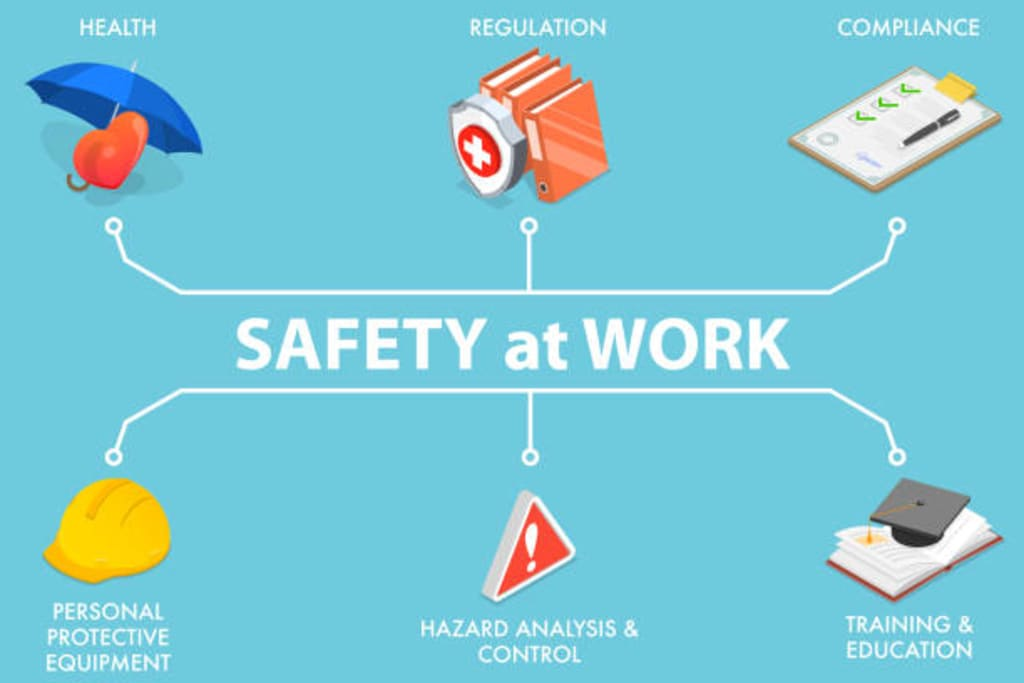
Without a properly developed HSMS, companies will have a fragmented safety system. Safety can only be documented in a checklist form, or verbally passed between employees, leading to numerous gaps that will eventually become problematic during the audit process or lead to incidents. The implementation of the Health and Safety Management System provides better clarity in managing safety within the organisation. Moreover, companies operating in dangerous industries, such as construction, manufacturing, and logistics, and having numerous staff across different facilities, will need to adopt this framework as a priority.
Besides the necessity of using it as part of a regulatory requirement, there is also a solid business case behind its implementation. By reducing safety-related accidents, the company will spend less money on insurance and lost production due to absenteeism, as well as reduce the risk of becoming involved in lawsuits.
What are the Essential Elements of an Effective HSMS?
For an effective HSMS system, the components that need to be present include-
1.Hazard Identification and Risk Assessment- In order to have a robust HSMS framework, the identification and assessment of potential hazards should be conducted, along with identifying measures to address the potential hazards.
2.Incident Reporting and Near-Misses- Incidents, injuries, and near-misses should be reported. Analysis of trends in reporting would allow the identification of systematic problems that may be fixed using appropriate interventions.
3.Compliance and Management of Legal and Regulatory Requirements- The requirements of each organization differ depending on the location and industry sector. Therefore, a proper HSMS framework would involve monitoring the regulatory requirements for the organization, along with compliance.
4. People and their Training and Competence Status- Safety cannot exist without people. The HSMS should keep track of who has been trained and certified, where training needs to be renewed, and whether certain competence gaps exist in particular positions.
5. Emergency Response Plans- Pre-defined plans for dealing with fires, chemical spills, medical emergencies, and other situations, together with drills, should be an integral part of any HSMS.
6. Inspection and Audit Management System- Regular internal audits are needed to verify that the HSMS operates properly. This should be easily facilitated by an effective HSMS.
7. PDCA Cycle and Continuous Improvement Process- Without feedback, it is impossible to use the PDCA cycle effectively. The HSMS must help review performance and continue improving based on results.
How Can Health and Safety Software Improve HSMS Implementation?
Conventionally, companies would utilise HSMS through physical documentation such as binders and spreadsheets. This strategy can theoretically be applied to achieve the framework requirements, but it is impractical and cumbersome to employ. Health and safety software digitises and automates the key processes of the HSMS, which provides several benefits:
1. Unified Database- Records on any aspect of safety management will be consolidated into one easy-to-access repository. One will not have to look for papers anymore or compare contradictory spreadsheets.
2. Real-Time Insights- With management dashboards, managers will be able to track the status of all actions, pending work, trends, and adherence to standards, thus taking decisions based on real information rather than assumptions.
3. Workflows Automation- Once an incident is reported, the system will automatically initiate the investigation process, assigning actions to particular personnel members who are then reminded to complete the task.
4. Mobile Capabilities- Any worker can use their mobile phone to document any risks in the work environment and report any incidents instantly, thus overcoming the delay inherent in paper documentation.
5. Audit Trails- Regulatory bodies and auditors require proof. Health and safety software generates an audit trail in which every decision and change is timestamped. Thus, proving compliance becomes easy.
How to Determine the Best Health and Safety Software for Your Business?
There is no one-size-fits-all health and safety software. Consider asking the following questions before choosing any software-
- Does it comply with standard HSMS frameworks? Ensure that the chosen software complies with relevant standards, such as ISO 45001. This way, you will make sure that its design reflects industry best practices of safety management.
- Is it customisable according to your industry needs? Construction and manufacturing firms face entirely different hazards and risks. Your health and safety software must fit the unique needs of your business.
- How user-friendly is it? A fancy system is of no value whatsoever if workers are not going to use it. Focus on ease-of-use, mobile access, and low levels of required training.
- How easy is it to integrate? No system works alone. Make sure it comes with APIs and integrations into HR platforms, payroll programs, etc., so that you don’t have to duplicate data across several systems.
- What kind of support is available from the provider? It makes a huge difference in terms of how successfully your organization will be able to implement the solution, especially if it’s the first time for you.
Are You Ready for the Transition?
Transitioning from your existing system or process-based safety management approach to an integrated HSMS, powered by the use of specialist health and safety software, is one of the most important steps an organization concerned about employee safety can take. The secret is to approach this decision in an organized manner. First, identify all weaknesses, inefficiencies, and redundancies in your safety process and use this information to define what kind of solution would benefit your organization best. Involving employees on the front line and safety professionals in this evaluation process is vital, along with management.
Good HSMS software will transform your safety system, opening new possibilities for improvement, helping you close any gaps, and allowing you to create a culture of safety that surpasses mere compliance with regulations and moves towards safety excellence.
When you consider that one preventable accident may cause significant losses to your company, the right HSMS and technology become critical components of your safety infrastructure.
You may also read: 5 Ways to Improve Your Wellness Journey