“Molecular Sponges” from the Laboratories of the West University of Timișoara: A New Generation of Hydrogels That Could Improve Migraine Treatment Delivery

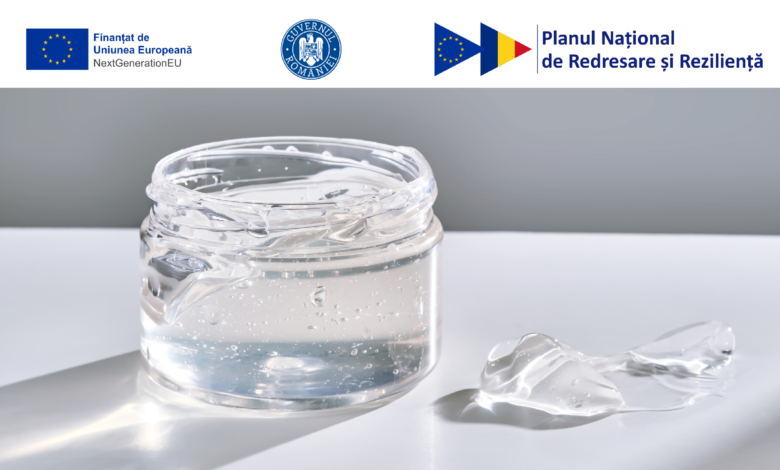
A study conducted by researchers and young specialists from Timișoara opens new perspectives for the development of modern pharmaceutical systems that are easier to use and better tolerated by patients


How can we improve the way medicines are administered?
When we talk about innovation in medicine, we often think of the discovery of new drugs. However, the way these medicines reach the body is just as important. The effectiveness of a treatment depends not only on the active substance, but also on the pharmaceutical form in which it is administered, its stability, and the body’s ability to absorb it properly.
In the research laboratories of the West University of Timișoara, a team made up of researchers, PhD candidates, and postdoctoral researchers in the field of chemistry is working on the development of modern drug delivery systems capable of improving both patient experience and treatment effectiveness.
A recent example is the study “Flunarizine-Loaded Hydrogels: A Novel Formulation and Physicochemical Characterization”, carried out by researchers from the Department of Chemistry within the Institute for Advanced Environmental Research (ICAM) and the Research Centre “Thermal Analysis in Environmental Problems”.
The paper proposes a new approach for the administration of flunarizine, a drug frequently used in the treatment of migraine and certain vestibular disorders, through innovative systems based on hydrogels.
Why is flunarizine important?
Migraine affects millions of people worldwide and is one of the most common neurological conditions. For many patients, preventing migraine episodes is essential for maintaining an active life and a good quality of life.
In this context, flunarizine is a widely used drug for:
- preventing migraine;
- treating certain vestibular disorders;
- reducing symptoms associated with dizziness and balance problems.
Although therapeutically effective, flunarizine poses an important challenge for researchers in the pharmaceutical field: it has low water solubility.
This characteristic can influence:
- the stability of the formulation;
- the uniform distribution of the drug;
- absorption and therapeutic effectiveness;
- the development of modern pharmaceutical forms.
For this reason, identifying systems capable of efficiently incorporating and transporting flunarizine is an important objective for current pharmaceutical research.
What are hydrogels and why are they considered materials of the future?
In recent years, hydrogels have become some of the most extensively studied materials in the pharmaceutical and biomedical fields.
They are three-dimensional polymer networks that can absorb and retain large amounts of water without losing their structure.
Due to their special properties, hydrogels offer numerous advantages:
- they allow more efficient dispersion of active substances;
- they can control the rate at which a drug is released;
- they increase the stability of pharmaceutical ingredients;
- they can improve patient comfort and compliance;
- they enable the development of innovative pharmaceutical forms.
For these reasons, hydrogels are being intensively investigated for use in controlled drug delivery, regenerative medicine, and intelligent biomedical devices.
The objective of the research: developing new delivery systems for flunarizine
The main objective of the study carried out at the West University of Timișoara was to evaluate the compatibility between flunarizine and a series of selected excipients, as well as to investigate the possibility of incorporating the drug into polymeric hydrogel matrices.
In the development stage of a medicine, compatibility between the active substance and the auxiliary components is essential.
Undesired interactions between the ingredients of a formulation can affect:
- product stability;
- therapeutic effectiveness;
- shelf life;
- safety of use.
This is why, before developing a new pharmaceutical formulation, researchers must demonstrate that all components can function together without undesired structural or chemical changes.
How do researchers verify the compatibility of a medicine?
To answer these questions, the research team used a series of modern physicochemical analysis methods.
These include:
FTIR spectroscopy
Fourier-transform infrared spectroscopy (FTIR) makes it possible to identify molecular-level changes and highlight possible interactions between the drug and the excipients.
Thermogravimetric analysis (TG/DTG)
This method provides information about the thermal stability of materials and their behaviour at different temperatures.
High-performance liquid chromatography (HPLC)
One of the most widely used techniques in the pharmaceutical industry, HPLC allows researchers to evaluate the purity and stability of active substances.
By combining these methods, the researchers obtained a complete picture of how flunarizine behaves in the newly developed systems.
Study results: excellent compatibility and high stability
The results obtained through all the analytical methods were convergent and pointed to the same important conclusion.
Flunarizine dihydrochloride proved to be compatible with the selected excipients and could be successfully incorporated into both cyclodextrin-based systems and PEG/Tween hydrogels.
More importantly, the researchers did not observe significant structural or chemical changes that could affect the integrity of the active substance.
This result represents an essential stage in the development of new pharmaceutical formulations, as it demonstrates that the materials used can serve as safe and effective carriers for drug administration.
What benefits could these new formulations bring?
Although the study is still at the research and characterisation stage, its implications are important for the future of drug administration.
Hydrogel-based systems can contribute to:
- improving the dispersion of the active substance;
- increasing formulation stability;
- controlled drug release;
- reducing fluctuations in drug concentration;
- developing pharmaceutical forms that are more comfortable for patients.
Such advantages are particularly relevant for long-term treatments, where patient compliance plays a major role in therapeutic success.
Significant potential for patients with special needs
One of the directions with the greatest social impact is the development of pharmaceutical systems adapted to vulnerable groups.
Elderly patients, children, or people undergoing chronic treatments often face difficulties in taking conventional medicines.
New hydrogel-based formulations could contribute to:
- increasing comfort during administration;
- reducing effects associated with traditional pharmaceutical forms;
- improving adherence to treatment;
- personalising therapy according to patient needs.
These aspects are becoming increasingly important in a context where modern medicine seeks not only therapeutic effectiveness, but also an improved patient experience.
Research carried out by a new generation of specialists
A remarkable element of the project is the composition of the research team.
The authors of the study — Camelia Daniela Ionaș, Dorinel Okolišan, Camelia Epuran, Ion Frățilescu, Gabriela Vlase, Alexandru Pahomi, Raul Ștefan-Pantiș, Mihaela Maria Budiul, Mădălina Grădinaru, and Titus Vlase — are part of the academic community of the West University of Timișoara and of ICAM’s research structures.
The team includes established researchers, as well as PhD candidates and postdoctoral researchers, demonstrating the important role that the West University of Timișoara plays in training the new generation of specialists in chemistry, advanced materials, and pharmaceutical sciences.
By involving young researchers in frontier projects, the university contributes to the development of the skills needed for future innovation in health and pharmaceutical technologies.
Impact for Romanian research and the pharmaceutical industry
The results of the study provide a solid foundation for future developments in the field of drug delivery systems.
At the same time, they demonstrate the capacity of research carried out in Romania to contribute to areas of international interest, such as:
- advanced pharmaceutical materials;
- intelligent drug delivery systems;
- applied chemistry in healthcare;
- innovative pharmaceutical formulations.
Such research may, in the future, facilitate knowledge transfer to the pharmaceutical industry and the development of products with high added value.
From the laboratory to more effective treatments
Behind every effective medicine lie years of fundamental and applied research. The study conducted at the West University of Timișoara shows that innovation does not only mean discovering new active substances, but also finding better ways to administer them.
By developing and characterising new hydrogels for incorporating flunarizine, the researchers have taken an important step towards more efficient, more stable pharmaceutical systems that are better adapted to patients’ real needs.
The results provide a solid basis for future investigations and confirm the contribution of Romanian research to the development of modern medicine and pharmacy.
About the study
The paper “Flunarizine-Loaded Hydrogels: A Novel Formulation and Physicochemical Characterization” was carried out by researchers, PhD candidates, and postdoctoral researchers from the Department of Chemistry of the Institute for Advanced Environmental Research (ICAM), West University of Timișoara.
The study investigates the development and characterisation of new hydrogel-based systems for the administration of flunarizine, a drug used in the prophylactic treatment of migraine and vestibular disorders, contributing to the development of modern and effective pharmaceutical formulations.
“The content of this material does not necessarily represent the official position of the European Union or of the Romanian Government.”
“NRRP. Funded by the European Union – NextGenerationEU”
Website: https://mfe.gov.ro/pnrr/
Facebook: https://www.facebook.com/PNRROficial/