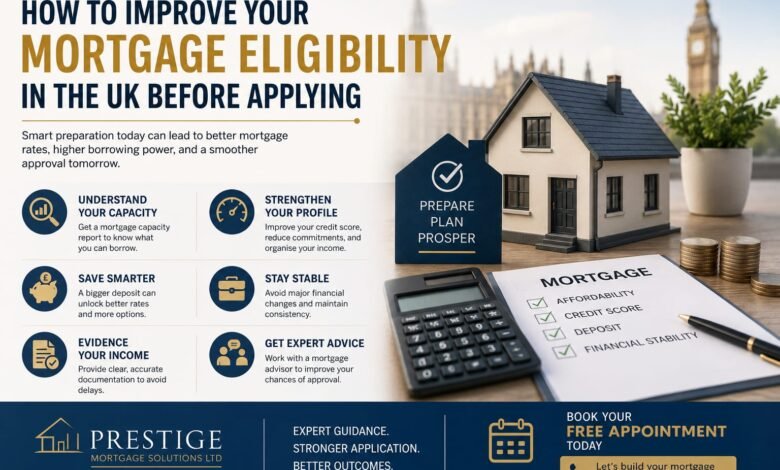
Applying for a mortgage in the UK can feel daunting—especially if you’re unsure how lenders will assess your application. Many borrowers assume the process starts when they submit a mortgage application, but in reality, the most important work happens before that point.


Improving your mortgage eligibility in advance can significantly increase your chances of approval, unlock better interest rates, and help you borrow more confidently. Whether you’re a first-time buyer, home mover, or looking to remortgage, understanding how lenders evaluate affordability is essential.
This guide breaks down practical, expert-backed steps to optimise your position before applying for a mortgage.
Understand How Lenders Assess Mortgage Eligibility
UK lenders focus on affordability rather than just income multiples. While income still matters, lenders also consider:
- Monthly commitments and living costs
- Credit history and current debt
- Employment stability and income type
- Property value and loan-to-value (LTV) ratio
A key tool used during this process is a mortgage capacity report, which gives a clear picture of how much you can realistically borrow based on your full financial profile.
Start With a Mortgage Capacity Review
Before viewing properties or submitting applications, it’s wise to complete a mortgage raising capacity assessment. This goes beyond basic online calculators and looks at:
- Gross and net income
- Existing credit commitments
- Household expenditure
- Stress-tested affordability under higher interest rates
This type of assessment helps you avoid disappointment later and allows you to make informed decisions about property price ranges.
Borrowers who complete this step early are far more likely to pass lender affordability checks on the first attempt.
Improve Your Credit Profile Before Applying
Your credit report plays a crucial role in mortgage eligibility. Even small issues can reduce borrowing power or increase interest rates.
Steps to optimise your credit profile include:
- Checking your credit reports with all major UK agencies
- Correcting errors or outdated information
- Reducing credit card balances (aim for under 30% utilisation)
- Avoiding new credit applications in the months leading up to applying
Consistency matters. Lenders want to see stable, responsible financial behaviour over time—not just short-term fixes.
Reduce Existing Financial Commitments
Outstanding debts directly impact affordability calculations. Car finance, personal loans, credit cards, and even overdrafts reduce how much you can borrow.
Where possible:
- Pay off or reduce high-interest debts
- Avoid long-term commitments shortly before applying
- Close unused credit facilities if appropriate
Even modest reductions in monthly outgoings can meaningfully improve the results of a mortgage raising capacity assessment.
Organise and Evidence Your Income Correctly
Not all income is treated equally by lenders. Basic salary is usually straightforward, but other income types require careful handling.
If applicable, prepare clear evidence for:
- Bonuses and commissions (usually averaged over 2–3 years)
- Self-employed income (SA302s and accounts)
- Rental income from buy-to-let properties
- Overtime or secondary employment
Poor documentation is one of the most common reasons mortgage applications are delayed or declined—despite applicants being otherwise eligible.
Save Strategically for Deposit and Fees
A larger deposit improves eligibility in two ways:
- It lowers your loan-to-value ratio
- It often unlocks better interest rates and lender options
In addition to the deposit, lenders also want to see that you can comfortably afford associated costs such as legal fees, surveys, and stamp duty (where applicable).
Demonstrating healthy savings behaviour strengthens your overall financial profile.
Avoid Major Financial Changes Before Applying
Stability is key from a lender’s perspective. In the months leading up to a mortgage application, try to avoid:
- Changing jobs without professional advice
- Switching from permanent to contract work
- Making large, unexplained bank transfers
- Taking on new credit or finance agreements
If changes are unavoidable, a mortgage advisor can help assess the impact and guide you on timing.
Get Expert Advice Before You Apply
Pre-application advice is one of the most underutilised yet valuable steps in the mortgage process. A qualified broker can identify issues early, recommend improvements, and align you with lenders that best match your profile.
A firm like Prestige Mortgage Solutions Ltd focuses on helping clients prepare properly—using detailed affordability reviews, lender-specific criteria analysis, and strategic planning before any application is submitted.
This approach reduces rejections, protects your credit score, and improves long-term outcomes.
Final Thoughts
Improving your mortgage eligibility in the UK isn’t about guesswork—it’s about preparation. Completing a mortgage capacity report, addressing credit and affordability factors, and seeking expert guidance before applying can dramatically change your borrowing experience.By taking the time to optimise your position upfront, you put yourself in control—making your mortgage application smoother, stronger, and more successful. Book Your FREE Appointment in Prestige Mortgage Solutions Ltd.