How is it possible for ski jumpers to stay in the air so long and how do they train for that? Physics & Training Explained

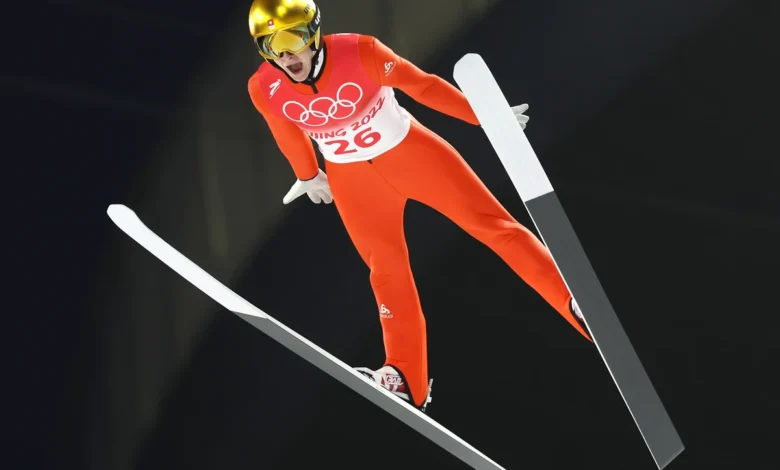
Ski jumping is one of the most visually dramatic sports in the Winter Olympics, often leaving spectators amazed at how athletes seem to float through the air for several seconds. This naturally raises the question: how is it possible for ski jumpers to stay in the air so long and how do they train for that? The answer lies in a unique blend of physics, precision technique, and years of highly specialised athletic preparation that transforms human movement into controlled aerial glide.


At its core, ski jumping is not about jumping high but about converting speed into distance. Athletes accelerate down an icy ramp before launching into flight, where aerodynamics take over. To fully understand how is it possible for ski jumpers to stay in the air so long and how do they train for that? we must explore how lift, drag, body position, and training discipline combine to produce what appears to be human flight.
Basics of Ski Jumping
Ski jumping is structured into four distinct phases: the in-run, take-off, flight, and landing. Each stage plays a crucial role in determining how far an athlete travels. During the in-run, jumpers reach extremely high speeds before launching off the end of the ramp, where timing and precision determine whether their jump becomes successful or unstable.
To understand how is it possible for ski jumpers to stay in the air so long and how do they train for that? it is essential to appreciate how speed is preserved and redirected. Rather than stopping at the edge, athletes use momentum to transition into a controlled glide. Every movement is refined to ensure maximum efficiency, with even minor body adjustments influencing overall airtime and distance achieved.
Physics of Flight
The science behind ski jumping is grounded in aerodynamics, particularly the relationship between lift, gravity, and air resistance. When a skier launches into the air, their body and skis act like a wing, creating pressure differences that generate lift. This lift counteracts gravity, allowing them to remain airborne for several seconds longer than a simple jump would allow.
The question how is it possible for ski jumpers to stay in the air so long and how do they train for that? can be answered largely through physics. The skier’s forward speed creates airflow beneath the body, while the V-shaped ski position increases surface area. This combination reduces drag and increases lift, enabling a controlled and extended glide rather than a rapid fall.
Take-off Mechanics

The take-off phase is one of the most technically demanding parts of ski jumping. Athletes must leave the ramp at a precise angle while maintaining forward velocity. If the timing is even slightly off, the entire jump distance can be reduced significantly. This moment is where explosive leg strength and perfect coordination come together.
When examining how is it possible for ski jumpers to stay in the air so long and how do they train for that? the take-off is critical because it determines the initial trajectory. Ski jumpers spend years developing the ability to transfer speed into lift at the exact millisecond required. Their training focuses heavily on timing drills, strength conditioning, and repeated simulated launches.
Flight Technique V-style
Once in the air, ski jumpers adopt the V-style position, where skis are spread wide to form a V shape. This technique dramatically increases lift by maximising the surface area interacting with airflow. At the same time, athletes lean forward to reduce drag, creating a streamlined position that supports longer flight times.
Understanding how is it possible for ski jumpers to stay in the air so long and how do they train for that? requires attention to this mid-air control. Jumpers must constantly adjust their posture in response to air pressure changes. Even subtle movements of the hips, arms, or head can affect balance, making this phase one of the most technically refined aspects of the sport.
Training Methods
Training for ski jumping is highly specialised and extends far beyond simple strength exercises. Athletes focus on explosive power, particularly in the legs, using squats, plyometrics, and Olympic lifts to generate maximum force during take-off. Flexibility training is equally important, helping athletes maintain aerodynamic positions in the air.
The question how is it possible for ski jumpers to stay in the air so long and how do they train for that? becomes clearer when considering their year-round preparation. Ski jumpers also train in wind tunnels, simulate jumps on plastic-covered hills, and practise balance drills to perfect body control. Mental training is also essential, as focus and confidence directly affect performance under high-speed conditions.
Equipment and Environment
Modern ski jumping relies heavily on carefully engineered equipment designed to enhance performance. Skis are long and specially shaped to improve lift, while suits are tightly regulated to reduce unnecessary air resistance. Even small variations in equipment can significantly impact how far an athlete is able to travel during a jump.
Environmental conditions also play a vital role in how is it possible for ski jumpers to stay in the air so long and how do they train for that? Wind direction, temperature, and snow texture all influence performance. Athletes must constantly adapt their technique to changing weather conditions, making ski jumping a sport where natural elements are as important as physical skill.
Conclusion
Ski jumping is a remarkable combination of physics, athleticism, and precision technique. It is not true flight, but a carefully controlled aerodynamic glide that allows athletes to remain in the air far longer than expected. Every phase of the jump, from take-off to landing, is engineered for maximum efficiency and distance.
Ultimately, how is it possible for ski jumpers to stay in the air so long and how do they train for that? is answered through a blend of science and discipline. Athletes dedicate years to mastering body control, timing, and environmental awareness, proving that what looks like flying is actually one of the most finely tuned performances in all of sport.
You may also read: Floyd Roger Myers Jr in The Fresh Prince of Bel-Air and The Jacksons