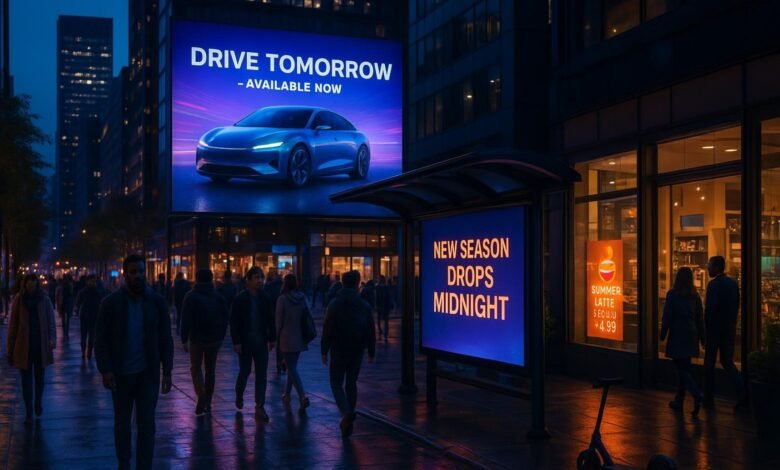
In today’s ad space, it’s hard to stand out. People see an estimated 6,000 to 10,000 ads every day. That often leads to “banner blindness” and ad fatigue, where ads get ignored. So how does a modern DOOH advertising agency break through and run campaigns people actually notice?


The answer is Digital Out-of-Home (DOOH): ads on digital screens in public places that can change fast, use data, and target specific audiences. These agencies use new tools to turn old-style outdoor ads into flexible campaigns that can be tracked and improved, using clear messages that reach people in real life.
What Is DOOH Advertising and How Do Agencies Operate?
Digital Out-of-Home (DOOH) advertising is a newer version of outdoor advertising that uses digital screens instead of printed posters. It brings many of the same ideas as online ads-like targeting and quick updates-into public spaces. It has grown fast in recent years because it works well and can adapt quickly as habits change.
DOOH vs Traditional Out-of-Home: Key Differences
Traditional Out-of-Home (OOH) advertising uses fixed images, like posters or printed vinyl billboards. It still works well for big brand messages because it has wide reach and stays visible for long periods. But it can’t change quickly, and it doesn’t offer detailed targeting. A printed billboard might stay the same for weeks, while a digital screen can switch messages in minutes. That’s the main difference.
DOOH uses digital screens and programmatic buying to show ads that match the situation. Brands can change creative right away, react to trends, adjust to weather, and even respond to audience patterns. DOOH is growing fast, with 82% ad recall and 24.2% growth in 2023. Traditional OOH gives broad, steady exposure, while DOOH gives more targeted and trackable results. Many brands get the best results by using both: traditional OOH for steady reach and DOOH for flexible, attention-grabbing messages.
Types of DOOH Formats Agencies Use
DOOH agencies use many screen types to reach people where they already spend time. Common formats include:
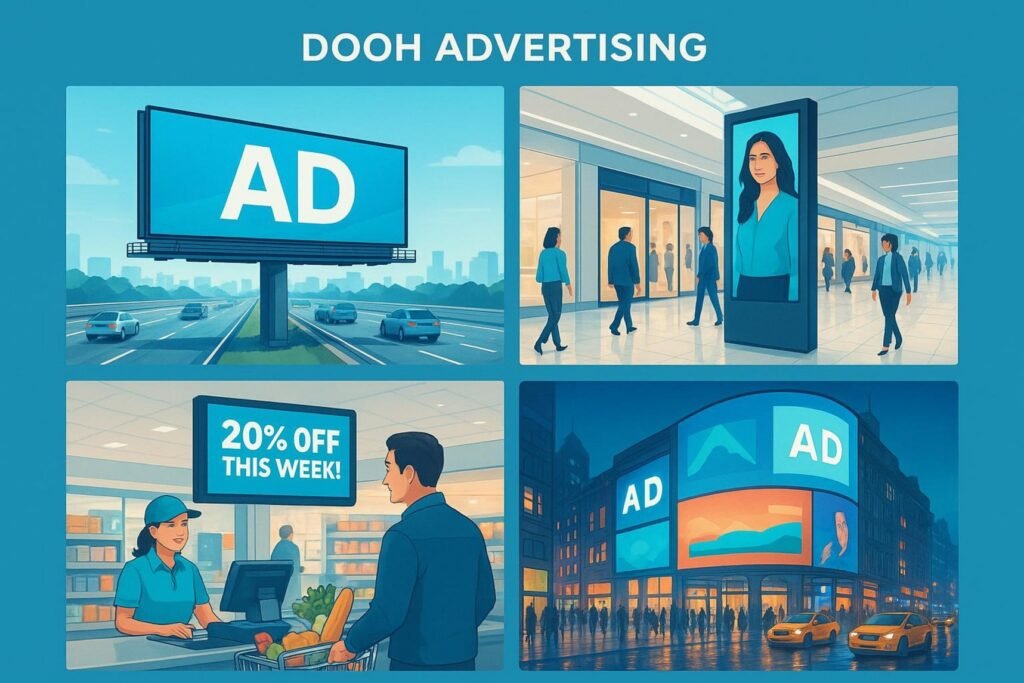
- Large-format screens in busy areas: highway billboards, city center panels, transit station screens, digital bus shelters, and large outdoor digital walls. These are built for high visibility and big awareness campaigns.
- Place-based screens: screens in locations like office buildings, malls, gas stations, gyms, restaurants, bars, universities, and EV charging stations. These placements reach people in moments that match the setting.
- Point-of-purchase (POP) screens: screens inside stores like supermarkets, convenience stores, pharmacies, liquor stores, and big box retailers. These displays can affect up to 70% of in-store buying decisions by reaching shoppers right when they are ready to buy.
- High-impact landmark screens: major screens in places like Times Square or the Sphere in Las Vegas, where the goal is maximum attention and shareable moments.
Where DOOH Campaigns Perform Best
DOOH works best where many people pass through and where changing content adds value. Strong locations include:
- Busy city areas: downtown streets, shopping zones, and popular landmarks.
- Transit and commuting spots: airports, subway platforms, bus shelters, and stations-places where people spend time waiting and often look around.
- Retail and in-store placements: great for influencing last-minute choices while people are already shopping.
- Leisure venues: stadiums, concert halls, cinemas, gyms, restaurants, and bars, where people are often relaxed and open to messages.
- Smart city placements: screens built into kiosks and digital shelters that can also show public info.
DOOH is used across many industries, including quick-service restaurants (QSR), retail and e-commerce, entertainment and streaming, financial services, automotive, education, consumer packaged goods (CPG), and apps/tech.
How DOOH Advertising Agencies Deliver Dynamic Campaigns
“Dynamic” is what makes DOOH different. Agencies use live data and creative tools so ads can react to what’s happening right now and feel relevant in the moment.
Dynamic Content: Real-Time Creative Updates
With DOOH, ad content can be updated right away, without printing or installing anything. Agencies can change ads based on factors like:
- Location
- Time of day
- Weather
- Local events
- Audience patterns
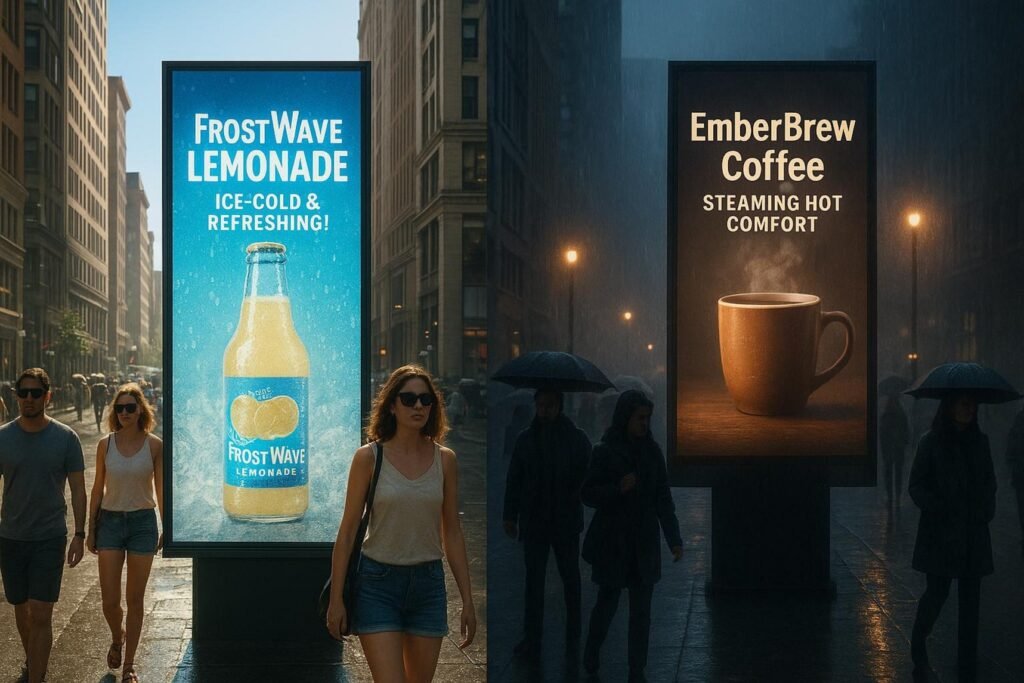
A coffee brand can promote iced drinks during a heatwave and hot drinks when it’s cold. A retailer can switch Black Friday deals across many screens at once. A sports brand can show live scores alongside a product offer. This fast update cycle keeps messages current and more interesting than static posters.
Data-Driven Personalization and Triggers
DOOH can personalize content at scale using data triggers. Agencies can connect data feeds so ads change automatically based on conditions such as:
- Nearest store location
- Local weather
- Time and day of week
- Live sports scores
- Event countdowns
- Product availability or promotions
Weather-based ads are a common example. Guinness ran “The Guinness Brewery of Meteorology” in Australia, where ads played only when temperatures dropped below set levels. Screens were placed near pubs serving Guinness to catch people looking for a warm drink. With programmatic DOOH, advertisers can set rules so when conditions match-like temperature, time, event distance, or audience type-the right creative runs automatically.
Leveraging Contextual and Environmental Data
DOOH can also use broader context to make ads feel useful instead of annoying. Agencies can adjust creative based on:
- Traffic conditions
- Distance to a store
- Local environment (like rain or heat)
Google has used live weather data so a billboard message changes with the day’s conditions (for example, showing different search ideas depending on rain or sunshine). British Airways ran “Magic of Flying,” using radar data to detect planes flying overhead. The screen showed a child pointing to the real plane, along with the flight number and destination. Campaigns like these do more than grab attention-they give timely information and feel connected to the real moment.
Interactive and Experiential Activations
DOOH can also be interactive, which creates stronger memories. Agencies may use:
- QR codes that open a landing page or offer
- Augmented Reality (AR) triggered by phone scans
- Gesture and motion sensors
- Game-style interactions with rewards
Netflix turned London bus stop posters into an AR experience for “Stranger Things,” letting people scan a QR code to see effects on their phones. Heineken in Brazil turned over 3,500 billboards into live streaming screens for UEFA Women’s Champions League matches, reaching more than 25 million people. Even simple ideas work well, like Coca-Cola’s “Share a Coke” moments that show names or posts on big screens, encouraging people to take photos and share online.
What Targeting Capabilities Set DOOH Agencies Apart?
One of the biggest benefits of DOOH compared to traditional OOH is targeting. Agencies can reach the right group at the right time and place with much more accuracy.
Location and Geotargeting Strategies
DOOH supports very local targeting. Agencies can define where ads run by:
- Country or region
- City
- DMA (Designated Market Area)
- Zip/postal code
A fast-food brand like Church’s Texas Chicken used a location-based DOOH campaign placing ads near its own stores and near competitors. This helps reach people when they are ready to choose where to eat, often with offers that fit the location.
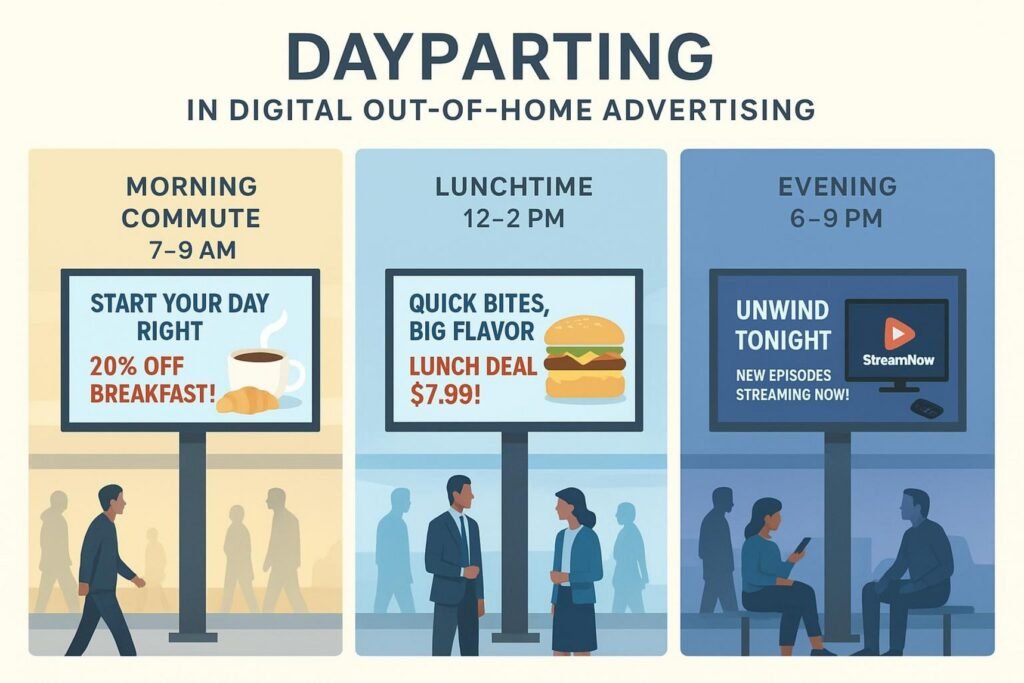
Dayparting and Timing Optimization
DOOH can also adjust messages by time. Dayparting means changing content based on:
- Hour of day
- Day of week
- Season
A coffee chain can run breakfast messages during morning commutes, then switch to afternoon offers near office areas later in the day. Travel Texas used dayparting and different messages to reach Gen X families, millennials, and boomer travelers in out-of-state markets. People who saw the ads were three times more likely to plan a trip to Texas.
Audience Segmentation and Behavioral Targeting
DOOH agencies can go beyond location and time by using mobility data and third-party audience insights. This helps pick screens that index higher for certain groups, such as frequent travelers or fitness fans.
Refuel Agency uses research tools like Military Explorer, College Explorer, Teen Explorer, and Hispanic Explorer to understand media habits and buying behavior for specific audiences. Corona Tools targeted Hispanic landscaping professionals using DOOH placements like gas stations, where crews often stop. The campaign led to double-digit sales growth and $1.9 million in new sales linked to the work.
Point-of-Interest (POI) Targeting
POI targeting focuses on very specific locations tied to an activity or mindset. For example, running energy drink ads around a live sports event.
This approach often helps drive foot traffic and sales. Mad Mex used store-level sales data to trigger programmatic DOOH ads. The message changed based on monthly sales patterns at each location (highlighting taste, health, or value depending on what worked best). The campaign delivered nine million exposures and a 9% sales increase tied to the ads.
How Programmatic Technology Powers DOOH Campaigns
Programmatic technology is what makes many DOOH campaigns fast, flexible, and targetable. It changes how ad space is purchased and how campaigns are managed.
What Is Programmatic DOOH?
Programmatic Digital Out-of-Home (pDOOH) is DOOH bought and managed through automated ad platforms. It combines the big reach of outdoor screens with the targeting and automation people expect from online advertising. Instead of manual deals and fixed schedules, pDOOH uses real-time data, audience insights, and bidding tools to run ads across very large screen networks.
pDOOH now makes up over 30% of total DOOH ad spend and is expected to grow 18.8% year-over-year in 2026, with forecasts passing $1 billion by that year. In 2024, 53% of U.S. DOOH campaigns ran programmatically, up 25 percentage points from the year before.
The Role of DSPs and SSPs in Buying
Programmatic DOOH uses two main platform types:
| Platform | Who uses it | What it does | Examples |
| DSP (Demand-Side Platform) | Advertisers and agencies | Plan, buy, target, upload creative, and track results across many screen networks | The Trade Desk, Yahoo!, Google Display & Video 360, StackAdapt, Vistar Media, Adomni |
| SSP (Supply-Side Platform) | Publishers and media owners | List and sell screen inventory, set rules, pricing, and content limits, and connect to buyers | Vistar Media, Place Exchange, Hivestack, Broadsign |
Advantages of Programmatic Buying for Advertisers
Programmatic buying brings clear benefits for advertisers:
- Speed and flexibility: launch fast, pause, or adjust settings based on results.
- Quick creative changes: swap ads from one platform without site visits.
- Better targeting: add audience, behavior, weather, and time signals on top of location.
- Smarter budgeting: move spend to screens and audiences that perform best.
- Privacy-friendly setup: often uses context and location signals instead of personal identifiers.
- Works well with other channels: retarget exposed audiences on mobile, video, or audio for a connected plan.
What Are the Measurable Benefits of Working with a DOOH Advertising Agency?
Working with a DOOH advertising agency brings clear, trackable benefits. Campaigns are built to be seen, remembered, and improved using data.
Higher Brand Visibility in High-Traffic Locations
DOOH places ads where people already are: city centers, transit hubs, malls, and gas stations. These screens can’t be blocked like online ads, and people can’t skip them. That helps with attention and recall.
DOOH has 82% ad recall. The OAAA also found that 73% of U.S. consumers view DOOH ads favorably-higher than TV (50%), social media (48%), and print (31%). This steady visibility helps brands stay top-of-mind.
Agile Campaign Management and Real-Time Adjustments
DOOH campaigns can go live quickly and change just as fast. Agencies can update creative to match news, local demand, or performance data.
A retailer can update promotions across many screens at once. A restaurant can switch offers based on time of day. This fast control helps brands keep messages current and react quickly when conditions change.
Seamless Integration with Omnichannel Campaigns
People interact with brands across many channels, so consistency matters. DOOH can sync with mobile ads, social campaigns, geofencing, connected TV (CTV), and streaming audio.
This makes it easier to reinforce the same message in more than one place. For example, a brand working with an agency like BE Media can retarget someone on mobile after DOOH exposure. Research shows people are 48% more likely to click a mobile ad after seeing the same ad on OOH first.
Increased Engagement and Unique Audience Interaction
DOOH supports video, animation, and messages triggered by data, which often grabs attention more than static posters. Agencies can also add interactive elements like:
- QR codes to drive visits or purchases
- Touchscreens (where available)
- Social feeds shown on screens
- AR experiences
These features create trackable actions and can collect useful signals about what people respond to. Many campaigns also create photo-friendly moments that people share online, helping the campaign spread. Studies show around 74% of people who see a DOOH ad later use their mobile device in response, such as searching for the brand or visiting a website.
How Is Success Measured in DOOH Campaigns?
DOOH measurement has improved a lot. Agencies can now report results in ways that feel closer to online advertising, including ROI and performance insights.
Metrics: Foot Traffic, Brand Lift, and Sales Impact
Agencies track more than impressions. Standard reporting often includes impressions served, venue and market breakdowns, and data costs for targeting. Beyond that, many campaigns measure business outcomes like:
- Foot traffic attribution: uses anonymized mobile location data to estimate store visits after ad exposure.
- Brand lift: compares exposed groups vs control groups to measure changes in awareness, recall, consideration, or purchase intent.
- Sales lift: links exposure to purchases using methods like matched-market testing to estimate extra revenue.
Together, these metrics show what happened from exposure to real-world action.
Attribution and Reporting Tools Agencies Use
Agencies use tools that bring reporting into one place and give more detail across media owners and screen networks. Common approaches include unified reporting platforms, plus device ID passbacks that connect exposure to later actions across digital channels.
AI also helps improve audience measurement by using mobile signals, GPS data, and camera sensors to estimate audience size and update it in real time. Platforms like StackAdapt offer DOOH reporting with heatmaps and screen-level details, making it easier to review which locations ran and how they performed.
Case Studies: Real-World Outcomes from Dynamic DOOH
Dynamic and targeted DOOH results show up clearly in real campaigns:
- National University’s Times Square New Year’s Eve takeover generated $1.5M in media value on about $250K spend, with an 83% client saving and a 50% lift in site traffic.
- Corona Tools drove double-digit sales growth and $1.9M in new sales by targeting Hispanic landscaping pros with community-based DOOH and experiences.
- Church’s Texas Chicken drove 4M store visits and a 12.2% store conversion rate using location-based DOOH plus mobile retargeting.
- Mad Mex increased sales by 9% by changing programmatic DOOH creative based on store-level sales data.
- The NBA used live scores and fan tweets in DOOH, leading to a 25% rise in tune-in intent and a 7% lift in brand awareness.
- Guinness’s weather-triggered campaign in Australia drove an 18% revenue increase and a 15% rise in pub foot traffic.
These outcomes show how strong planning, smart targeting, and flexible creative can produce real, measurable gains.
Conclusion
Digital Out-of-Home (DOOH) is changing how brands reach people in public spaces. It combines the impact of outdoor media with the speed and targeting of digital ads. Several trends are pushing DOOH forward. AI is improving audience measurement using mobile signals, GPS data, and camera sensors, giving faster and clearer audience insights. Programmatic DOOH is also growing fast, and forecasts suggest it may reach 45% of total OOH ad spend by 2027, with more automation and better optimization.
DOOH is also linking more closely with mobile engagement, often through QR codes that move people from a public screen to a digital action. In-store retail media is expanding too, using DOOH screens in and around stores to influence buying decisions at the shelf. DOOH and connected TV (CTV) are also starting to overlap, making it easier to run coordinated messages across public screens and home screens. With these changes, DOOH remains a key channel for agencies that want high-impact, trackable campaigns, supporting a global market forecast to grow from $22.51 billion in 2026 to $56.1 billion by 2034.