The biggest games on an autumn release schedule often arrive carrying huge expectations: a new blockbuster sequel, a vast open world or a familiar annual series. Minecraft Dungeons II has a different advantage. It returns to a format that already made sense for players who wanted to play together without committing to a hundred-hour campaign.
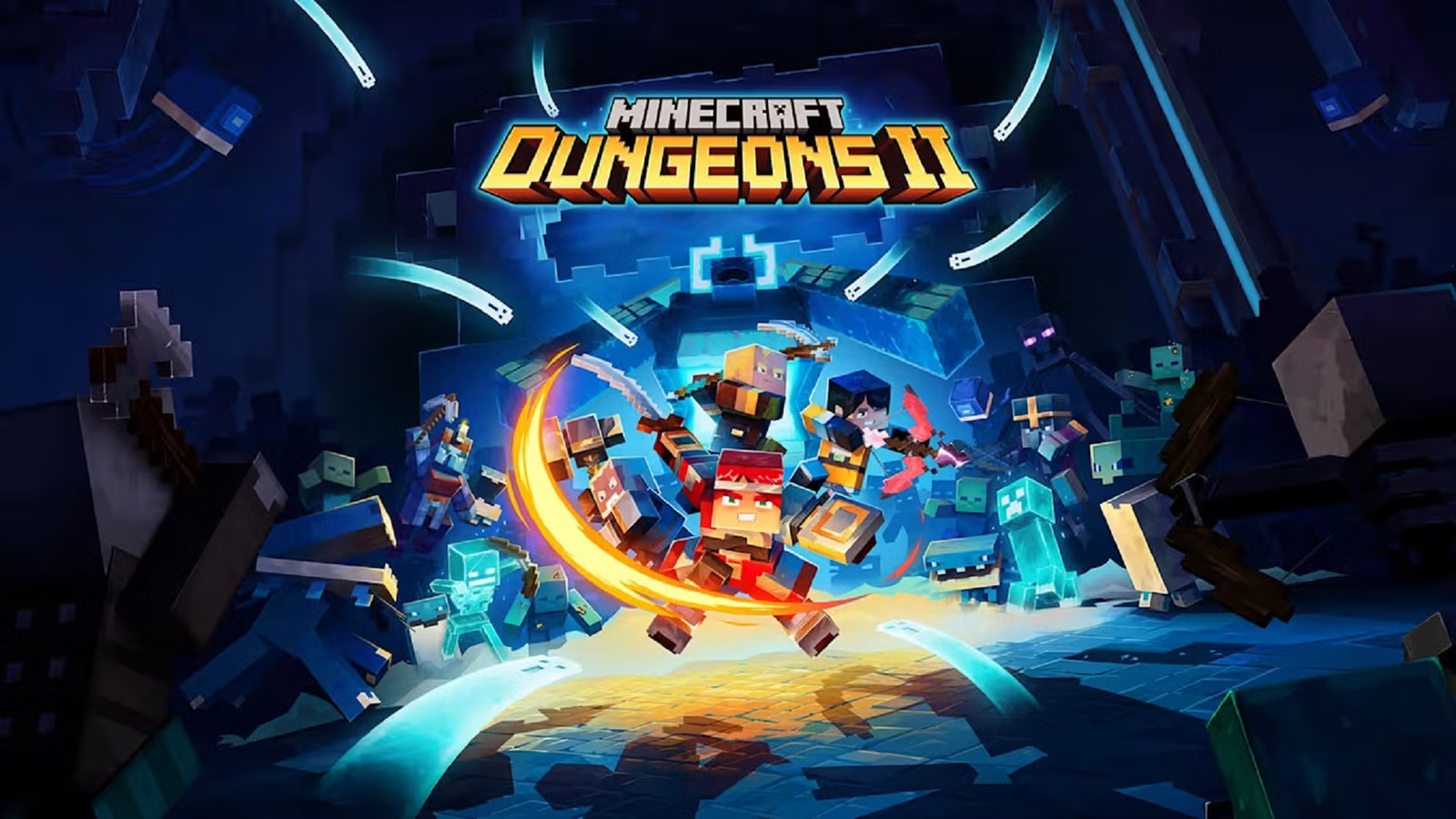
Microsoft has confirmed that the sequel will launch on 29 September 2026 for Xbox Series X|S, PC and cloud, with Game Pass availability from day one. The first trailer points towards new lands, a growing threat to the Overworld and the Twisted Warden as a new enemy, but the appeal of the original was never only about the setting. It was about how quickly a group could get into a dungeon, find better equipment and make a little progress together. Xbox Wire

That makes the sequel worth watching among this year’s new games. While live casino games can offer quick, self-contained entertainment, a good dungeon crawler needs to make short sessions feel connected to something larger. Players should be able to finish a run in an evening, then return later with a clearer reason to chase one more item or try a tougher difficulty.
The first game understood the value of a simple starting point
Minecraft Dungeons did not ask players to learn the full logic of a traditional role-playing game before they could enjoy it. There were no elaborate character classes to choose at the start, no lengthy list of skills to memorise and no pressure to build the perfect party before leaving the first area.
Instead, weapons, armour and artefacts shaped how a character played. Someone who found a powerful bow could take on more of the ranged damage. Another player might equip defensive gear and stay close to enemies. The system was easy to grasp, but still left room for experimentation.
That balance made the game particularly useful for mixed groups. A regular player could spend time improving their build, while someone joining for the first time could still contribute without feeling like a passenger. It is a quality many co-op games aim for and few manage consistently.
Minecraft Dungeons II does not need to make every system deeper simply because it is a sequel. More loot, more levels and more enemy types only help if players can still understand what makes a new item worth keeping. The best drops in the original changed the feel of a run. A new weapon did not just have a higher number attached to it; it encouraged players to approach fights differently.
Co-op needs more than four people on screen
The new game will have a chance to improve on the part that matters most: making players feel like a team rather than four people attacking the same enemy from different directions.
Good co-op design gives each person a reason to pay attention to what the others are doing. One player may need help after being overwhelmed. Another may find an artefact that changes the group’s plan for the next encounter. A difficult boss becomes memorable because someone saves a teammate at the right moment, not because everyone happens to have strong enough equipment.
The first Minecraft Dungeons often achieved this through its straightforward combat. Players could see when an area was becoming dangerous and react quickly. There was little need to stop and explain complicated rules in the middle of a fight.
The sequel should protect that clarity. If it adds more build options, it should also make them readable. Players should know why a weapon works well with a particular enchantment, or why an artefact could help the group survive a crowded room. Complexity works best when it appears gradually, through use, rather than through menus.
There is also room for the new game to give parties more choices before a mission begins. Different routes, optional encounters or changing conditions could make repeat runs feel less familiar without turning each dungeon into a maze. The aim should not be to make every session longer. It should be to give players a reason to talk about trying another approach next time.
Familiar worlds still need surprises
Minecraft gives the sequel a useful visual language. Creepers, skeletons, villages and underground ruins are immediately recognisable, even to people who have never played a dungeon crawler. That familiarity lets the developers spend less time explaining the world and more time changing how it feels.
The danger lies in relying too heavily on recognition. A dungeon made from familiar blocks will not hold attention on its own. Players need spaces with a purpose, whether that means navigating a crumbling fortress, protecting a route through hostile territory or uncovering areas that reward curiosity.
The announced Twisted Warden suggests the sequel may lean into a more unsettling corner of the Minecraft universe. That could work well if the game uses atmosphere carefully. The original often had a bright, welcoming tone, which suited its accessibility, but a sequel can afford to make certain areas feel more threatening. A darker setting does not mean abandoning the series’ style. It means giving players a stronger sense that they have entered somewhere they should not be.
Enemy design will matter just as much. The best encounters force a group to move, prioritise targets and change position. A room full of identical enemies can be satisfying for a few minutes, but it becomes routine quickly. Mixing enemy roles, creating hazards and giving bosses attacks that players can learn and avoid would make repeated runs more rewarding.
A release date that gives it room
The 29 September date could also work in the game’s favour. By then, players will have had a summer full of larger releases and live-service updates. A co-op action game with a clear identity may feel like a welcome change from titles that demand daily attention.
Minecraft Dungeons II does not need to become the biggest game of the year to succeed. It needs to give friends a reliable reason to come back: a new mission to attempt, an item to test, a difficult boss to beat or simply an easy way to spend an evening together.
That was the strength of the first game. It made the idea of a dungeon crawler feel approachable without making it empty. If the sequel keeps that directness while offering more variety in its missions, combat and rewards, it could become one of the autumn’s most played new games.