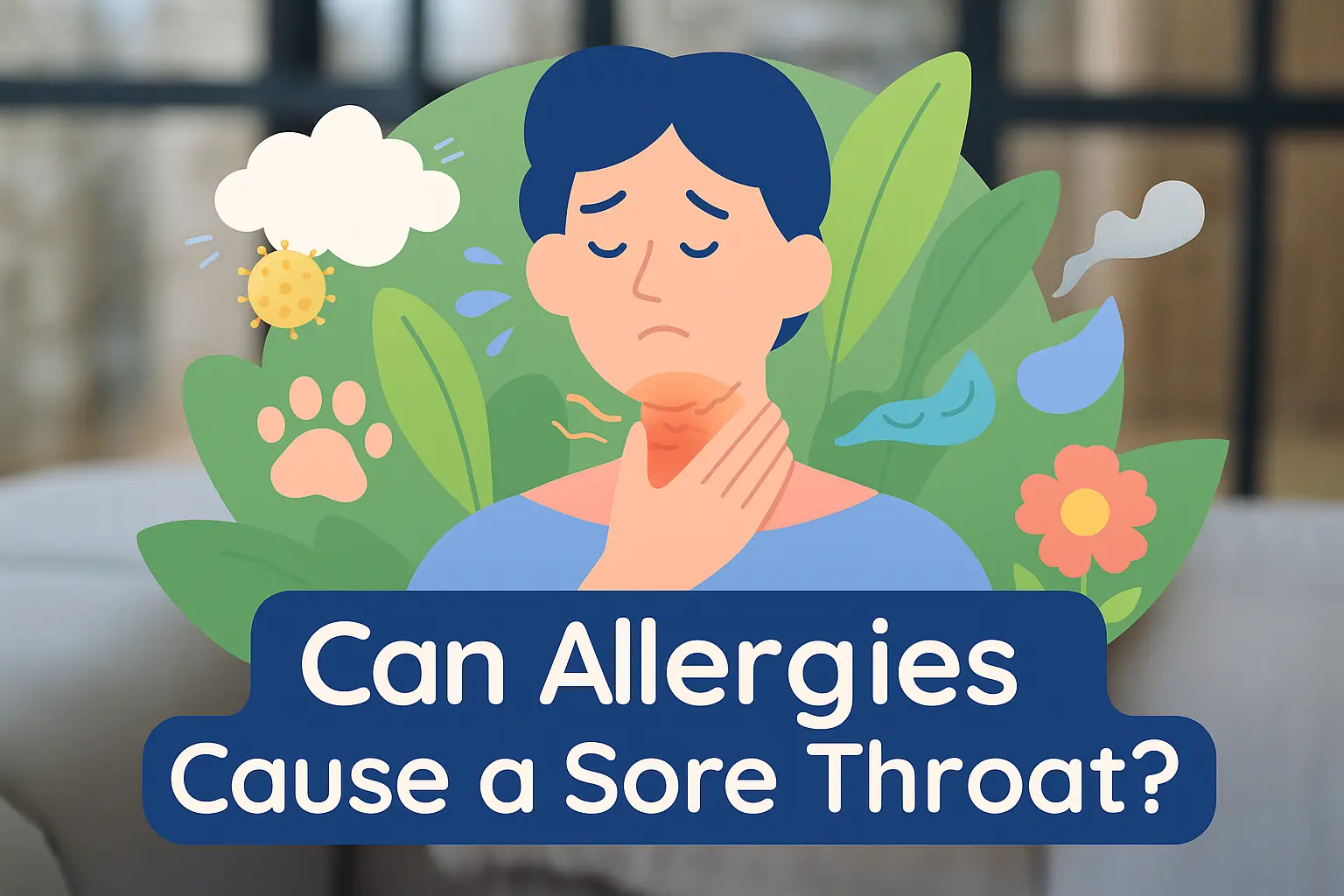
Many people wake up with an irritated throat and immediately assume they are catching a cold. In reality, allergies can be the hidden cause. If you have ever asked, can allergies cause sore throat, the answer is yes. Allergic reactions often trigger inflammation, dryness, and mucus build-up that leave the throat feeling rough, scratchy, or mildly painful. It can happen during pollen season or all year round with indoor triggers.


This confusion is common because allergy symptoms can copy the early signs of illness. However, learning the difference can save time, money, and discomfort. Instead of reaching for the wrong remedy, you can choose treatment that targets the real issue. In this guide, you will learn why it happens, what symptoms to watch for, and how to find fast relief in the UK.
How Allergies Can Cause a Sore Throat
Your immune system is designed to protect you, but sometimes it overreacts to harmless particles such as pollen, dust mites, mould spores, or pet dander. When this happens, it releases histamine and other chemicals. These substances create swelling and irritation in the nose, sinuses, and throat. The result may feel like dryness, itchiness, or a constant urge to swallow.
When people search can allergies cause sore throat, they are often surprised that the throat is linked so closely to the nose. The airways all work together, so inflammation in one area can affect another. If the nose becomes blocked, you may breathe through your mouth more often, which dries the throat and makes discomfort worse, especially overnight.
The Main Cause: Postnasal Drip and Throat Irritation
One of the biggest reasons allergies lead to throat pain is postnasal drip. This happens when the nose produces extra mucus after exposure to allergens. Instead of clearing normally, the mucus slides down the back of the throat. Even a small amount can cause ongoing irritation, particularly if it continues for hours or days.
Postnasal drip often feels worse first thing in the morning. While you sleep, mucus can gather and coat the throat. You may wake with a hoarse voice, frequent coughing, or the need to clear your throat repeatedly. Drinking water, using the right allergy treatment, and reducing triggers can help calm the irritation quickly and naturally.
Common Allergy Symptoms That Happen Alongside a Sore Throat
A sore throat linked to allergies usually arrives with other symptoms that make diagnosis easier. Sneezing, watery eyes, blocked nose, itchy ears, and a runny nose are all common clues. These signs show the body is reacting to allergens rather than fighting an infection. The throat becomes part of a wider pattern instead of a single isolated problem.
Some people also feel tired or mentally foggy. This is not always because allergies directly cause exhaustion, but because congestion and throat irritation interrupt sleep. If symptoms appear after gardening, vacuuming, visiting a home with pets, or opening windows during high pollen days, allergies are far more likely than a virus.
Allergies vs Cold vs Flu vs Infection
It can be difficult to know whether symptoms are caused by allergies or illness. Colds often develop gradually and may include thicker mucus, tiredness, and mild aches. Flu usually feels more intense, with fever, chills, body pain, and a stronger sense of weakness. Throat pain from infection can also be sharper or more severe.
By contrast, allergies often cause itching, sneezing, and recurring symptoms linked to certain places or seasons. If you wonder can allergies cause sore throat, check whether symptoms improve indoors, after rain, or when using antihistamines. Those changes can be helpful clues. If fever or severe swallowing pain appears, seek medical advice promptly.
Common UK Allergy Triggers
In the UK, seasonal pollen is one of the leading causes of allergy-related throat discomfort. Tree pollen tends to rise in spring, grass pollen becomes a major issue in late spring and summer, and weed pollen can continue later in the year. Warm, dry, windy weather often spreads pollen further and increases symptoms.
Indoor triggers can be just as troublesome. Dust mites live in mattresses, carpets, and soft furnishings, while mould thrives in damp bathrooms, kitchens, and poorly ventilated rooms. Pet dander can linger long after an animal has left the space. If symptoms continue throughout the year, indoor allergens are worth investigating carefully.
Best Treatments for Allergy-Related Sore Throat
Antihistamines are a common first step because they block the chemicals responsible for allergic reactions. Many people notice less sneezing, reduced mucus, and improved throat comfort after taking them. Non-drowsy options are often preferred during the day, while some evening choices may help if symptoms disturb sleep at night.
Nasal sprays can also be highly effective because they treat inflammation at the source. When the nose is less swollen, breathing improves and postnasal drip reduces. Alongside medicines, simple support matters too. Warm drinks, throat lozenges, and regular hydration can make the throat feel calmer while longer-term treatment takes effect.
Home Remedies for Fast Relief
Home remedies can offer quick comfort when symptoms flare up. Gargling with warm salt water may help soothe irritated tissues and clear lingering mucus. Honey mixed into warm water or herbal tea can coat the throat and ease that raw, scratchy feeling. These options are simple, affordable, and easy to try at home.
Moisture is another useful tool. Dry indoor air can make symptoms worse, especially during colder months when heating is on. A humidifier or steamy shower may reduce dryness and help you breathe more comfortably. Resting your voice, avoiding smoke, and sipping water regularly can also support faster relief throughout the day.
When to See a GP or Pharmacist
Most allergy sore throats improve with self-care, but there are times when professional advice is important. If pain becomes severe, swallowing is difficult, or symptoms last for many days without improvement, it is wise to speak with a pharmacist or GP. Persistent symptoms may have another cause that needs checking.
A pharmacist can recommend suitable over-the-counter treatment based on your symptoms and health history. A GP may investigate asthma, sinus issues, reflux, or repeated infections if the pattern is unclear. Getting the right diagnosis can stop ongoing discomfort and help you choose a more effective long-term treatment plan.
How to Prevent Allergy Sore Throat in Future
Prevention is often easier than dealing with repeated flare-ups. During high pollen days, keep windows closed, dry washing indoors when possible, and shower after spending time outside. Washing hair and changing clothes can remove pollen that would otherwise spread around your home and continue irritating your throat.
Inside the house, wash bedding regularly, vacuum often, and reduce damp areas where mould can grow. Consider allergy-friendly covers for pillows and mattresses if dust mites are a problem. If you know your triggers, avoiding them becomes much simpler. Small daily habits can lead to fewer symptoms and a more comfortable throat.
Conclusion
So, can allergies cause sore throat? Absolutely. The most common reasons are postnasal drip, inflammation, mouth breathing, and dryness caused by allergic reactions. Although the discomfort can feel frustrating, it is usually manageable with the right treatment and a few practical lifestyle changes. Knowing the cause is the first step towards real relief.
If symptoms return often, pay attention to patterns such as weather, pets, cleaning, or specific seasons. Those clues can reveal your triggers. With smart prevention, suitable medication, and timely advice when needed, you can protect your throat and feel more comfortable throughout the year, whether indoors or outside.
FAQs
Can allergies cause sore throat without sneezing?
Yes, some people mainly experience throat irritation, congestion, or postnasal drip without frequent sneezing. Symptoms vary from person to person.
How long does a sore throat from allergies last?
It can last for as little as a few hours or continue for weeks if exposure to the allergen remains constant.
Do antihistamines help a sore throat from allergies?
Yes, they often reduce mucus, sneezing, and inflammation, which can ease throat discomfort over time.
Can hay fever make swallowing uncomfortable?
Yes, dryness and irritation from pollen allergies can make swallowing feel rough or mildly painful.
Should I see a GP for repeated throat symptoms?
Yes, especially if symptoms keep returning, worsen, or do not improve with normal allergy treatment.
You may also read: Replace High-Maintenance Lawns With Smarter Options